
Preliminary Tasks
Preliminary Task 1
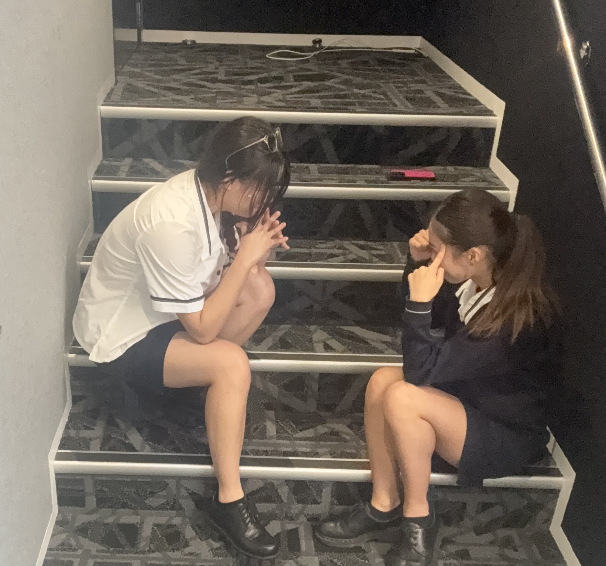
Staircase photo (two students, dark stairwell)
Effect created: Intimacy plus discomfort — feels like a private, tense moment we’re intruding on.
Angle/height: Shot from above, looking down the stairs — this diminishes the subjects and reinforces the sense of them being closed in/trapped.
Framing: Tight, vertical corridor of stairs frames them on both sides, leaving little negative space — creates claustrophobia.
Lighting: Low-key, mostly natural/available light with the top of the stairs falling into darkness — builds unease and hides information from the viewer (we can’t see what’s up there).
Body language/proxemics: Both subjects hunched forward, hands near faces (one covering, one rubbing eye) — reads as distress, guilt, or exhaustion without needing dialogue.
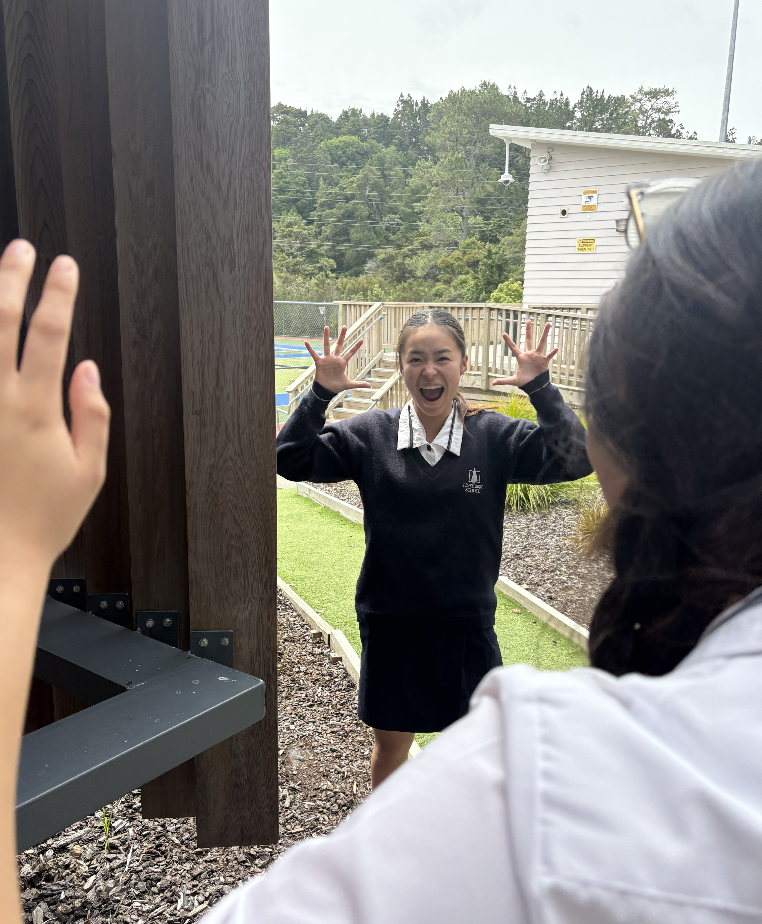
Outdoor “scare” photo (student with claw hands, mouth open)
Angle: Slightly low, from the other student’s POV over her shoulder — puts viewer in the “victim’s” position, receiving the scare.
Framing: Foreground hand raised (startled reaction) + wooden beam creates a natural frame-within-a-frame around the “scarer.”
Lighting: Flat, bright daylight — deliberately unscary environment, so the shock comes from the performance, not the setting. This is a strong contrast tool if paired with the darker stairwell shot.
Effect created: Comic/jump-scare energy — sudden, exaggerated, breaks tension rather than building it.
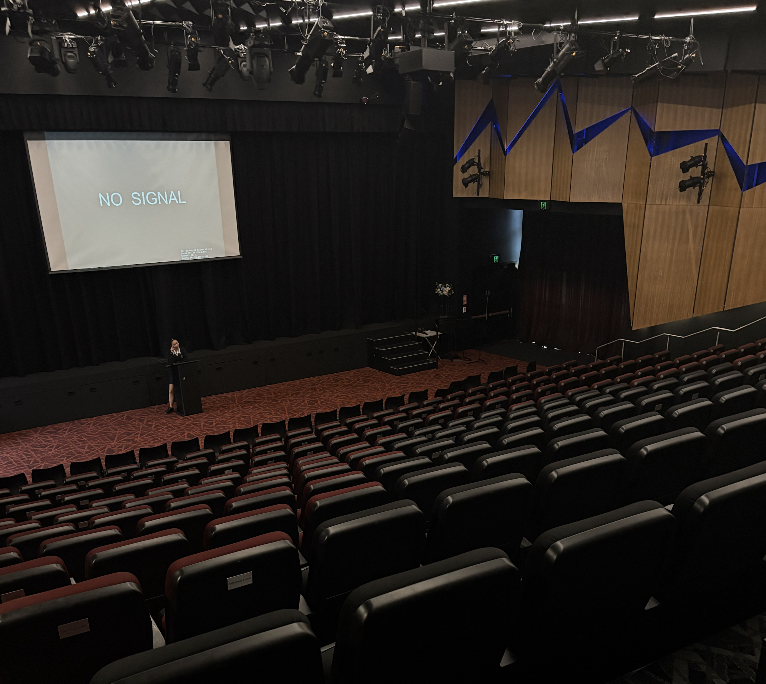
Empty cinema, “NO SIGNAL” on screen
- Framing: Deep space, rows of empty seats leading the eye to a blank screen — creates emptiness/isolation.
- Lighting: Very low-key, screen glow is the dominant light source — draws all attention to the “NO SIGNAL” text.
- Effect created: Eerie, unresolved feeling — useful as a cutaway or establishing shot for dread, since it visually says “something’s missing/wrong.”
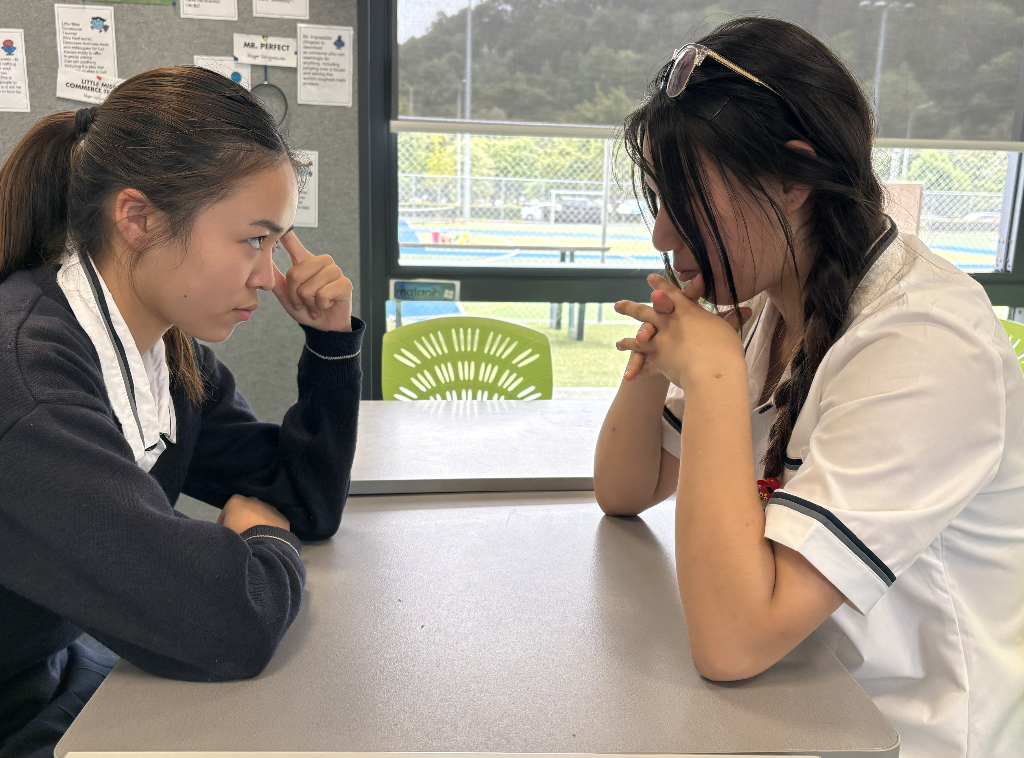
Table confrontation photo (two students, close over a table)
- Angle: Eye level, side-on — puts viewer in a neutral “observer” position rather than siding with either character.
- Framing: Very tight two-shot, faces close together — signals confrontation or a shared secret.
- Expression/gesture: One with narrowed eyes and a hand near her temple (suspicion/thinking), the other with clasped hands and lowered head (nervous/defensive) — clear power imbalance in the exchange.
- Effect created: Reads as an interrogation or accusation moment; tension carried entirely through posture and eyeline, not action.
Preliminary Task 2
Group task · 30-second concept & pitch
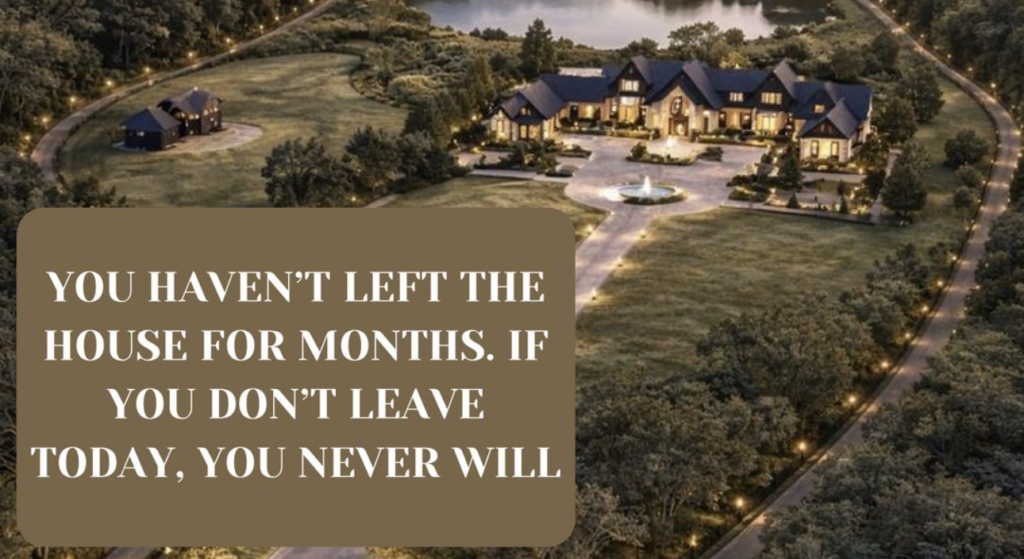
The purpose of this task was to begin to apply our micro element knowledge to a practical project. We worked in small groups of three and were given the prompt of “You haven’t left the house in months. If you don’t leave today, you never will”. With this prompt we had to create a concept for a 30 second scene of a film and complete a pitch for the film.
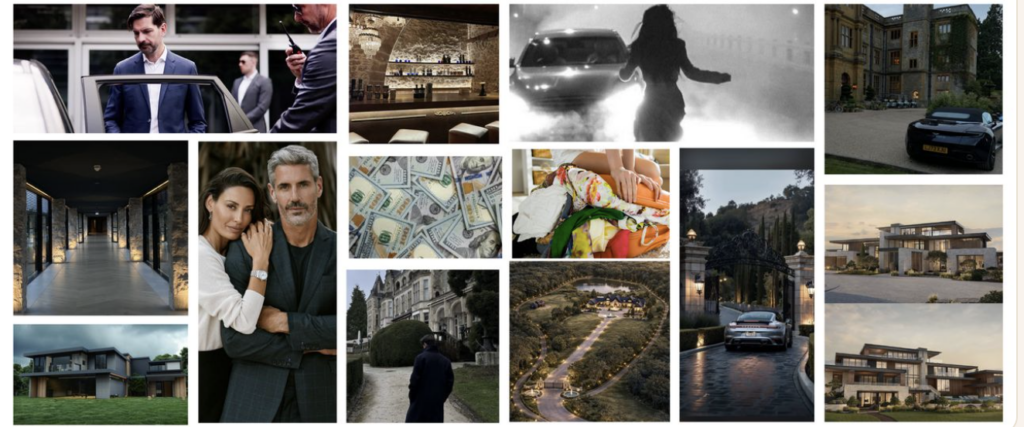
The first idea came from a “runaway” bride, This was inspired by the iconic runway done by the fashion model: Anok Yai Spring/Summer 2025 show during Paris Fashion Week in September 2024 (the concept is included in the mood board). But the genre idea is somewhat dystopian as inspired by the runway set up itself so naturally I wanted this to be a “escaping” plot. The setting me and my teammate (Celina) agreed on immediately was a luxirous house, we had other ideas such as a beach villa but the rich but unhappy wife has always been the shared vision we had since the start.
The mood board for this essentially shows the pillars of our inspirations. Wealth and control runs throughe very image here: grand estates, private security, and a couple that is more “formal” than romantic. This implies everything is just a “show” and the woman in here suggest she is not truly free despite all this wealth. The turning point is the woman sillhoutte covered in fog to show her next moves as the plot advances…
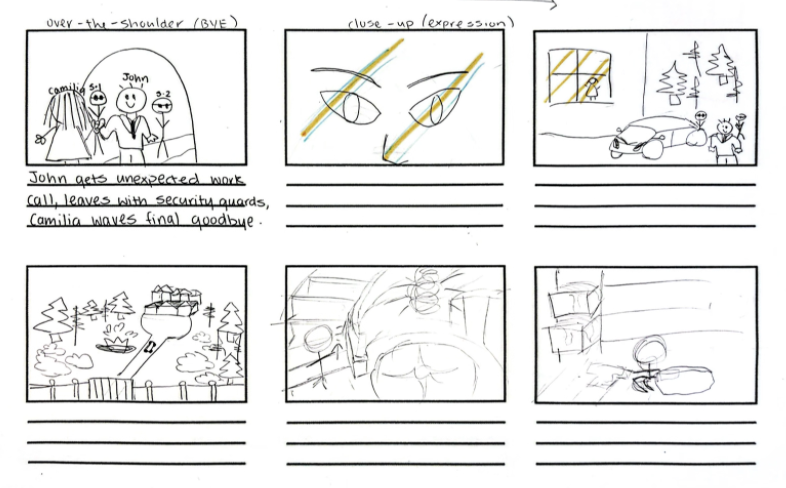
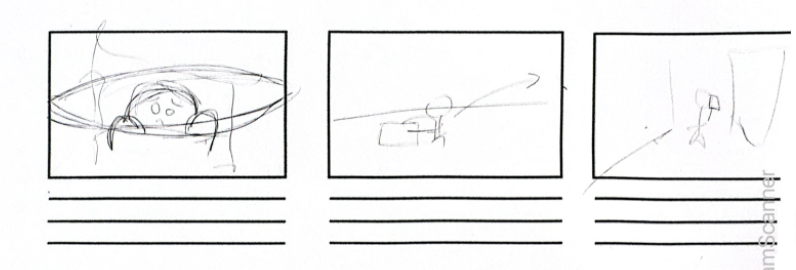
For the storyboard, me and Celina had a discussion before printing out storyboard. Here is the full breakdown of everything that happens in our clips:
| Clip | Camera Shot | Lighting | Sound / Editing | What Happens |
|---|---|---|---|---|
| 1 — The Goodbye | Over-the-shoulder | 2-point (eerie effect) | — | John gets an unexpected work call and leaves with his two security guards; Camilia waves a final goodbye. |
| 2 — The Look / Cross-Cutting | Super close-up → establishing shot → close-up | Single ray of light down the middle → 3-point/natural | Foreshadowing → parallel editing (cross-cutting) | Extreme close-up on Camilia’s eyes, cross-cut with a car arriving outside the mansion grounds. |
| 3 — The Estate | Wide shot | Natural | — | Establishing shot of the mansion grounds — driveway, gates, trees, fountain. |
| 4 — Off-Balance | Dutch angle | Natural light from windows / 3-point | Suspense backtrack | A disorienting, tilted composition with swirling motion lines — the plan is now in motion. |
| 5 — The Escape | High angle (from behind) → low angle → continuity/movement → wide shot | Dim, low light throughout | Diegetic sound, kept frantic but mysterious | Camilia packs a bag, checks the door cautiously, then moves toward the exit — ending on a wide shot of the route out. |
In this task we brainstormed ideas, made a mood board, created a storyboard and then made and presented our pitch. Through this task I learnt that storyboarding ideas and collaboration can require communication and skill. Our audience feedback was our plot was great but can work on illustration so in future I need to improve my drawing skills. In the next prelim task where we create a concept and film it, I want to focus on improving communication in a big group.a
Preliminary Task 3
For this task we are creating a one-minute film in groups of 3. Our prompt includes the following criteria: must include dialogue of “He’s gone”, must include a prop of significance, and there must be some kind of unanswered question. After brainstorming ideas based on this prompt my group and I decided on the concept of a short thriller that shows enigma. We then divided up our pre-production tasks and I worked with Celina and Joel on creating a mood board/storyboard for our piece.
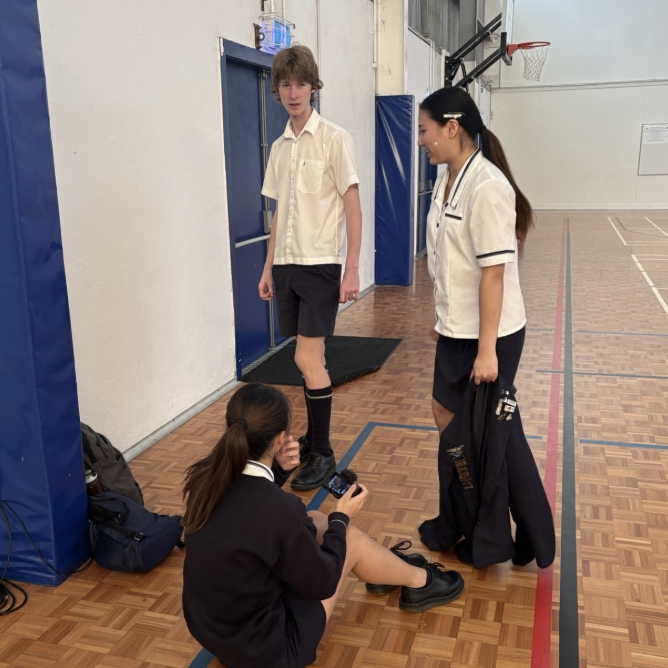
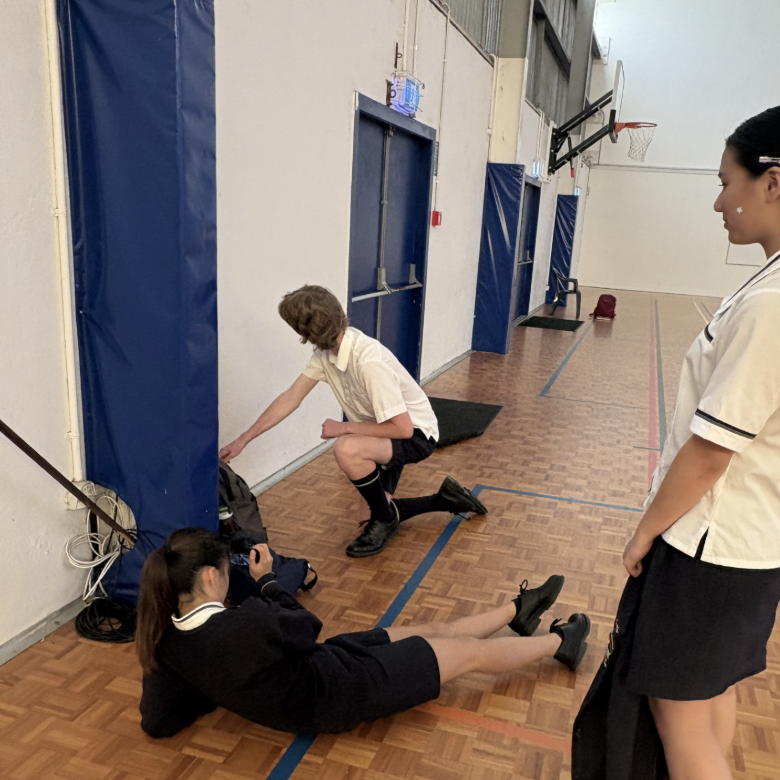
Together with my group of two other classmates, we discussed which genre would best fit the prompt and ultimately decided on a mystery thriller rather than horror. We took inspiration from the Roblox game Mimic, particularly the sections where players search for important objects while tension gradually builds. Our concept centred on a student searching for a missing duffel bag in the school gym after hours. The duffel bag acted as the significant prop, driving the narrative because both the protagonist and the audience wanted to know what was inside and why it had disappeared. During the search, the student is suddenly attacked and knocked unconscious by another student. The following day, while the victim’s friend is eating lunch, they receive a phone call from the attacker saying, “He’s gone.” This line was a spontaneous idea during filming, but it strengthened the enigma by raising even more unanswered questions. Who is “he”? What happened to the missing student? Why was the bag so important? Leaving these questions unresolved encouraged the audience to keep watching to discover the truth.
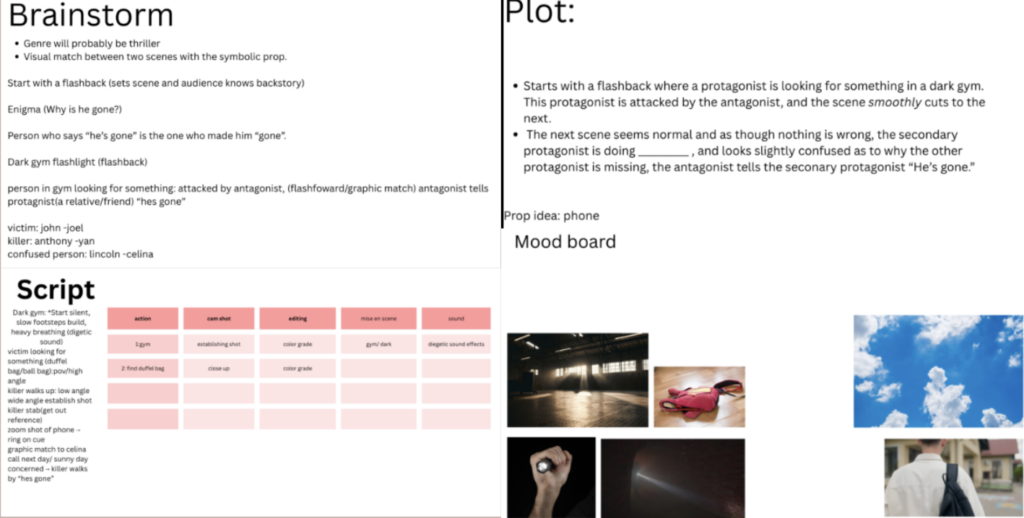
Script: Dark gym: *Start silent, slow footsteps build, heavy breathing (digetic sound)victim looking for someting (autTer bag/ball bag):pov/high angle killer walks up: low angle wide angle establish shot killer stab(get out reference) zoom shot of phone – ring on cue graphic match to celina call next day/ sunny day concerned – killer walks by “hes gone”
We all worked together to brainstorm ideas, create the script, and plan the shots. My primary roles were creating the mood board and directing the storyboard, although we shared responsibilities throughout filming. I also acted as the “killer,” giving me experience performing on camera as well as contributing behind the scenes.
The filming itself was certainly a learning process. It was virtually my first time acting, and although I think my performance was only serviceable, I managed to fit the character well enough that I would feel confident acting again in the final coursework. One of our strengths was the variety of shots we used, along with how effectively we built mystery through the use of the missing duffel bag and the unanswered phone call. However, we could certainly improve our teamwork, as we experienced several misunderstandings and creative disagreements during production. Despite this, each member of our group brought different strengths to the project. This is something I will remember for the final coursework, as I will carefully choose group members with complementary skills to maximise the quality of our final film opening.
Equipment
Editing and Final Cut
For my personal edit of our footage, I decided to use Capcut because it was accessible from school and allowed me to experiment with a range of editing tools and techniques. I studied the basics on how to use it through some tutorials.
I am pleased with how I was able to structure the sequence so that it flowed smoothly and maintained a clear sense of progression. In particular, I think the pacing of my edit worked well in building tension and keeping the audience engaged. I did this by first cutting the videos into the way I think it showed a clear plot. Using skills from Premier Pro workshop, I managed to apply the basics such as add, crop, and cut.
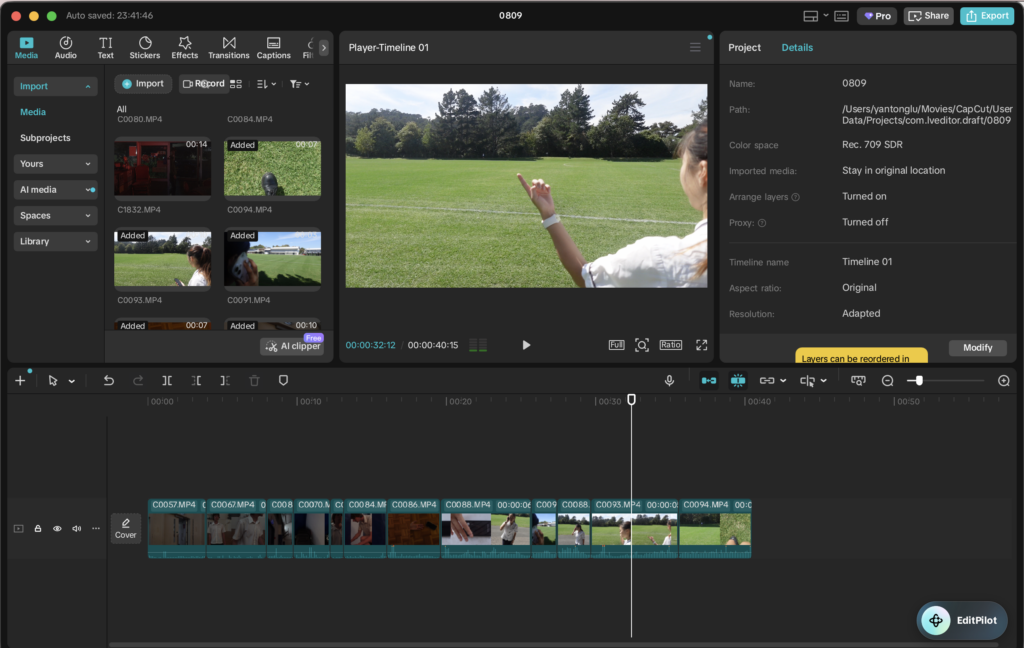
Something that was challenging was deciding how to cut the clips effectively to match the intended mood. I found it difficult at times to balance continuity with creativity, especially when trying to make transitions feel natural while still conveying meaning. This made me realise that editing is not just about putting clips together, but about carefully selecting and arranging shots to control how the audience interprets the scene.
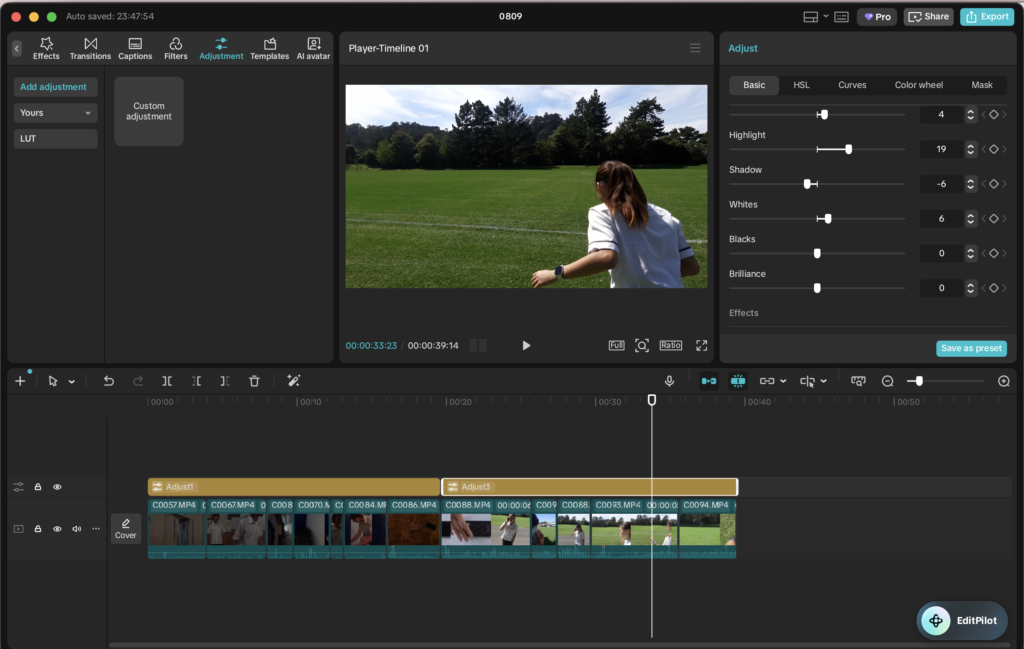
Furthermore, using my workshop on edinng knowledge I understood that color grading plays a major part in a film so I was able to explore more of what I wanted the film to appear for the audience (eerie and a contrast with brightness for the grass field).
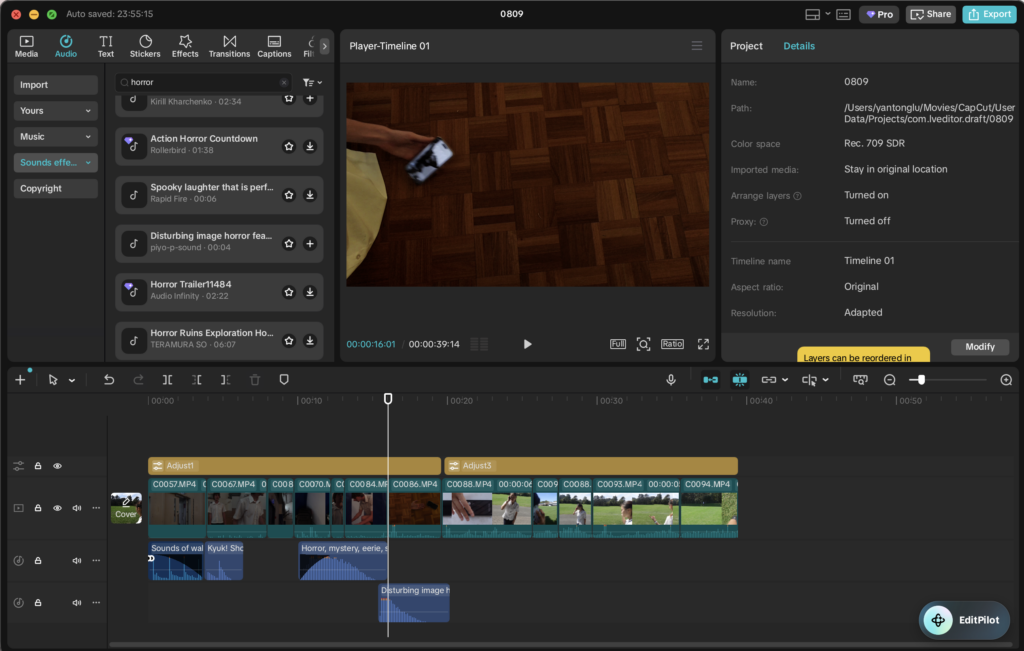
Then I added sound effects which was my favourite throughout the editing process because I get to discover so many sounds from what capcut was able to provite me. I learned to search for the keywords sucha s “footsteps” and “jumpscare” and listent to multiple sounds to see which one was fitting for the scene. One thing that was challenging was getting the movements to align with the sounds for a maximum horror effect.
From this task, I have learnt the importance of pacing, timing, and continuity in editing, as well as how different cuts can significantly impact meaning. I will apply this to my next piece of coursework by planning my edits more deliberately and thinking more critically about how each transition contributes to the overall narrative and audience response.