Production — “Final File”
Premiere Pro Workshop
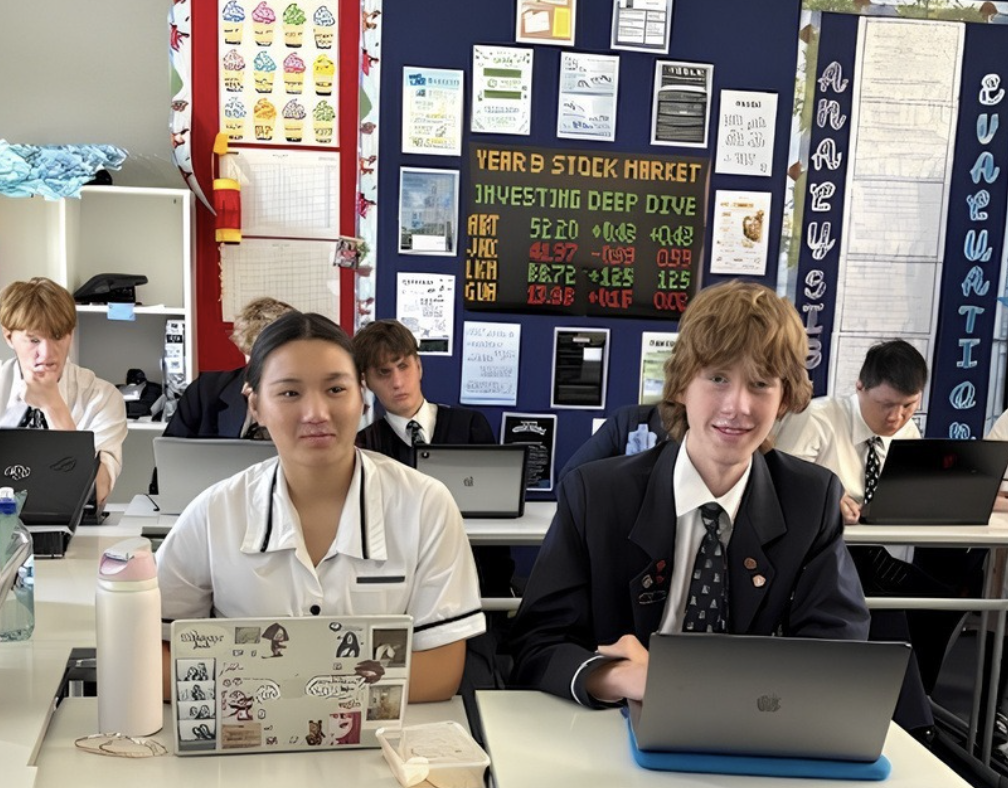
Before we started editing, our class had a Premiere Pro workshop with Mr George, an experienced film maker and teacher from South Seas Film School. It was really useful to learn editing from someone who actually works in the film industry, because he showed us how editing is used in real productions and not just at school.
In the workshop we learnt the basics of Premiere Pro, such as importing clips, adding them to the timeline, cropping and cutting. He also explained how to organise footage into bins / use keyframes / other skill, which I hadn’t done before. One thing that stood out to me was colour grading. Before the workshop I thought colour grading was just making a video brighter or darker, but I learnt that it plays a major part in how the audience feels about a scene. One example is he showed how making a scene colder and bluer for tension.
I used these skills straight away in my personal edit for Preliminary Task 3. Even though I edited in CapCut, I could still apply the basics like adding, cropping and cutting, and I used colour grading to make the gym look eerie while keeping the grass field bright as a contrast. For our final film opening, Joel did most of the editing since he had the most experience with Premiere Pro, but because of the workshop I understood what he was doing and could give suggestions on things like pacing and colour.
Overall, I think the workshop was really helpful because it gave me the basic editing knowledge I needed for the rest of the coursework. If I had the chance again, I would ask more questions about sound mixing / practise more on Premiere Pro at home, as this is the area I still feel least confident in.
Brainstorming & Concept Creation
Evidence and context of discussions:
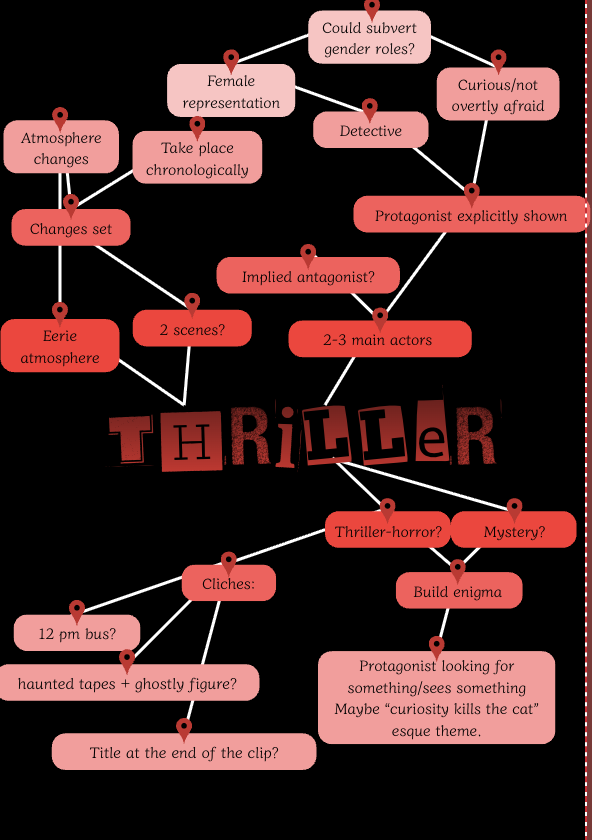
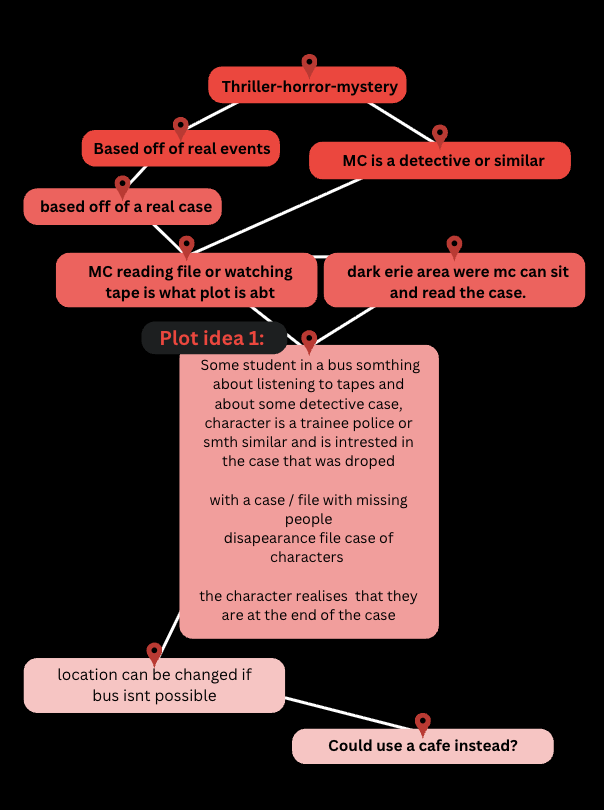
My original idea: “Closing Shift”
My orignial idea that I had in mind before we started any discussion was about a junior detective going home from work at a police station. She carries a case file with missing people on it and every stop enters a person. When reviewing the case file the audience will be focused on the realisation of the detective seeing the people on the case file matches the people coming on the bus. It will end on a sort of hook therefore allowing interpretation on themes such as superficiality, supernatural, and horror. There is no proper explaination to why the detective appears on the final page of the missing page report however, we initally wanted a distopian effect of how the detective was also ‘missing’ perhaps this was a dream or victimised by the ‘killer’.
Planning for Production
Orignial storyboarding design by Joel:
Storyboard
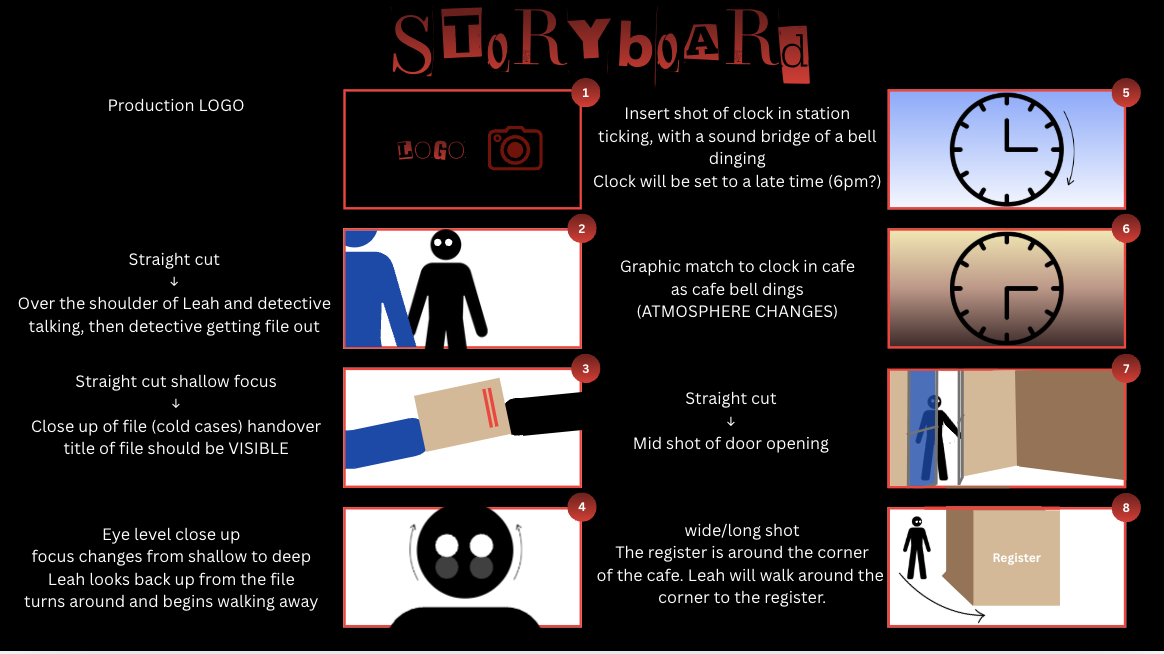
The storyboard for our film opening was made by Joel on Canva, as storyboarder was his role. It has 32 shots across four pages, and each frame has a description of the camera shot, focus and sound next to it. Even though I didn’t draw it, it was really important to me because as Leah, I’m in almost every shot. It became my guide for what I had to do in each scene.
Visual style
The storyboard has a black background with red borders around every frame, and the title “Storyboard” is in a ransom note style font with mismatched red and black letters. I think this already fits the horror-mystery genre before you even read the shots. The characters are simple stick figures, but they are colour coded, which makes it easy to follow. Leah is black, the detective is blue, the missing people are red and green, and the waiter is beige. This was useful because you can instantly tell who is in each shot.
Shots 1–8: Setting up the story
The first page starts with the production logo, then an over the shoulder shot of Leah talking to a detective and a close up of the “cold cases” file being handed over. I like how the storyboard uses a graphic match between two clocks, one in the police station and one in the café, with the background changing from blue daylight to a dark brown. This shows time passing and the atmosphere changing without needing any dialogue. The page ends with Leah walking through the café door and around the corner to the register.
Shots 9–16: Introducing the file
This page focuses on making the file seem important. There’s an insert shot of the file sticking out of Leah’s bag, then an extreme close up so the audience can read the name. Leah orders, sits down and starts working on her laptop with diegetic keyboard tapping. One of my favourite shots is 15, a close up of my face looking at the computer while my eyes drift towards the file. This shows Leah’s curiosity just through eyeline, which was something I had to focus on when acting. Shot 16 is a low angle from the file’s perspective, making Leah look like she is towering over it.
Shots 17–24: The first missing person
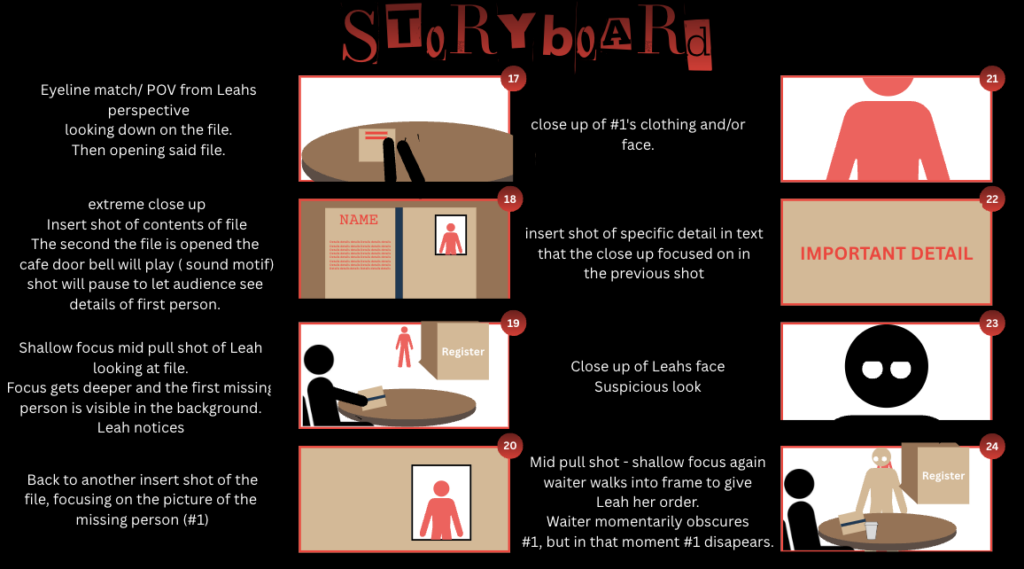
This is where the enigma starts. Leah opens the file and the café bell rings as she sees the first missing person’s photo. Shot 19 uses a pull focus from shallow to deep so the missing person (#1) appears in the background. The storyboard then cuts between the photo, #1’s clothing and an “important detail” in the file, so the audience realises they are the same person. Shot 24 has the waiter walking in front of Leah, and in that moment #1 disappears. We actually improvised this on filming day by having Joel hide under a table, and it worked even better than planned.
Shots 25–32: The climax
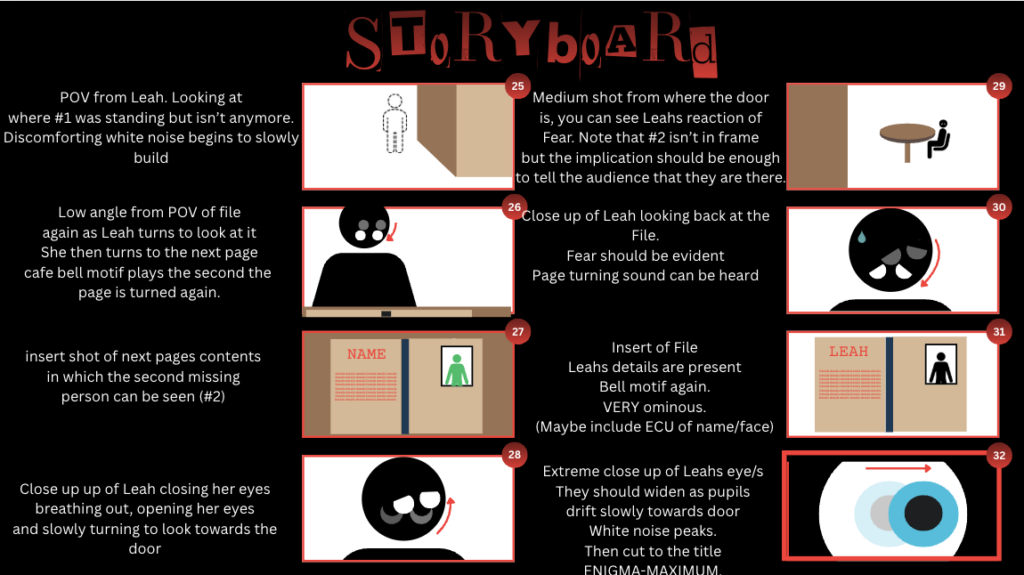
The final page builds the tension the most. Leah looks to where #1 was standing, but they’re gone, and white noise starts to slowly build. She turns the page and sees the second missing person (#2), and the bell plays again. Shot 29 is a medium shot from the door looking back at Leah, where #2 isn’t shown but is implied to be there. The last pages show Leah finding her own details in the file, ending on an extreme close up of my eye drifting towards the door before cutting to the title. Joel’s note says “ENIGMA – MAXIMUM”, which sums up what we were going for.
What changed in the final opening
When we actually filmed, a lot of the storyboard changed. We cut the police station scene (shots 2–6) because the mock filming showed it would go over the two minute limit, and we replaced it with me walking down a hallway wearing a police lanyard. We also added a new ending where someone attacks Leah from behind, which was my idea on filming day. However, most of the café shots stayed very close to the storyboard, especially the pull focus shots and the low angles from the file.
Reflection
I think the storyboard was really helpful, especially for me as the actor. Since there was no dialogue, I had to show everything through facial expressions, and the storyboard told me exactly what emotion each shot needed, from curiosity to suspicion to fear. The stick figures made some shots a bit hard to picture, but the detailed notes beside each frame made up for this. If I did it again, I would want to be more involved in the storyboarding process so I could add ideas from the actor’s side earlier, instead of just during filming.
Mood Board
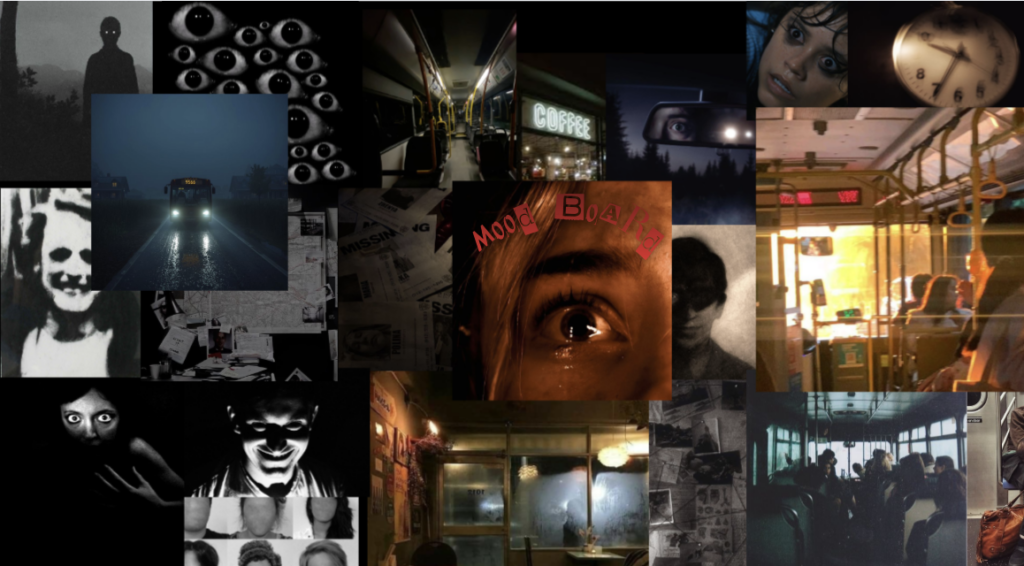
After brainstorming, I created the moodboard for our film opening, with Joel and Bruce giving suggestions along the way. Since we already knew we were making a horror-mystery thriller, I wanted the moodboard to show a dark and uneasy atmosphere that our group could follow throughout production.
A big feature of my moodboard is warm lighting in dark settings. Instead of bright, clean lighting, most of the images I chose have dim orange or yellow light surrounded by shadow. I think this creates a feeling that something isn’t quite right, because warm light is usually comforting but here it feels lonely and unsettling. The nostalgic fog like style is what we are aiming for in the film as this is plays a major horror convention in the film seen in the bus and cafe images and the middle image of the wide eye is also one idea marking the finale frame to create maximum tension.
At the time, we were still planning for the main set to be a bus, so I included a lot of images of buses at night. We later changed the location to a restaurant because filming on a moving bus would be unsafe and hard to coordinate. Even so, the mood of those images stayed the same: empty spaces, night time, and a character who is alone.
Looking back, I think the moodboard was really useful because it kept everyone focused on the same atmosphere, even when our plot changed. It also helped later in editing, as we could look back at it when colour grading to make sure the final opening matched what I had in mind from the start.
Roles & Responsibilities
| Role | Person |
|---|---|
| Casting Director | Yantong |
| Health and Safety Officer | Bruce |
| Storyboarder | Joel |
| Script Writer | Yantong |
| Location Scout | Yantong |
| Costume/Prop Designer | Joel |
| Tech Support | Yantong & Joel |
| Scheduler | Yantong |
How did the group decide who got each role?
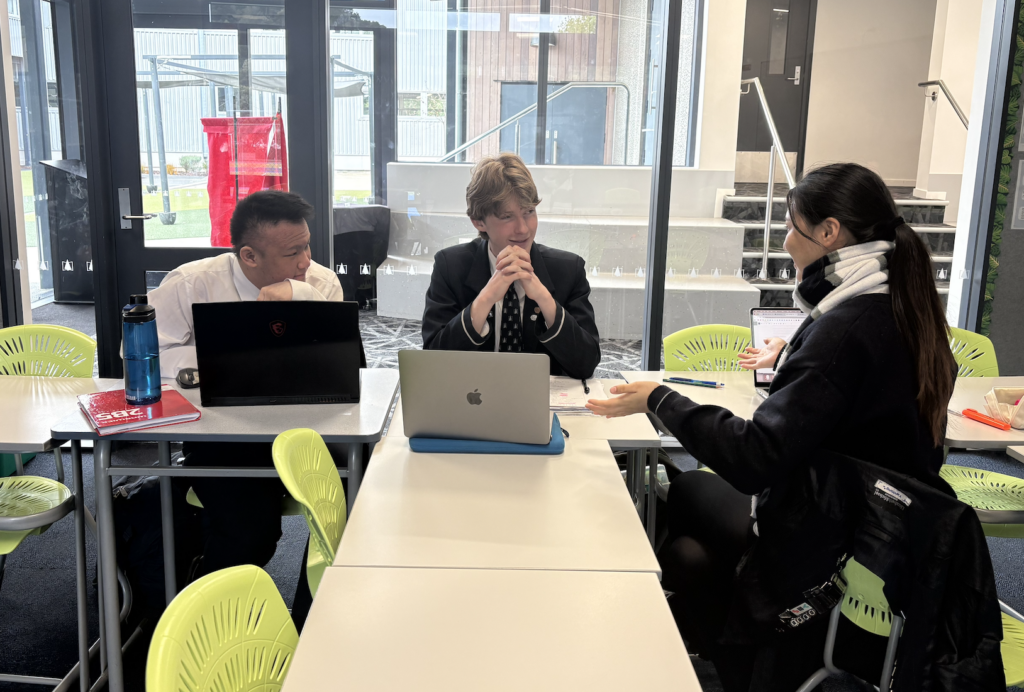
The roles were mainly decided through discussion, considering each person’s interests, strengths and previous ideas. I took on the casting director role because I have good connections with people in the Drama Club and could potentially find actors if we needed them. Bruce became the health and safety officer because he was particularly keen to take on that responsibility. Joel took the storyboarder role because he was enthusiastic about visually developing the story on Canva.
I became the script writer because I had the original plot idea and a clear vision for how the scene could develop, including the characters’ motives and personalities. I also became the location scout because, before we delegated roles, I already had ideas about filming on a bus or in a café based on our original plot. Joel took responsibility for costume and prop design because of his knowledge and interest in mise-en-scène. We also shared tech support, while I took responsibility for scheduling to help organise the production process.
First task under each role
My first tasks for each role were fairly straightforward. As the casting director, I had to think about potential actors and who we could contact if we needed them. Bruce, as the health and safety officer, had to look at possible risks with our locations and filming. Joel started working on the storyboard and planning the camera shots on Canva, while I worked on developing the original plot into a clearer scene. For location scouting, I looked into places that could work with our idea, especially the bus and café. Joel also considered the costumes and props we would need, while we shared the tech side of things and I helped organise the schedule and deadlines.
Most of our planning was done through in-class discussions, with some communication on Discord when we wanted to develop ideas before the next lesson. We spent quite a lot of time talking through how we wanted the story to work and what each part of the production would look like. One thing I realised during this process was how difficult it can be to explain an idea that feels really clear in your own head. I already had a strong visual idea of how I wanted the scene to play out, but explaining that exact image to everyone else was harder than I expected. Because of this, we had a lot of discussions, and at one point we spent almost a whole double Media period actually acting out different parts of the scene so everyone could understand what we were trying to achieve.
This also made me realise that I am quite a visual learner and communicator. Acting things out and physically showing what I meant was much easier for me than just trying to explain it verbally. Even though the planning process involved a lot of discussion and sometimes felt like we were going back and forth, it was interesting seeing how everyone’s ideas slowly came together and became a shared vision rather than just one person’s idea.
Going into these roles, I think the main thing I still need to work on is communicating my ideas clearly enough for everyone else to understand and contribute to them. I have realised that having a strong idea in my own head is not necessarily enough, because I need to be able to turn that idea into something the whole group can actually visualise and work with. This is something I want to improve as we continue with the production, especially when we are making decisions together and developing the original idea further.
Casting director
At first, we thought we would need two extra actors, so we brainstormed different characters that could be included in the scene. However, as we developed the idea, we realised that we could actually play the characters ourselves and didn’t really need outside actors. We ended up casting within our group, with me playing Leah, Joel playing #1, Bruce playing #2, and a parent playing the waiter.
We didn’t hold auditions because we decided that bringing in outside actors would probably make the process more complicated. We would have had to explain the whole plot, the characters and exactly how we wanted each scene to be acted. Since we had already created the idea together, it made more sense for us to act in it ourselves. This also meant we could start filming without having to spend extra time finding and explaining everything to other people.
I think working with people we already knew made the directing and casting process much easier. There was already a basic understanding between everyone because we had all discussed the plot and worked on developing it together. Everyone already knew what the overall idea was and what they needed to do, so we didn’t have to constantly explain the story from the beginning. It also made it easier to communicate during filming because we were comfortable discussing changes and trying different things.
Overall, I think our casting choices worked well because everyone already understood the story and was involved in creating it. However, one thing I would change is spending more time establishing a strong foundation for the characters and the scene before we started. Sometimes we assumed that everyone understood what we meant, which made some of our ideas more ambiguous than they needed to be. Having a more structured discussion at the beginning would have made sure everyone had the same understanding before we moved into filming.
Location:
Location Scouting
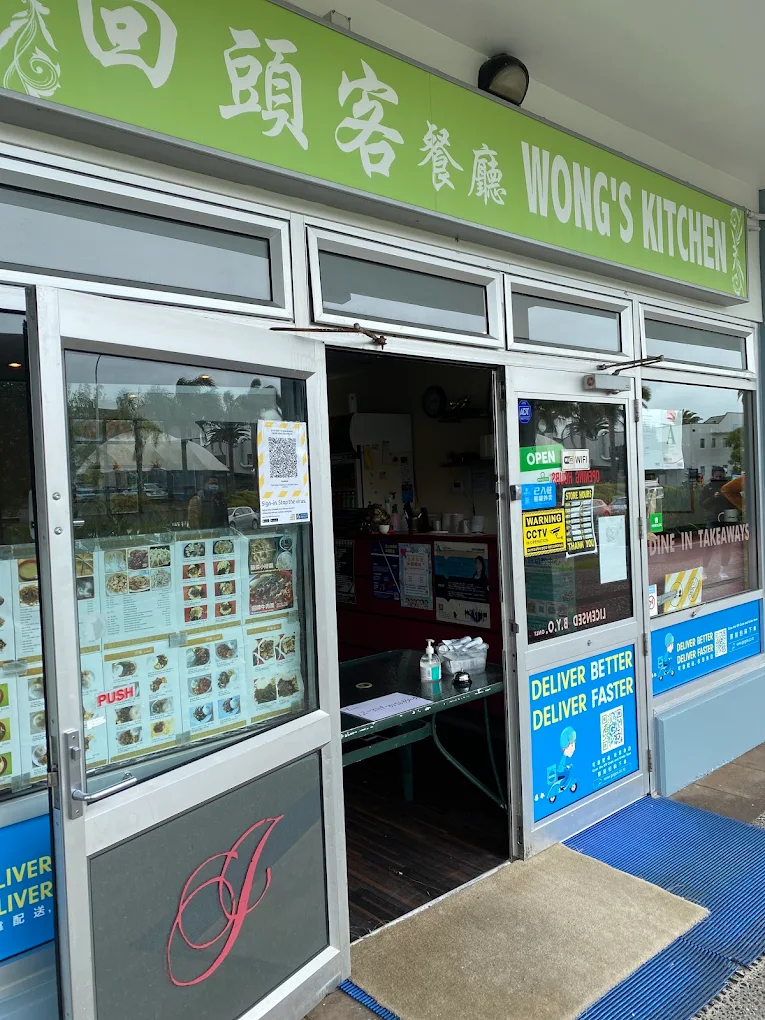
Location scout was one of my roles, along with Bruce. Our first idea was to film on a bus, but it would have been unsafe and too hard to coordinate, so we changed the main setting to a restaurant.
I asked my friend if we could film at their family’s restaurant, Wong’s Kitchen, and they kindly let us use it on Monday when it’s closed. At first it didn’t look very creepy, since it’s a bright, friendly family restaurant. But using a real restaurant made our set look much more authentic than anything we could make at school. On filming day we turned off the bright fridge, displays and lights, and used Joel’s lighting rig and fog machine to make it dark and unsettling.
I think it was one of our best decisions, as our set design got 4.38/5 in the class feedback. Next time I would visit the location at night first to see how the lighting would look before filming.
4. Scheduler and Mock filming session
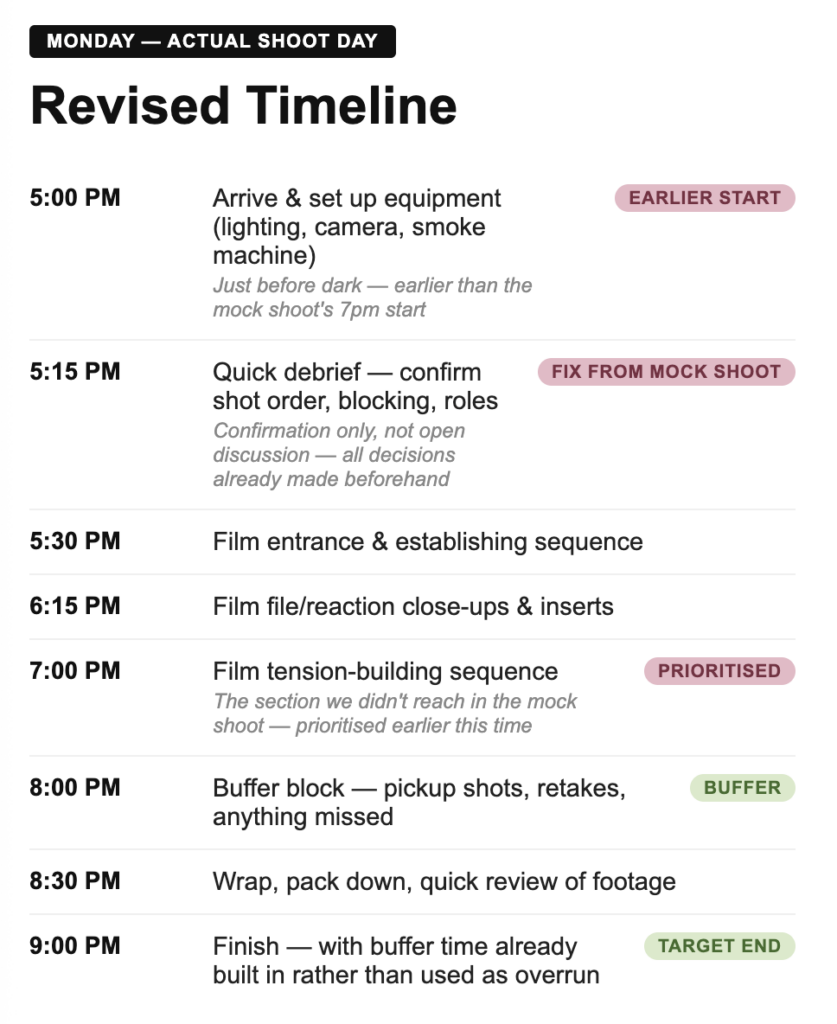
Our schedule I would say was well organised. Since my best friend and her family owned the resturant, it was easy to communicate to check the resturant availability for a mock rehersal. We agreed we would do a runthrough without any special equipment to visualise except the cannon camera. We agreed on a Tuesday (16 June) and waited for it to turn dark which was around 7pm. We had 2 hours to get a visualisation to how we want the final film to turn out which also includes after the mock shoot, we would have to look over the footage and decide what was a good idea and what to change (especially the angles and sound effect additions). We initally thought there was enough time for us to find all the shots we needed for further review however to our suprise we only got as far as the entrace which meanr we did not have enough time for the second part of the film which was building tension. Upon reflection, our main issue was that we spent to much time discussing what needs to be done which took an hour before the actual shooting. Next time, I would defintely make a checklist of shots we need to take and the appropriate equipment that we needed to bring along with having all the discussions in class or outside of shooting/filming hours so we can use our time more wisely on practical fimling. In terms of time management, since we scheduled the actual shoot day to be on Monday, I hope for us to arrive at 5pm just before dark to set up, and debreif everything along with having extra hours so we can have less pressure to end at 9pm.
In the videos below show the active discussion of trying out different angles, filming process, and modified ideas. Majority included me directing the vision I had in my head and some improptu actions. We got time to discuss a few things and review the footage for further imrpovement. You can see in the videos, I was constantly bringing ideas to the tables as well as my teammates however I hope for improvement we could finalise movements down to the eye movements to not leave much of the ideas until the day of the shoot.
Prop Deep-Dive: The Case File
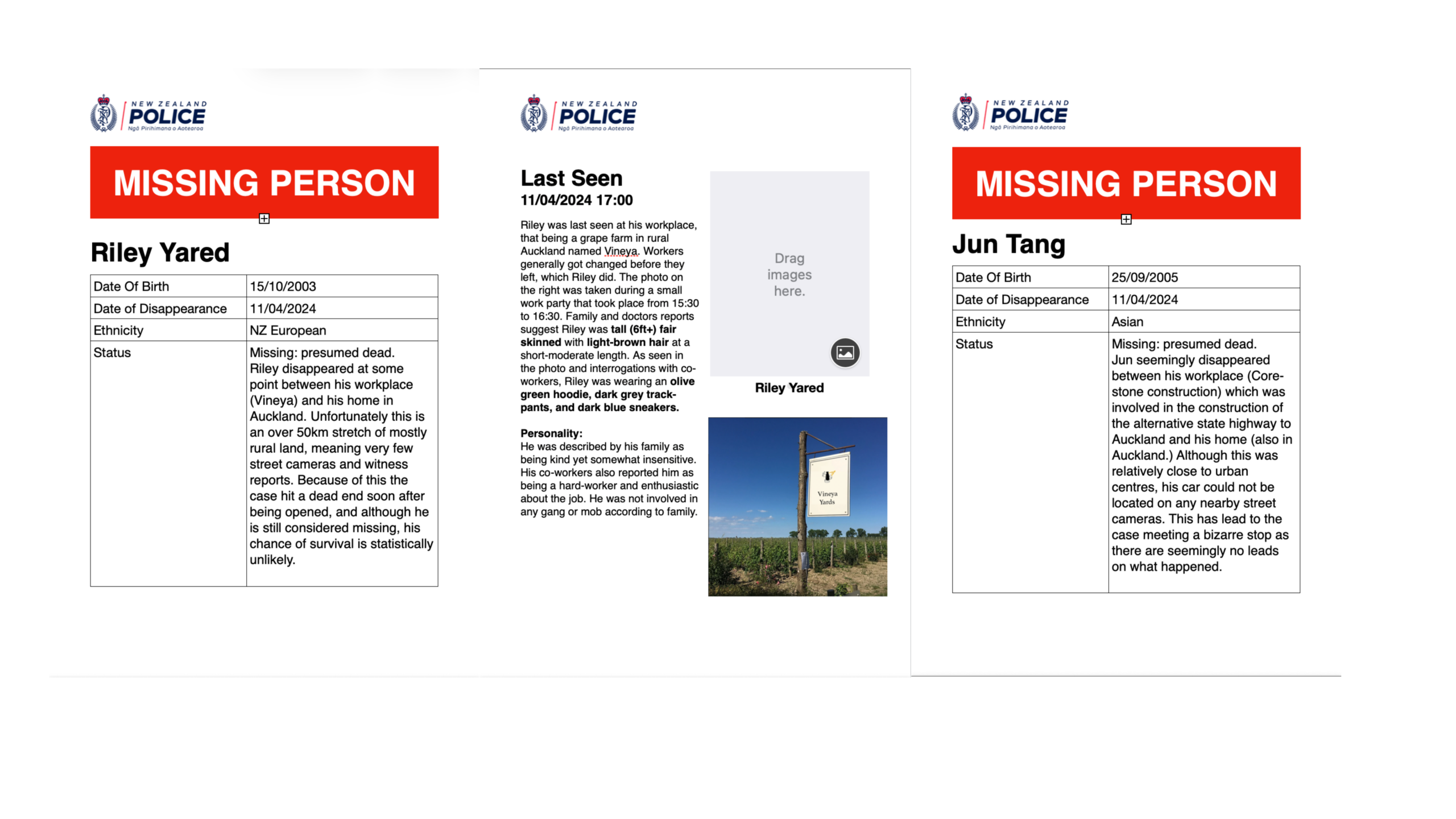
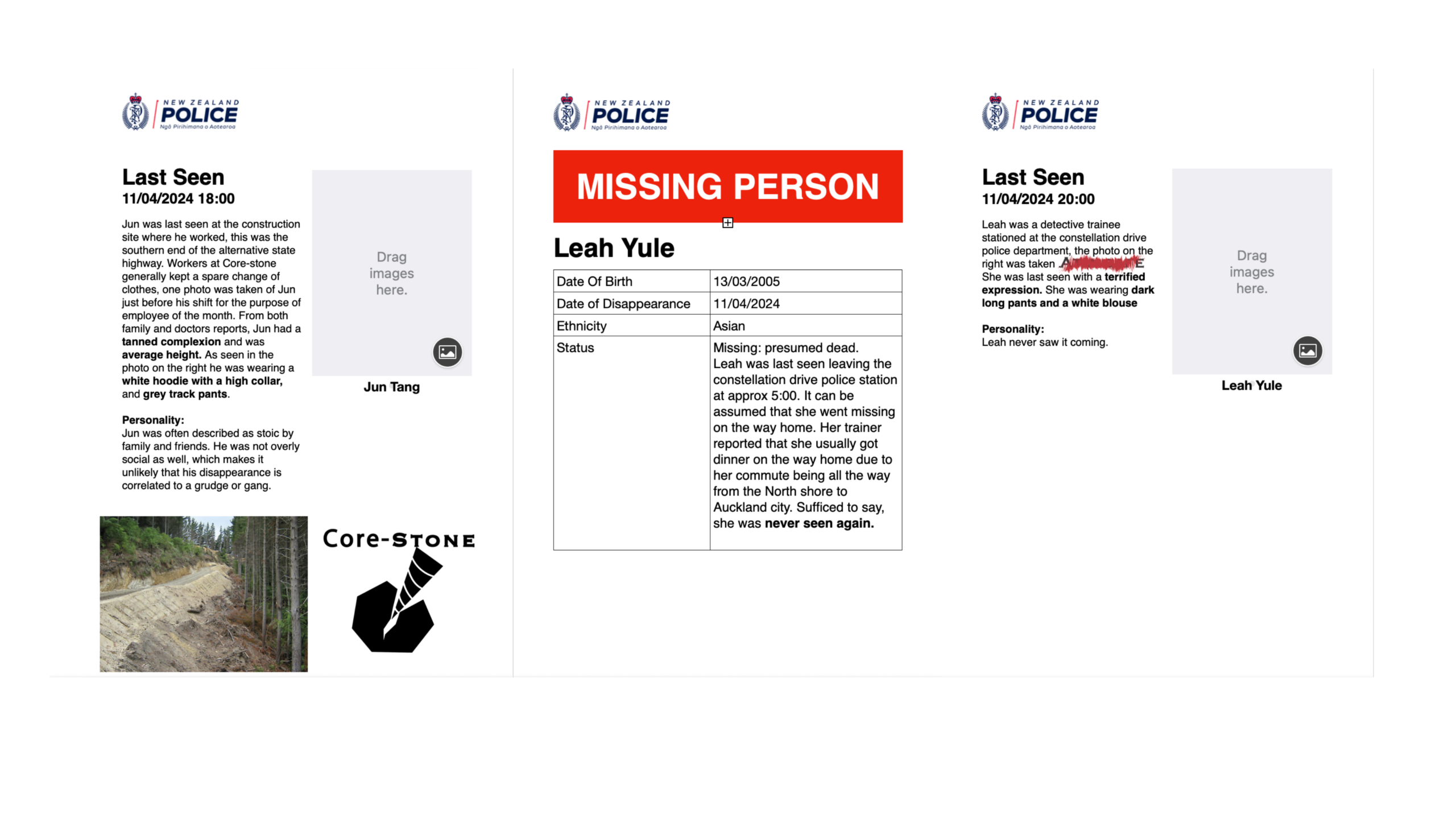
The cold case file itself is one of the most important props, as it drives the whole plot of our opening. Joel designed and made it himself. The pages were based on real NZ Police missing persons files, and the folder was inspired by the manila folders in the old detective show Columbo. Each missing person has their own page with a polaroid photo, and the last page has Leah’s own details on it, which is the big reveal at the end. I think the file worked really well because it looked realistic in the close up shots, and it made the audience want to know what was inside, just like Leah.
| File | Key details |
|---|---|
| Riley Yared | DOB 15/10/2003, disappeared 11/04/2024, last seen at Vineya vineyard. Described as tall, fair-skinned, light-brown hair; olive green hoodie, grey trackpants, dark blue sneakers. Kind but insensitive, hard-working. |
| Jun Tang | DOB 25/09/2005, disappeared 11/04/2024, last seen at the Core-Stone construction site. White hoodie with a high collar, grey trackpants; tanned, average height. Described as stoic, not very social. |
| Leah Yule | DOB 13/03/2005, disappeared 11/04/2024, last seen leaving the Constellation Drive police station ~5pm. Terrified expression, dark long pants and a white blouse. “Leah never saw it coming.” |
Something
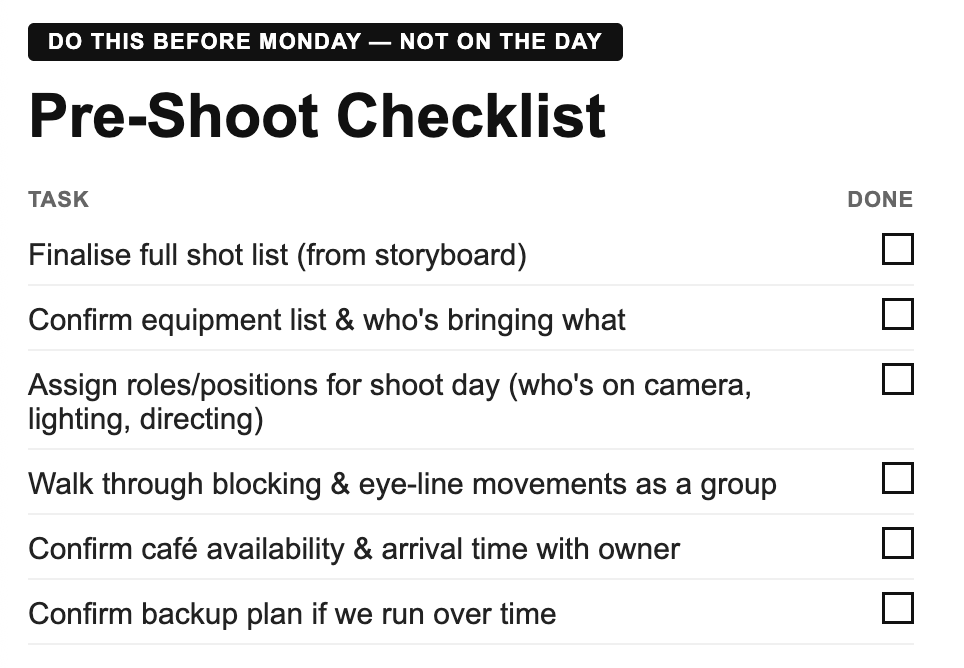
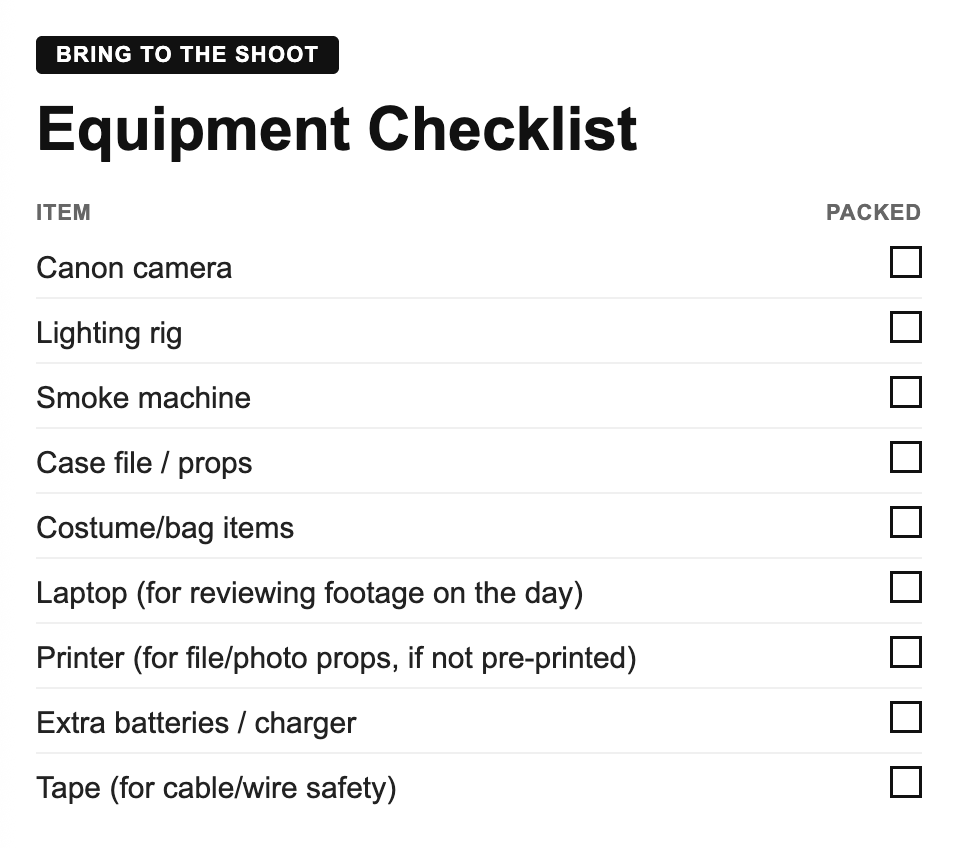
After learning curve on the mock shoot, I made sure to be slightly prepared and wrote a list of things I should keep in mind and checklist of all the things I should bring
Costume Design
Costume Design
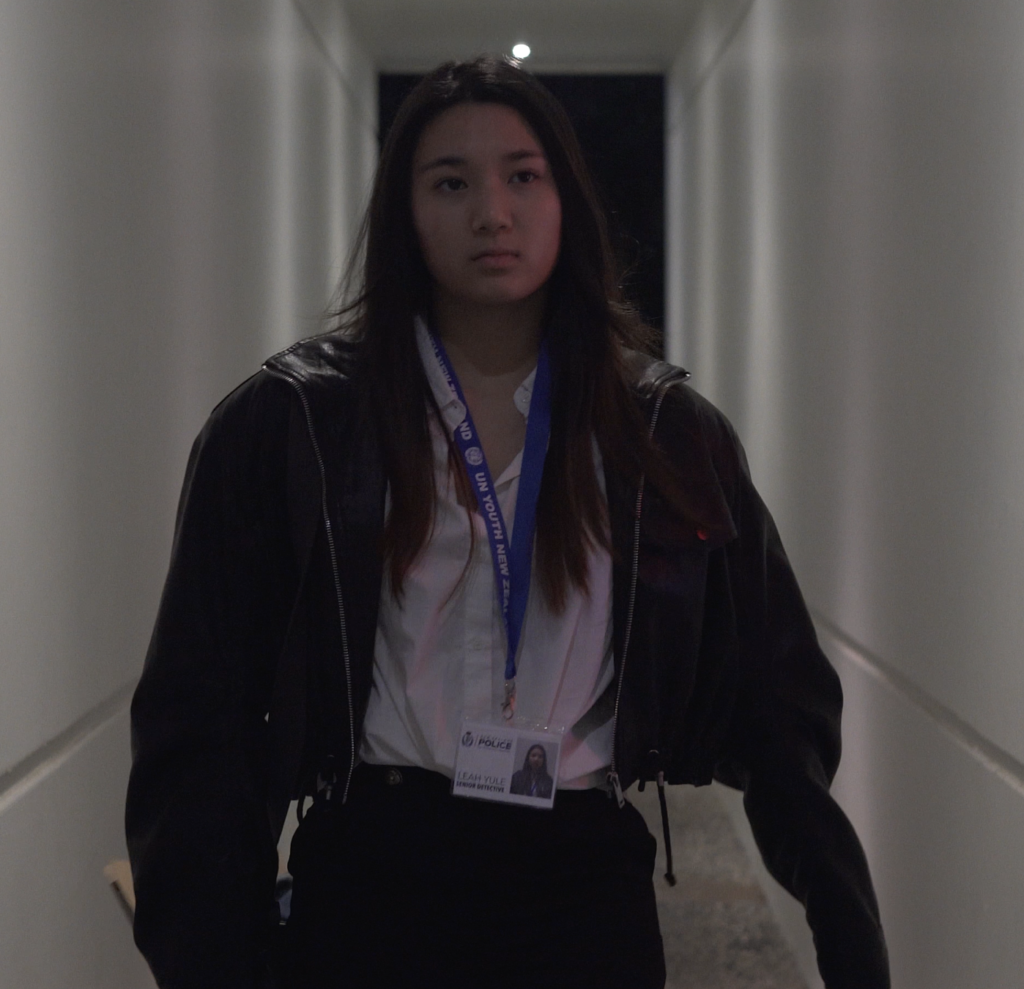
Joel was in charge of costume design, but as Leah I needed my costume to show I was a detective, especially after we cut the police station scene. I wore a smart jacket with a lanyard that Joel made with an NZ Police logo and the title “Senior Detective.” The missing people wore casual, modern clothes, which made them look like normal people and made it creepier when they appeared at the door. Our costume design got 4.38/5 in the class feedback. The main critique was the “UN Youth” text on the lanyard, which Joel covered up in editing.
Acting rehersal
Facial Expression Practice
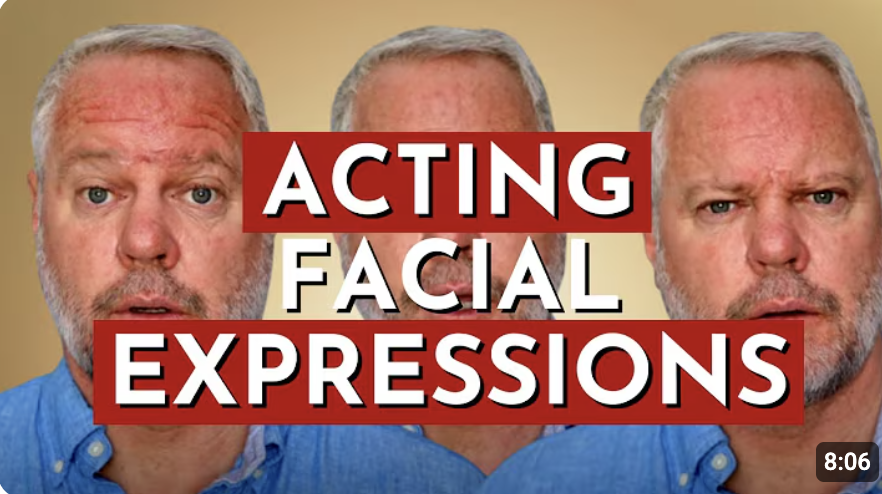
Since our opening has no dialogue, I had to show Leah’s emotions only through my face. Before filming, I practised in front of a mirror by watching thriller scenes with my group so I could show curiosity, suspicion and fear clearly in close ups. The hardest part was the ending, where Leah slowly looks towards the door, because the fear needed to build gradually instead of looking over the top. I think this practice helped, as the close ups of my face are some of the most important shots for building tension.
Filming Day
We filmed at Wong’s Kitchen, which was the diner Bruce had scouted. Monday was the only day the diner was closed to customers, so we decided to book it for then. We arrived at around 5:30pm and started setting up the lighting rig and smoke machine. After that, we spent around half an hour going over the order of the shots and making sure everyone knew what they were doing before we properly started filming at around 6pm. My uncle also came along to help us on the night, and Joel’s dad played the waiter while also keeping an eye on the smoke machine to make sure it didn’t overheat. We ended up finishing at around 9:30pm, which was later than I had originally scheduled as the scheduler. Even though it was a long evening, I think it was worth it because we managed to get a lot of footage from almost every angle we had planned.
Improvisations
There were quite a few things that changed while we were actually filming. Near the entrance of the diner, there was a hallway that looked really creepy once we turned the lighting on, so we decided to change the opening and use it instead of what we had originally planned. One of the actors playing a missing person also improvised by ducking underneath a nearby table as the waiter walked past. It actually worked really well because you can barely notice him in the footage unless you’re specifically looking for him. The improvisation I was most proud of was adding a scene right at the end where someone suddenly appears behind Leah and attacks her. This wasn’t in the original plan at all. Joel was unsure about the idea at first, but after we filmed it, it ended up being one of the strongest parts of the sequence. Since I was playing Leah, I could also tell while we were filming that the ending had a lot more impact than the one we had originally planned.
Reflection
There are definitely a few things I would do differently next time. We didn’t properly organise a costume for Joel’s dad when he played the waiter, so his outfit looked a little out of place compared to the rest of the cast. We only really noticed this once we were already filming, so it was too late to properly fix it. I also wish we had taken more insert shots of smaller details around the diner while the lighting and smoke machine were already set up. It would have given us more options when editing, and it is much harder to recreate those shots afterwards.
As the scheduler, I also found coordinating everyone’s availability more difficult than I expected. One group member was particularly hard to reach outside of school, which delayed getting some of the prop photos finalised. We also weren’t as careful with the wires around the floor as we should have been. Bruce noticed the issue about halfway through filming and pointed it out, which reminded us to be more aware of the health and safety side of the production.
Overall, though, I think the filming day went really well. We ended up with almost 50GB of footage from over an hour and a half of filming, and everyone stayed in a good mood throughout the evening despite how long it took. Some of the things we improvised on the night, especially the ending, actually turned out better than what we had originally planned, which showed me that sometimes being flexible during filming can improve the final product.
Production Company & Logo
Our initial and agreed idea was always to have our logo simple and not a granduer name with a complex opening with lots of animation. So we got into our group during class to discuss what we could potentially agree on and we went to brainstorm on a piece of paper only to discover we wanted alliteration in our logo. I grabbed my reading book and told joel to point on a random word on a random page only to be disapointed with this idea. However, this allowed us to conclude a random word generator would be nice and so all we needed was a letter starting with P and the second word as Productions. And we agreed that the word “Peak” was the catchiest name. This was an intentional pick because “peak” is a trending slang word commonly used in social media memes. So using this as our logo allowed the audience to have an impression that our creation is relatable in this generation and not so alienated from what the audience already know about media piror viewing and exposure to our film.
So our design for our production will naturally be related by the online meme, one very popular is the “peak” meme. We decided that Peak Productions’ branding takes direct inspiration from A24’s less-is-more approach: a monochrome, minimalist mark built around an obscured face and a pair of disembodied hands, rendered in silhouette rather than full detail. The obscured face keeps the logo itself enigmatic — appropriate for a company whose films lean on withheld information as a genre convention. Keeping the palette strictly black, white and grey (no colour) was a deliberate choice to signal “thriller” before the film has even started, and to make sure the logo doesn’t compete visually with the café’s own warm-to-red colour grade once it transitions into the opening scene.
The clearest thing I took from researching A24 is that logo consistency signals confidence — a company that doesn’t need to update its branding constantly reads as more established, even as a fictional student production company. That’s directly why Peak Productions’ logo stays fixed and unadorned rather than trying to look “busier” or more elaborate.
I took a photo of Joel outside the classroom and then used canva to color grade him into black and white. Joel then went home and animated the logo. Without much understanding of the way canva color grading works, I had to watch a tutorial and learn all the elements on how to turn a picture into my liking. This skill will come in handy when in the final project I am able to edit my final product into the vision and color grading I have in my head.
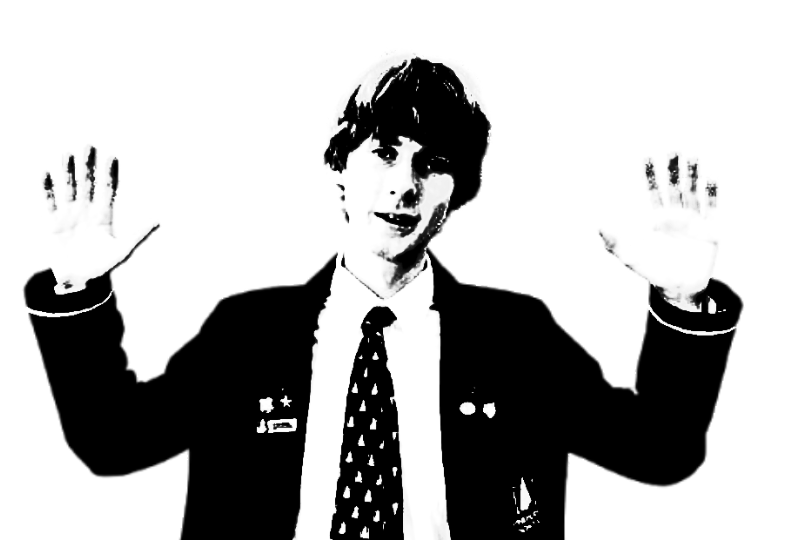
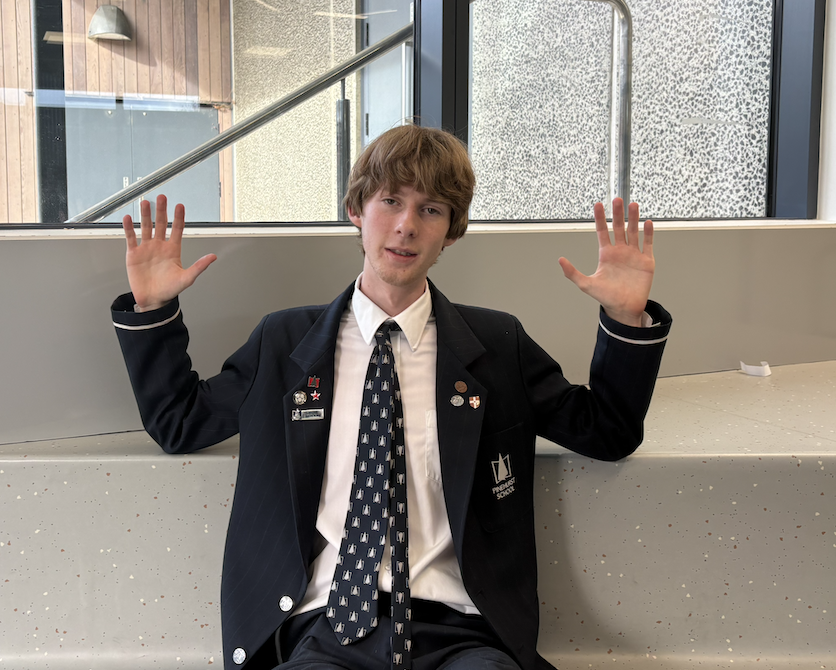
Joel then animated his hands for the logo opening:
Feedback:
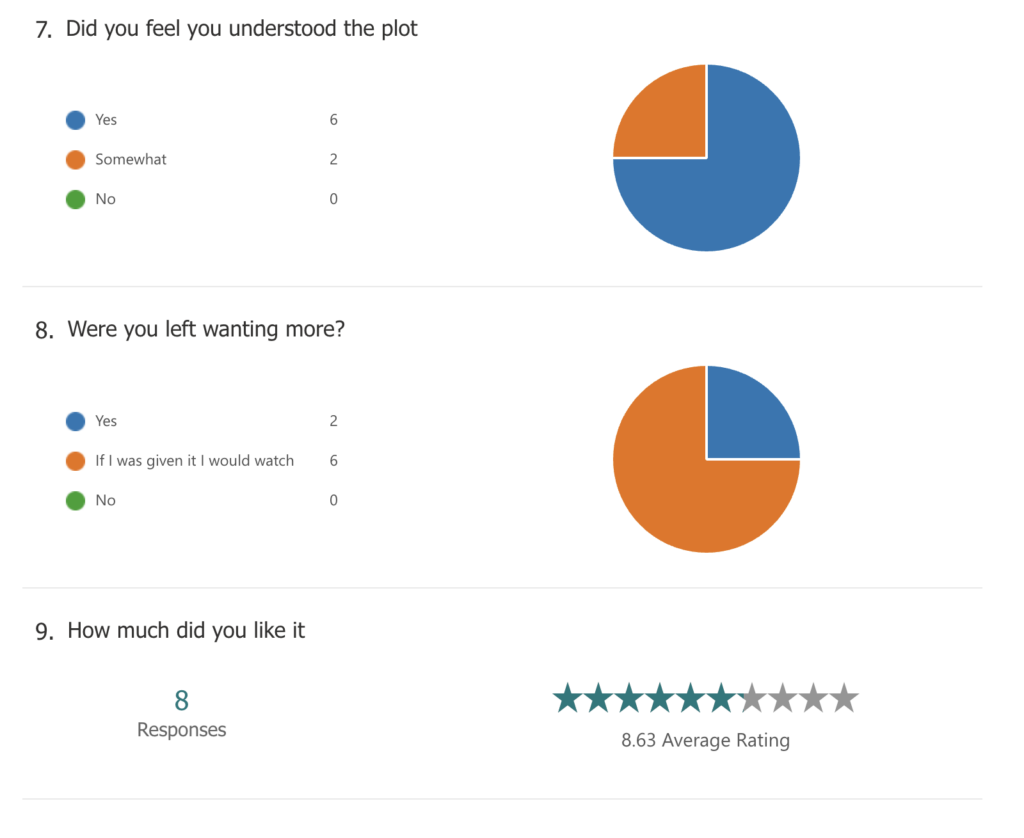
After finishing our draft, my group presented the film opening to the class and our teacher. We used a Microsoft Form to collect feedback, and 8 people responded. Overall I was really happy with the results, but there were also some useful critiques that helped us improve the opening before the final cut.
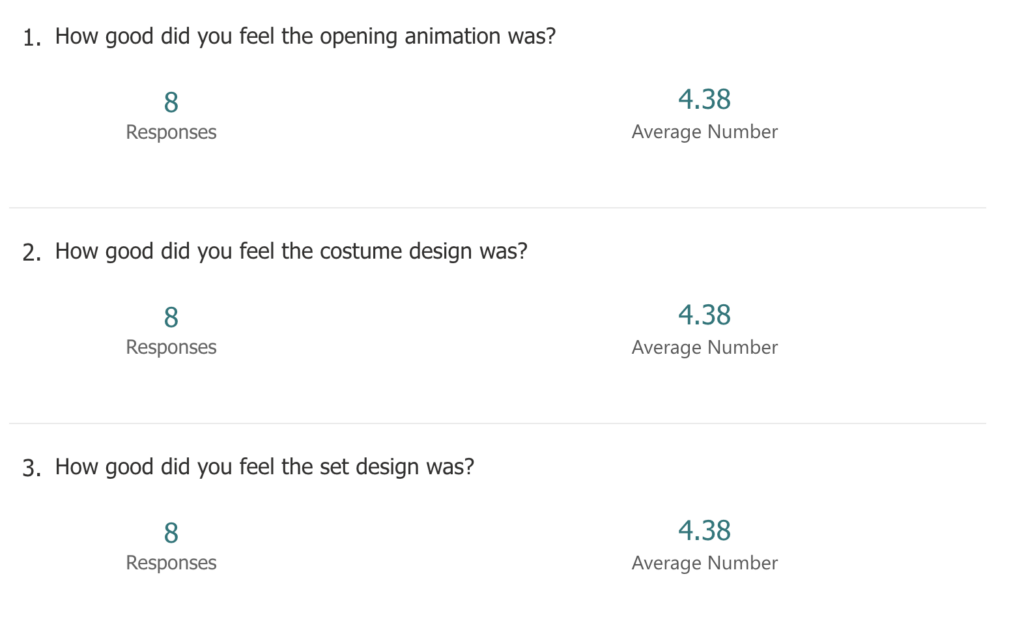
Opening animation – 4.38/5
The production logo animation was made by Joel, and I think it was very creative. The low frame rate hands give it an uncanny, almost stop motion feel, which fits the horror-mystery genre we were going for. I think the rating shows that the class agreed it set the tone well before the opening even started.
Costume design – 4.38/5
I think the costume design was pretty good. I portrayed my role as a detective well, with the smart jacket and lanyard making it clear Leah works for the police even though we cut the original police station scene. Joel’s casual outfit as #1 also looked a bit scary because it looked so normal, which made it creepier when he was just standing at the door watching Leah. One response said the costume design was good but they didn’t understand the “UN Youth” text on the lanyard. This was fair, since it was a real lanyard and the text wasn’t meant to be there, so Joel covered it with a mask in Premiere Pro.
Set design – 4.38/5
I was really proud of the set design, since I organised the location through family connections. Using an authentic Chinese restaurant made the setting feel real instead of looking like a classroom pretending to be a café. The fog machine created an intense and unsettling atmosphere, and one response said the beginning transition and set design was very good. Some people thought it was too dark for a restaurant, but this was somewhat intentional, as we wanted the audience to question why Leah was there in the first place.
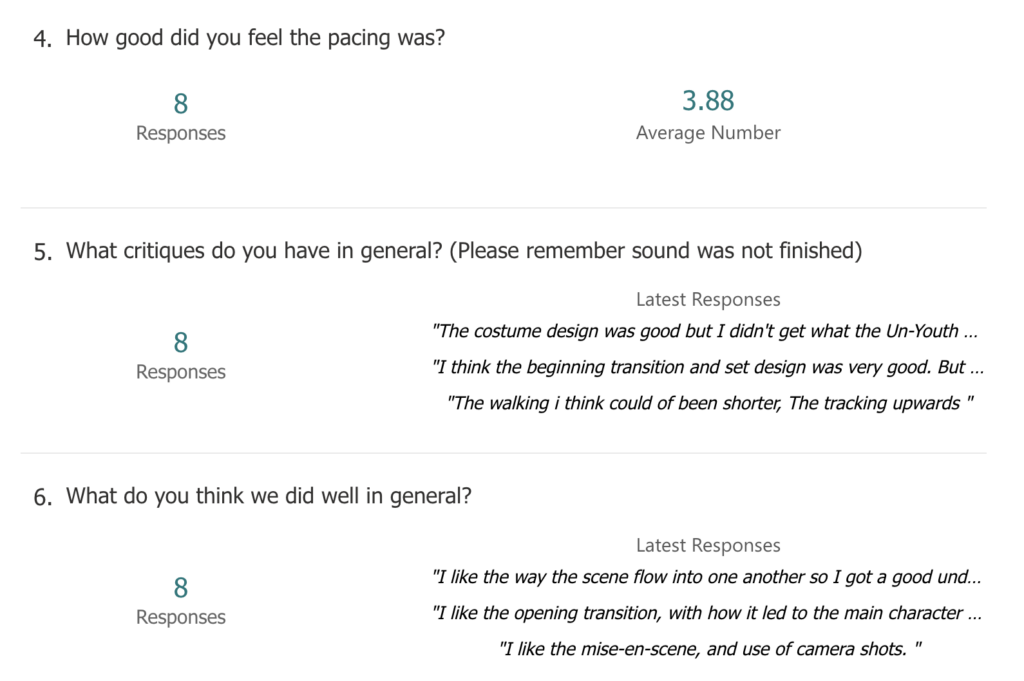
Pacing – 3.88/5
This was our lowest rating, but I still think it was a decent score. Joel’s editing on the pacing was steady, and it built tension slowly up to the ending. The main critique was that the walking scene could have been shorter. I agree with this, as the hallway scene took up time we could have used for building tension in the café. Joel fixed it by removing the cut back to me walking, while keeping the lanyard insert so the audience still knows I’m a detective.
Did you understand the plot?
6 people said yes and 2 said somewhat, and nobody said no. I think this is a good result for a mystery thriller, because we didn’t want to explain everything. Some questions were also left unanswered on purpose, like one response asking why Leah was looking at missing person files in a random restaurant. I think this creates enigma and makes the audience want to find out more.
Were you left wanting more?
2 people said yes and 6 said “if I was given it I would watch”, with no one saying no. I think this shows the hook at the end with the attack and title worked, but next time I would want more people to answer a definite yes. Finishing the sound design should help with this, since sound wasn’t finished at the time of the draft.
Overall reflection:
Reflection
Overall, this project has been one of my favourite experiences in Media Studies, and I’m really happy with how our final film opening turned out. Looking back at the whole production process, from brainstorming to the final cut, I think we managed to create an opening that fits the horror-mystery genre well.
My main roles were casting director, location scout and acting as Leah, the main character. At first I was also going to be the script writer, but after the mock filming we decided to take out dialogue completely. I think this was the right choice, because the silence made the opening more tense and let the micro elements like camera, sound and mise-en-scène tell the story. Location scouting was probably the role I was most proud of, as I used family connections to get access to Wong’s Kitchen on its day off. Having a real restaurant made the set look much more authentic than anything we could have made at school.
Acting as Leah was also a big step for me. In Preliminary Task 3 I said my acting was only serviceable, but this time I felt a lot more confident, especially in the close ups where I had to show fear without saying anything. Some of our best moments came from improvising on filming day. I suggested adding someone standing behind Leah and attacking her at the end, and even though Joel wasn’t sure at first, it turned out to be a strong ending that hooks the audience before the title.
There were definitely things we could improve. Communication was our biggest weakness, as it was sometimes hard to organise things outside of school because of extra-curriculars, and I was away when the film title was chosen. In my prelim tasks I said I wanted to improve communication in a group, and although we did better than before, I would plan meeting times weeks in advance next time. I also think we could have made the opening more believable, since a lot of feedback asked why a detective would read case files in a dark restaurant. While this adds enigma, a few small details could have made the story feel more realistic without giving away the mystery.
In the end, I think choosing group members with different strengths really paid off, which was something I learnt from the prelim tasks. Joel’s editing and animation, Bruce’s health and safety, and my casting and location work all came together into a final product I’m proud of.