Brainstorm Concept Creations
Inital Brainstorm
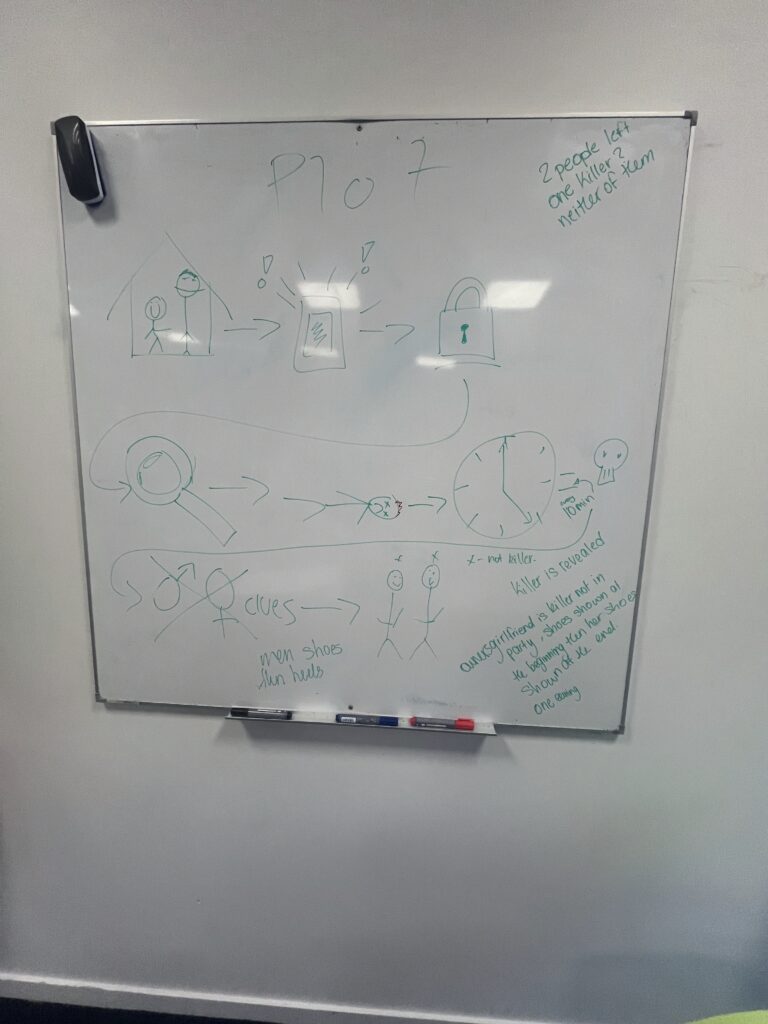
Our original plan for our A2 Media Studies short film was to make a mystery thriller about a typical basketball game night that rapidly turns into a scary evening. The narrative opens with five guys in the home of the main character, who is additionally referred to as the homeowner’s son, while his girlfriend is “away”. They discover that one of them may be connected to a murder after receiving a strange message from an alarm that sounds and takes them into a locked challenge. As the movie goes on, a countdown builds suspense and tension while the characters race against time to find clues, including evidence like shoes and other hidden facts. Which ultimately leads them to not escape but not find out who the killer is.
Second Brainstrom
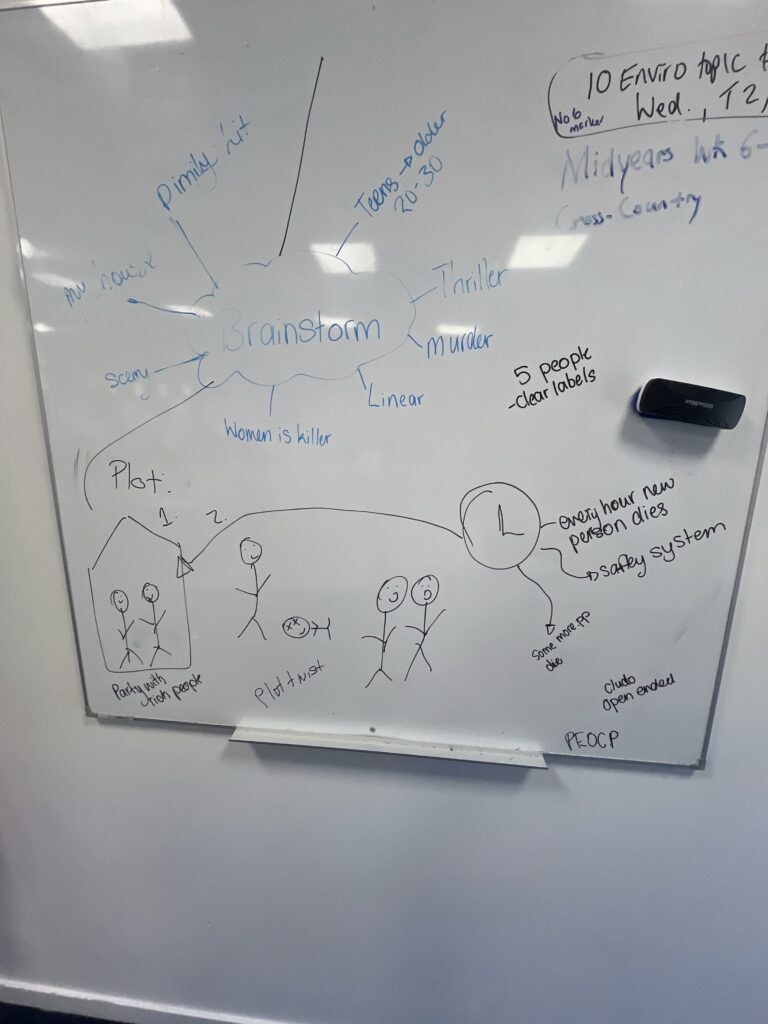
This brainstorm shows the early stages of our A2 Media Studies short film concept and how we arranged our ideas prior to developing a final plot. We used a mind map approach to planning, which enabled us to fast capture and link concepts without sticking to a strict sequence. After determining that the primary genre in the center was a murder thriller, we branched out into important conventions including a linear narrative, a female killer, a young target audience (about 17–22 years old), and a restricted setting at a home party. This kind of planning worked well since it encourages creativity and made it easier for us to see how different plot parts may complement one another.
We used basic lines and arrows to create a basic plot outline beneath the mind map. Our original idea was a 5 person party where a murder occurs, building conflict and distrust among the players. With the possibility of another person dying every hour (which we then changed to 10 min), the story’s timer heightened the suspense and forced characters to solve the mystery before the allotted time ran out. We also thought about using an open ending to keep the audience wondering what actually happened, and we planned for hints to be delivered throughout the movie. We were able to define the essential elements of a psychological thriller through this planning process, which also provided us with a solid basis on which to develop and improve our final production concept.
Original shot list and death list
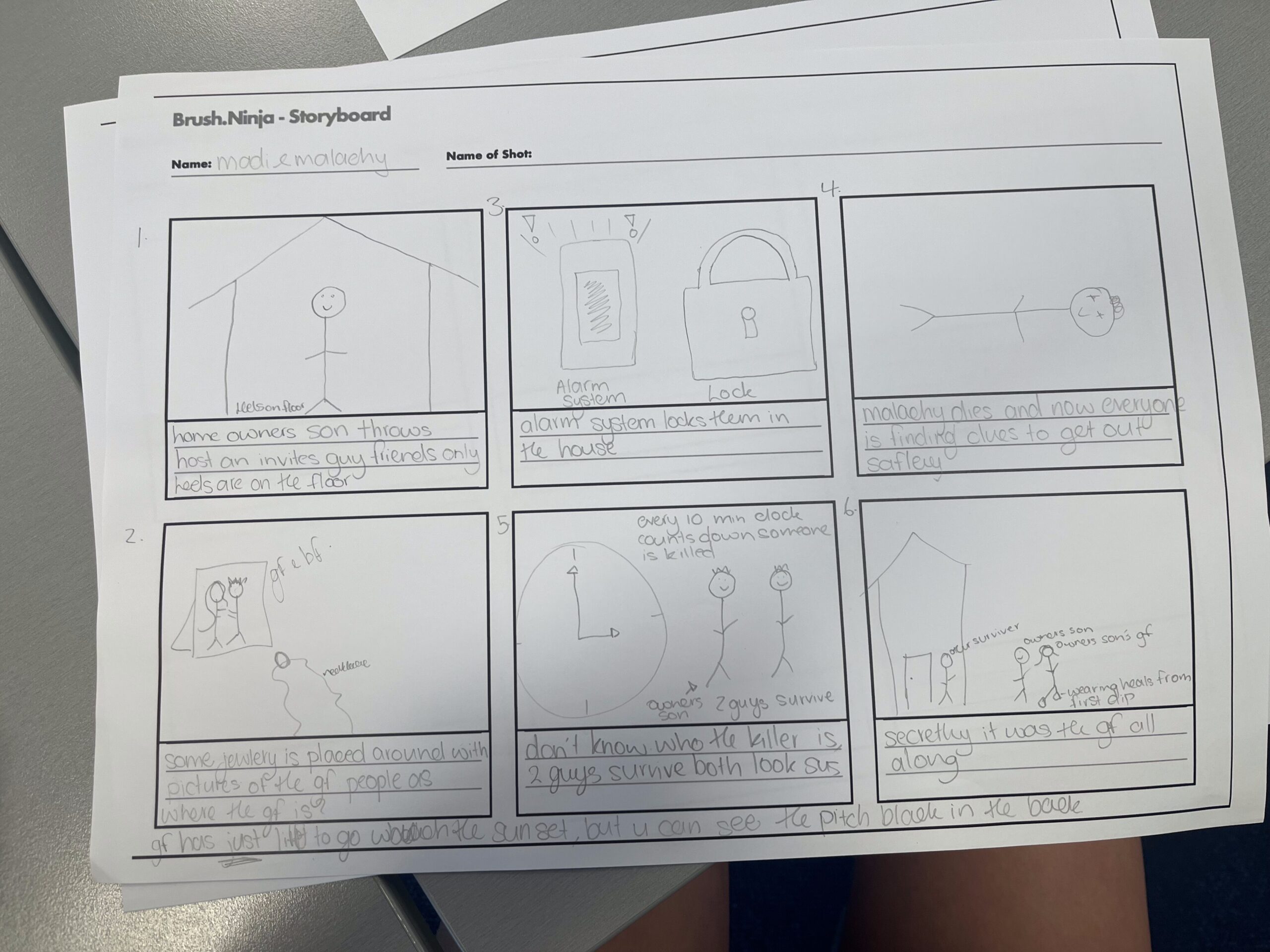
The creation of our original short film narrative and the sequence of the major events are depicted in the first storyboard. In order to establish a typical and familiar scenario for the audience, we planned for the story to start with the homeowner inviting his buddies over while his girlfriend isnt there. An alarm system then locks all the doors, trapping the group inside the property and creating a cramped, tense atmosphere. As the plot develops, one of the characters passes away, and the surviving pals must look for hints to get away and identify the murderer as even more people get murdered without an explanation. In order to heighten the suspense, the storyboard also features a countdown clock, implying that failure to solve the riddle could result in the death of another person. A storyline surprise when the audience learns that it might have been the girlfriend’s idea all along is hinted at in the last frame. We were able to visualize the plot and determine how to employ suspense, mystery, clues, and an unexpected conclusion by making this storyboard.
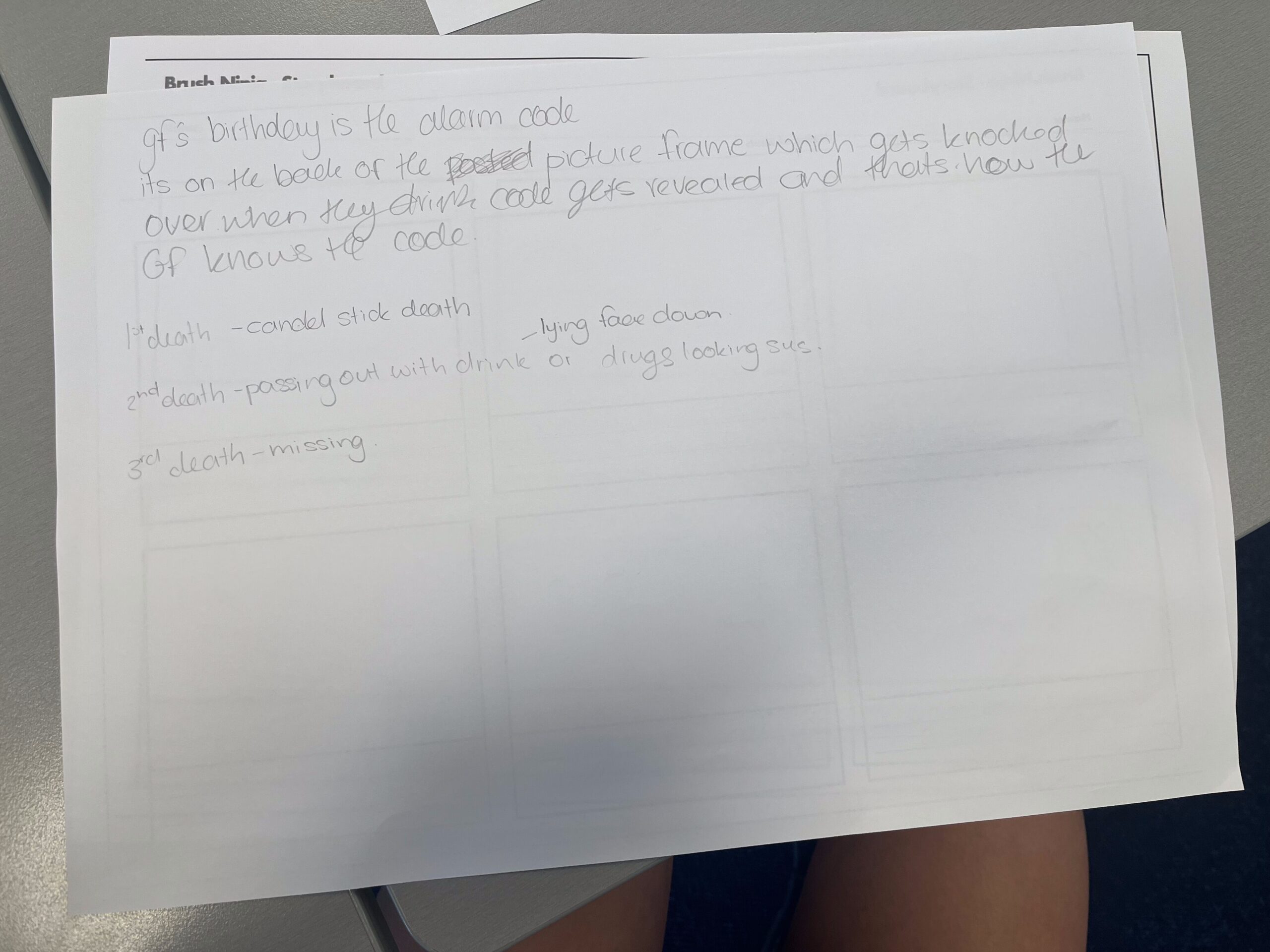
The second storyboard focuses on the hints that will enable the viewer to solve the mystery while elaborating on the plot’s specifics. We intended for the alarm code to be the girlfriend’s birthday, which would be concealed in a knocked-over picture frame that the characters would find out later in the movie. We also came up with several theories about how the victims would vanish or pass away, such as one death involving a candlestick, another that seemed to be brought on by drugs or alcohol, and a third that just vanished. As part of our planning process, these concepts helped us consider how to build tension while keeping the audience in suspense.
FeedBack we received
We got our class to give us feedback on out shot list so that we could see if the plot actually made sense or if it was just us being biased. Getting feedback from our teacher and classmates, made us realise that the plot didn’t fully connect. Especially when it came to the murders and how they happened, when and where. It was very obvious that it needed some tweaking and fixing but overall everyone liked the idea so far. An example of this was when Kai got killed, the question was, was he going to actually be murdered and for that to have been shown? Or was it that we were going to have to make him disappear since we didn’t have enough time and we felt although we already had enough for the short film and we didn’t want to over complicate the plot. I then created the updated shot list so that our new ideas and connections made more sense and we could actually see it in a practical way.
Updated shot list
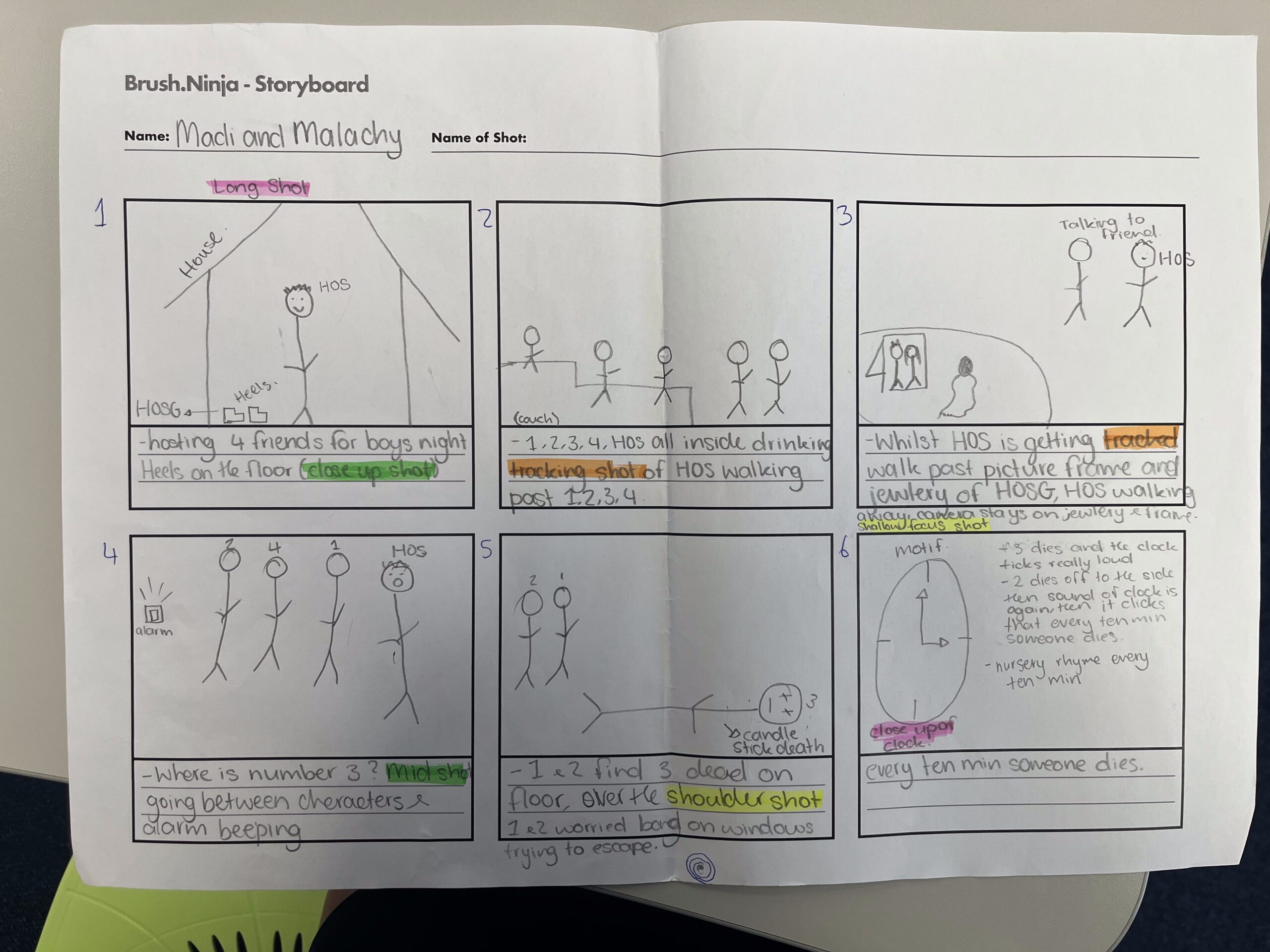
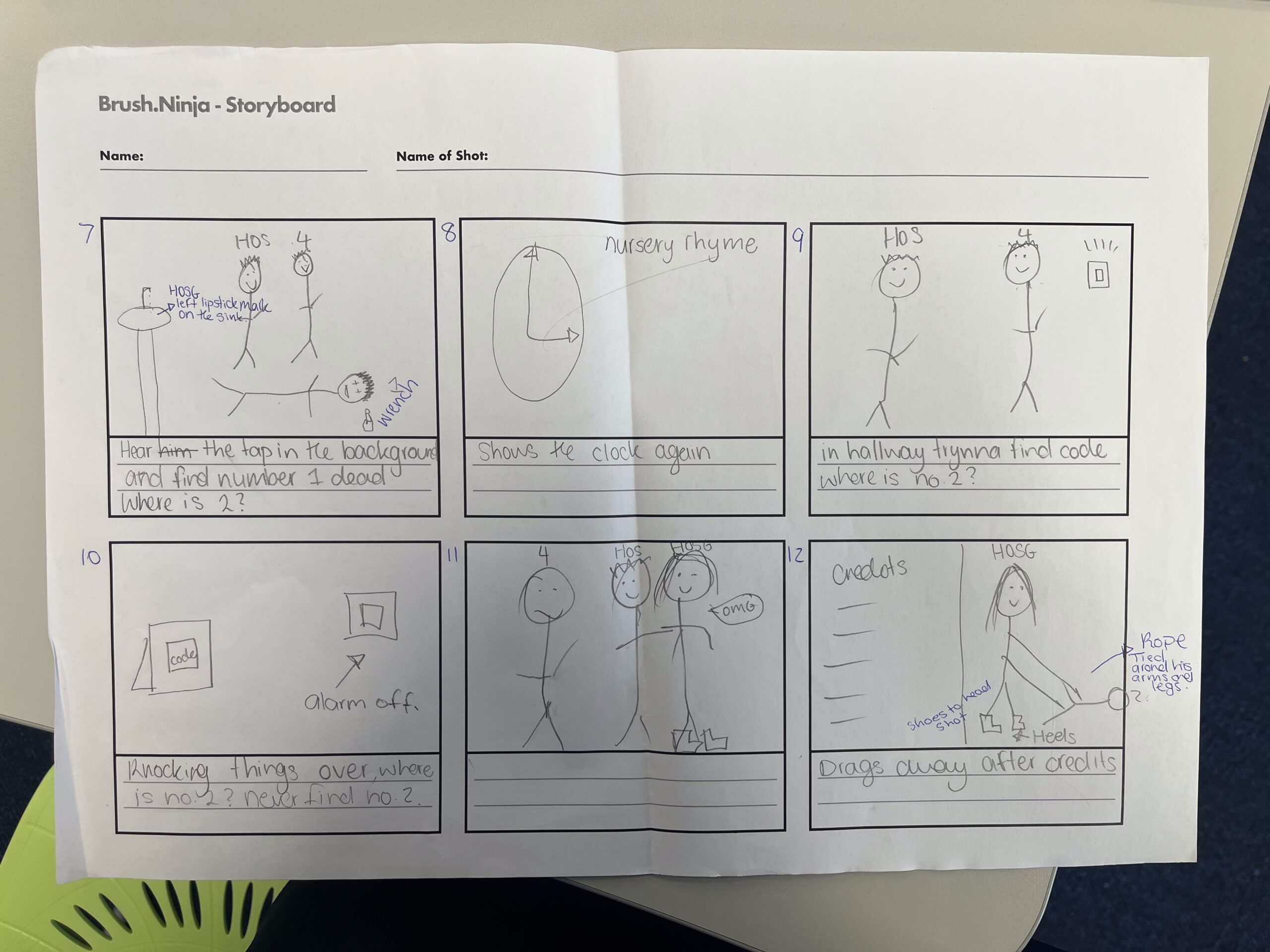
1st Page
We changed our shot list after finishing our first storyboard to make our concepts more specific and useful for filming. The particular camera angles and shots that we intend to employ are included in this version, including long views, close-ups, tracking shots, mid shots, over the shoulder shots, and shallow focus pictures. We were able to consider how to create tension and direct the audience’s attention to crucial hints throughout the movie by organizing our camera work beforehand.
1st Page
The setting and characters are introduced in the first part of the storyboard. Subtle indications, like a pair of heels on the floor, suggest that something is off as the movie opens with a long shot of the house and the homeowner holding a boys night. A tracking shot shows the homeowner passing a picture and jewelry that will eventually be crucial pieces of evidence as the characters mingle. When one of the characters abruptly vanishes, the alarm system goes off, keeping everyone within the house and causing panic.
2nd Page
Creating suspense and mystery is the main goal of the second section of the shot list. While searching the house, the remaining protagonists find dead bodies and attempt to figure out what is going on. Because someone passes away every ten minutes, the viewer is reminded that time is running out through repeated close ups of the clock. As the survivors look for clues and try to flee, the use of sound, such as a ticking clock and a nursery rhyme, contributes to the ominous mood and heightens the suspense.
2nd Page
While certain issues remain unanswered, more of the enigma is revealed in the final moments. The viewer is kept in suspense as one of the missing boys is never located, despite the characters discovering the alarm code by knocking over a picture frame. The movie first seems to finish with the credits rolling, but in the last scene, the girlfriend is seen pulling a body away, indicating that she was complicit the entire time. By updating our shot list, we were able to enhance the narrative’s structure, incorporate a greater variety of camera approaches, and guarantee that our movie adheres to the standards of a psychological thriller with tension, concealed clues, and an unexpected conclusion.
Character clothing the original
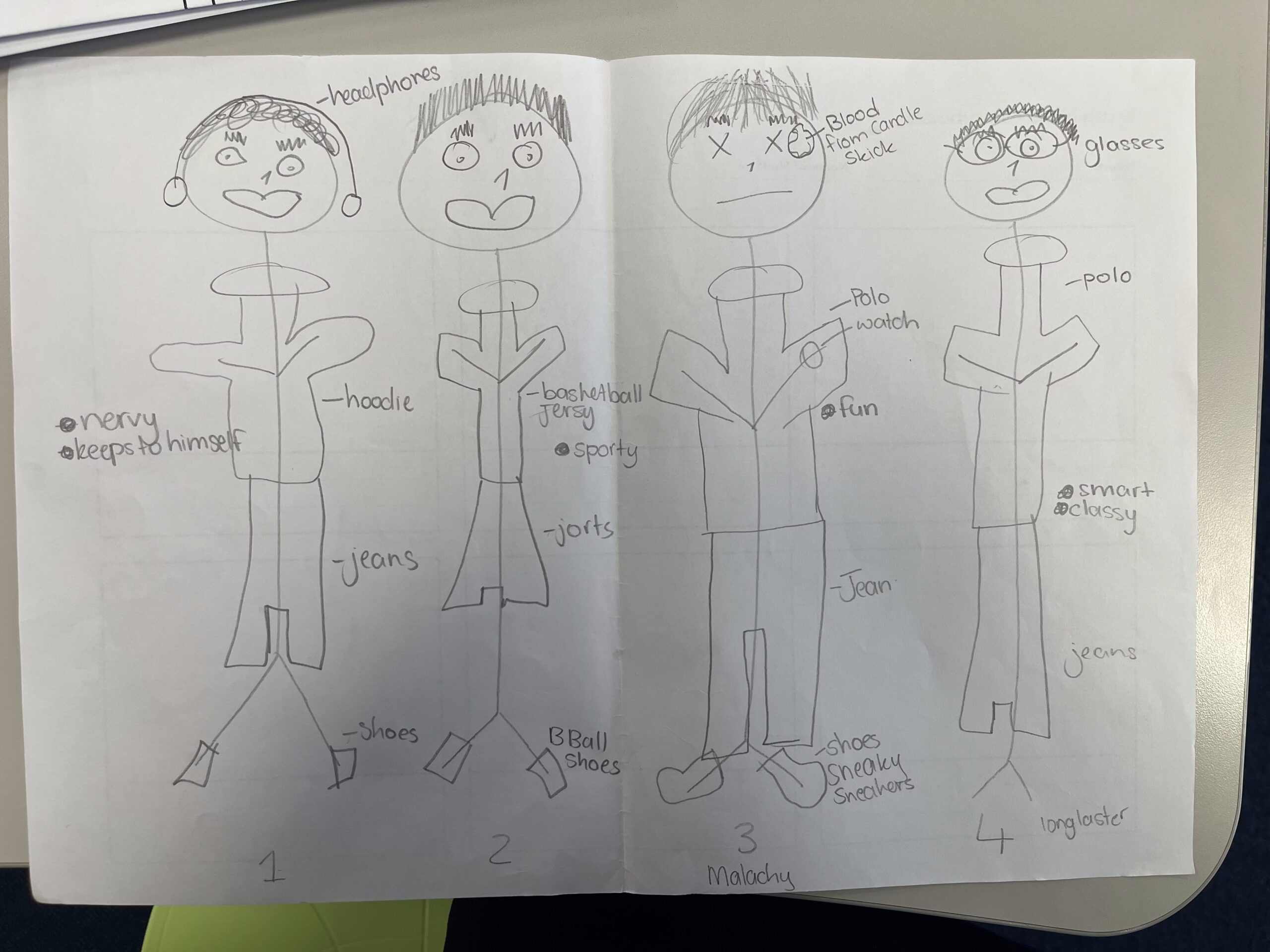
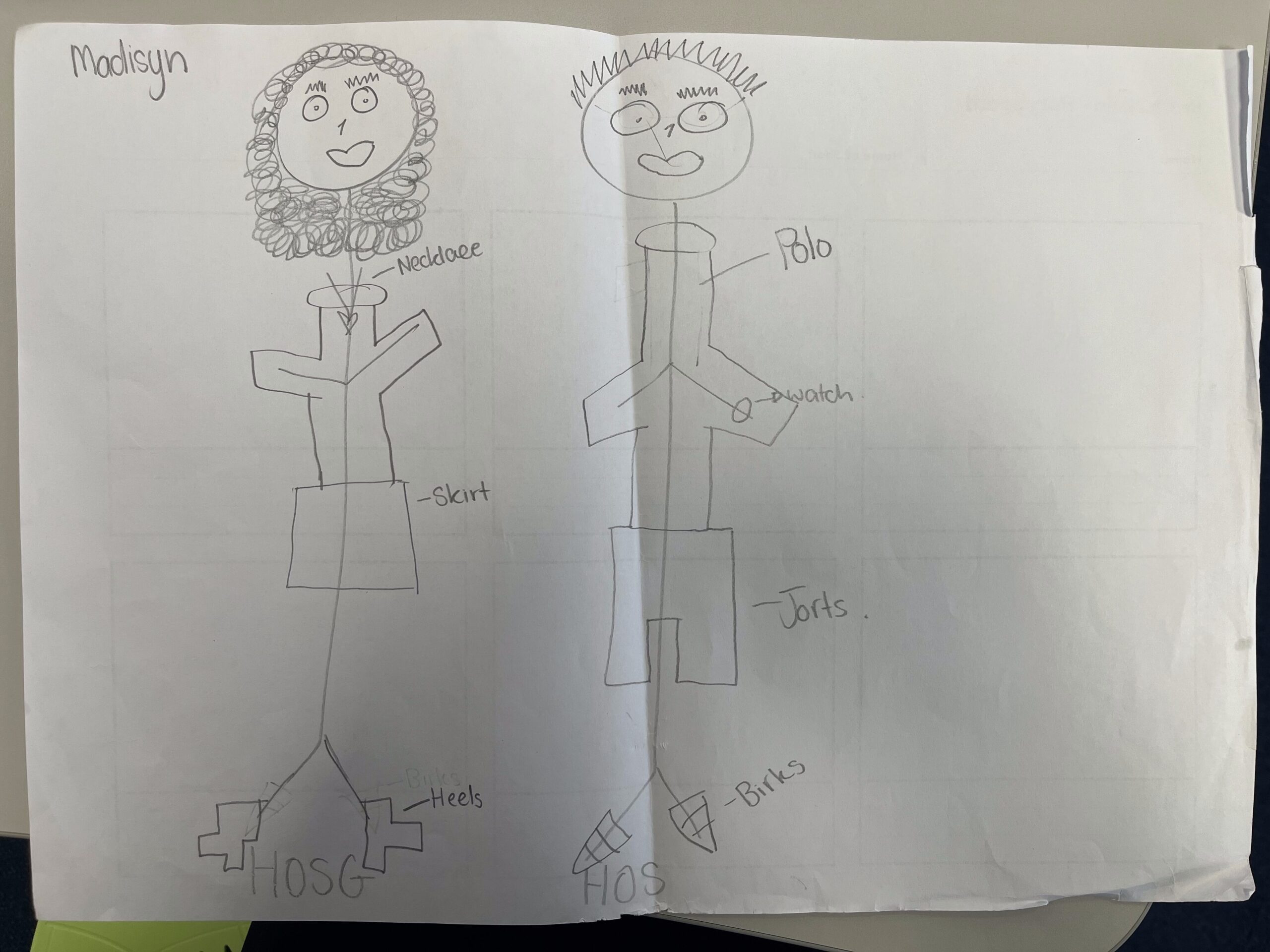
To gain a clear understanding of the expectations and requirements for the costuming in our short film, i have decided to develop a series of costume sketches based on the characters and overall aesthetic that we wanted to establish. These designs explored different clothing options, colours, style and combinations that I believed worked best with the overall vibe. Creating these initial costume concepts allowed us to visualise how each character was going to be presented. I wanted each outfit to reflect the individual personality, of the characters rather than making them look identical. For example Jaxs outfit incorporated sporty clothing to reflect his athletic personality, while Julians more academic and structured clothing reinforced his intelligent and studious character. This then came to life exactly how I envisioned it for our actual film.
Mood boards for each character with clothing and description of their demeanour.
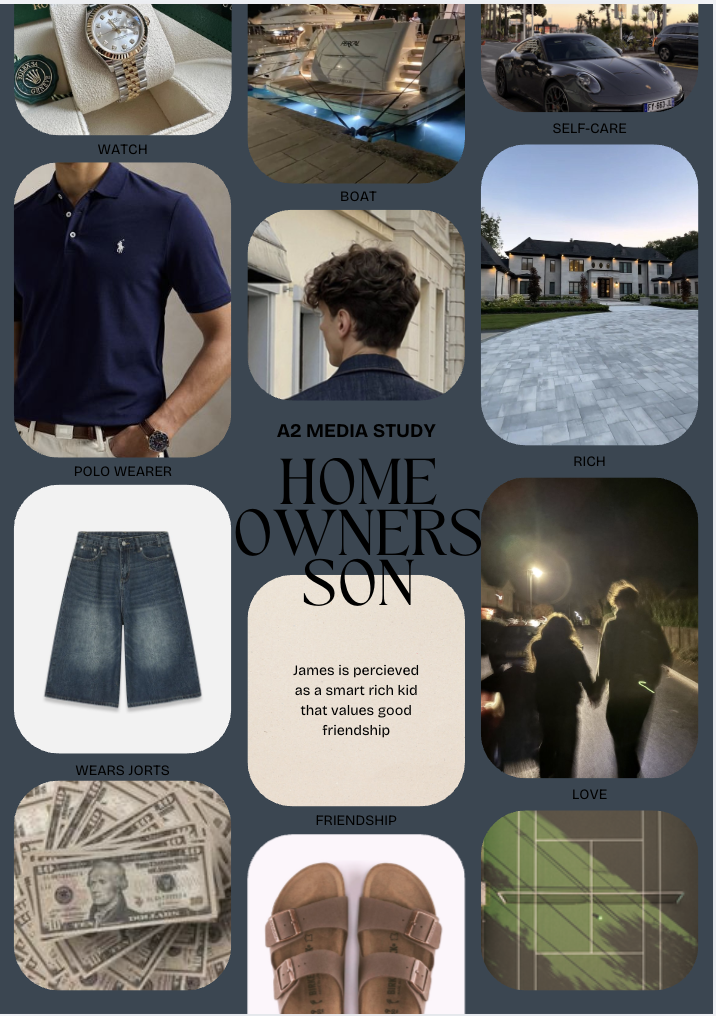
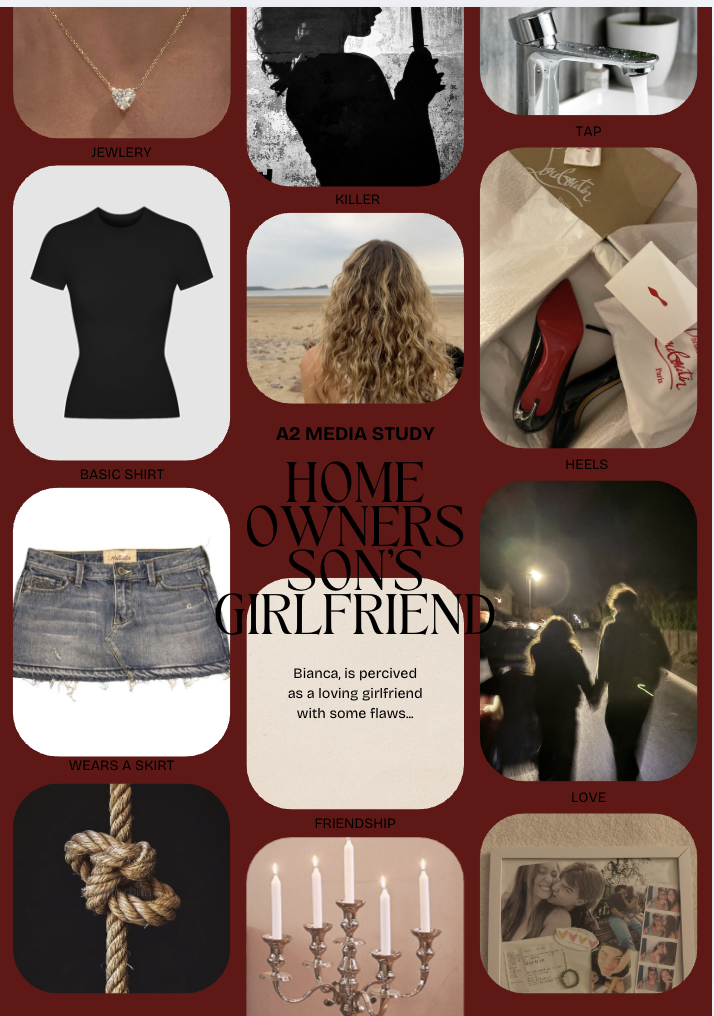
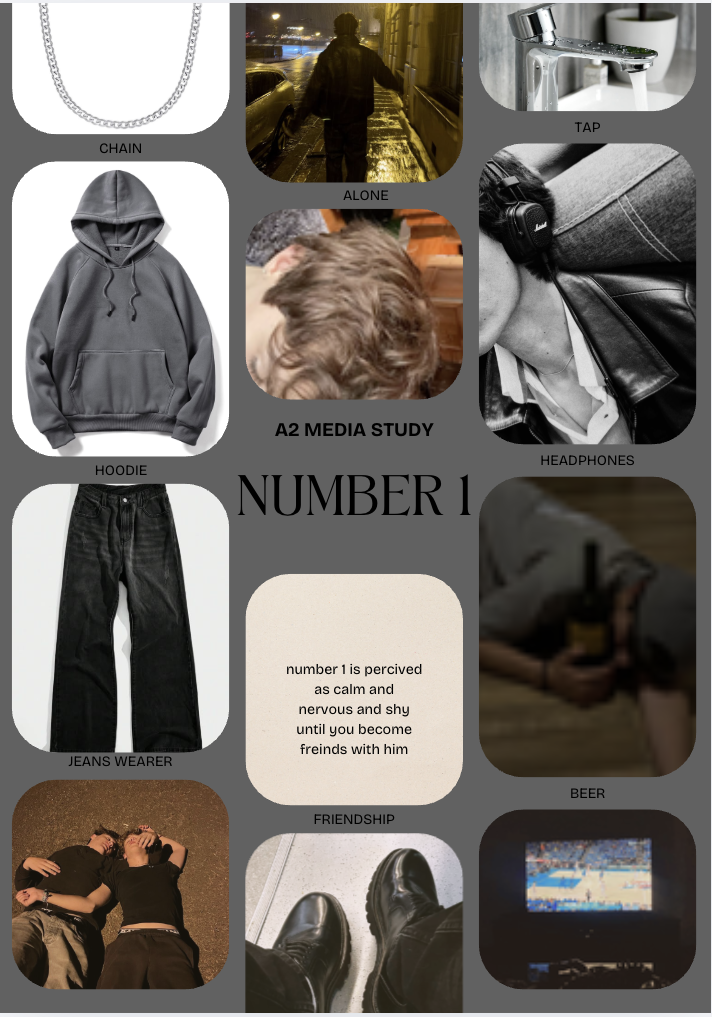
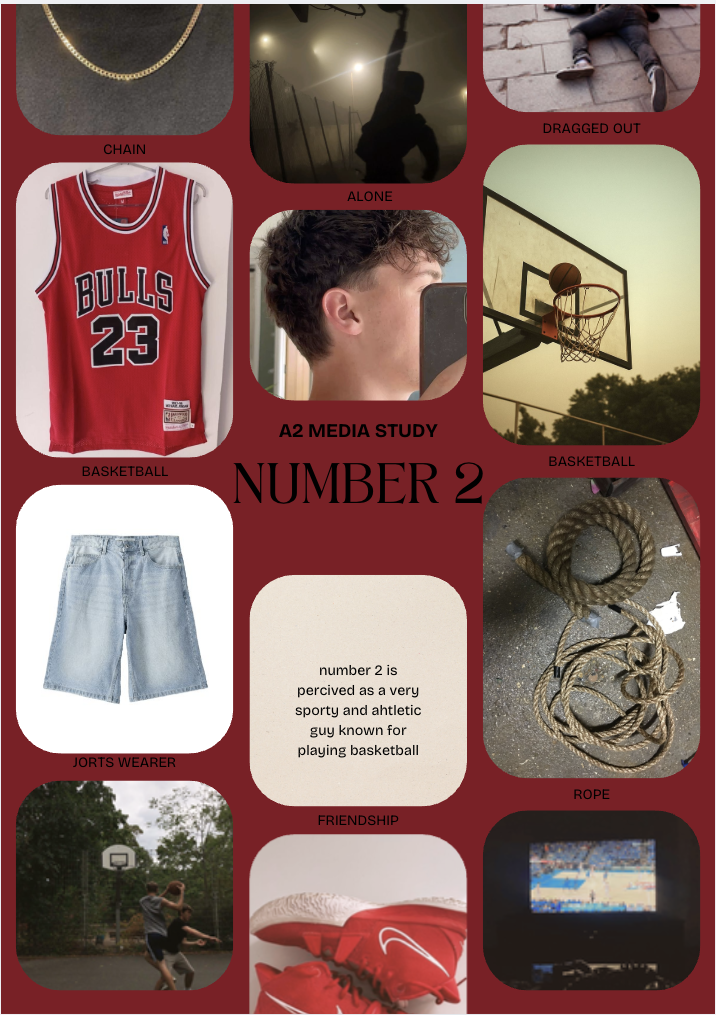
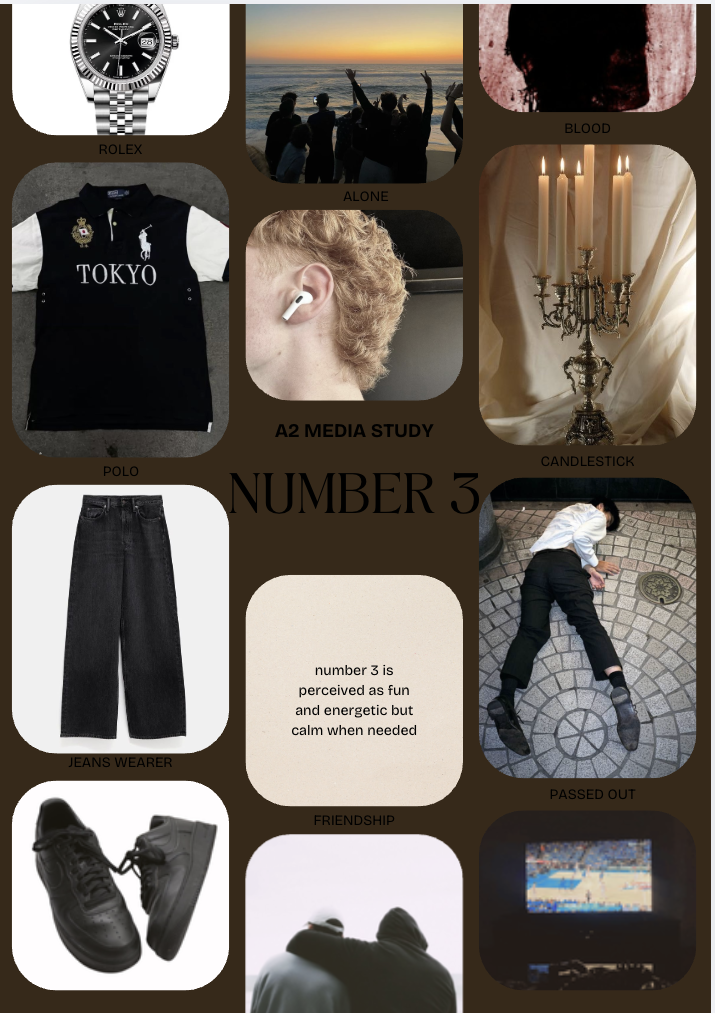
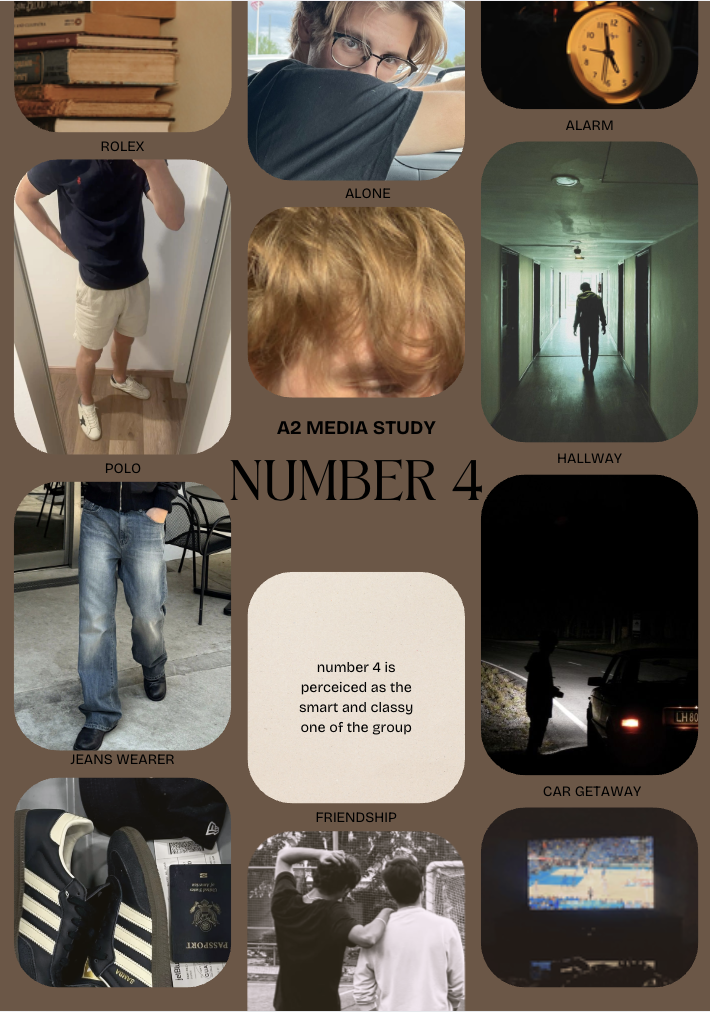
I created individual mood boards for each character to establish a representation of wealth and privilege. Although the characters have different personalities, I wanted all of them to appear wealthy through their clothing, neutral and clean colours, branded clothes and polished outfits to communicate that they come from wealthy families. This is important because their wealth contributes to the representation of them as sheltered and carefree teenagers who have access to opportunities and resources that others may not. The mood boards also helped differentiate their personalities while maintaining this shared wealthy identity. For example Jax’s sporty clothing reflects his athletic personality, Julians more formal and academic appearance represents his intelligent and studious character.
Prop List
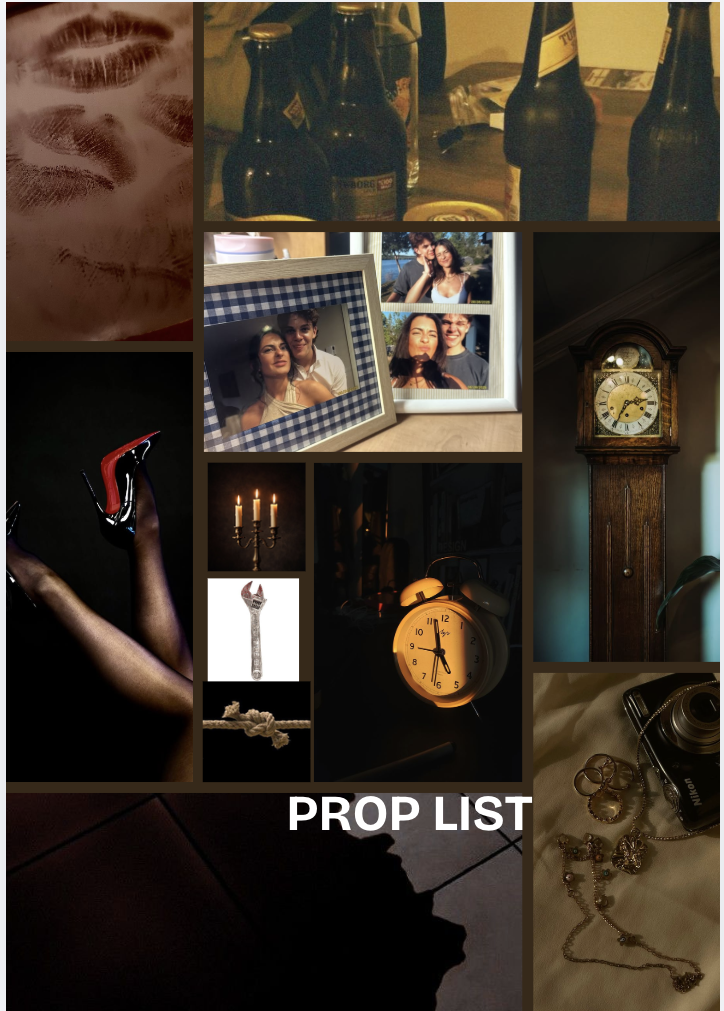
I created a prop list based on our original prop list following the conventions of the board game Cluedo to help establish the murder mystery. This included candlesticks, clocks, rope and a wrench, which were deliberately selected because they are associated with the weapons and objects from Cluedo. These props helped to create audience expectations and made the film feel like a modern adaptation of the classic murder mystery game. I also used jewllery to reinforce the wealthy representation of the characters. This also helped to add a clue to who the killer was. The red heels were particularly significant as they became an important visual symbol connected to the female character and the mystery surrounding the murders. Their distinctive appearance allowed the audience to recognise the character through the prop before the final reveal. The use of these props supported both the narrative and the visual style of Host, while helping establish themes of wealth, deception, mystery and betrayal.
Original prop list
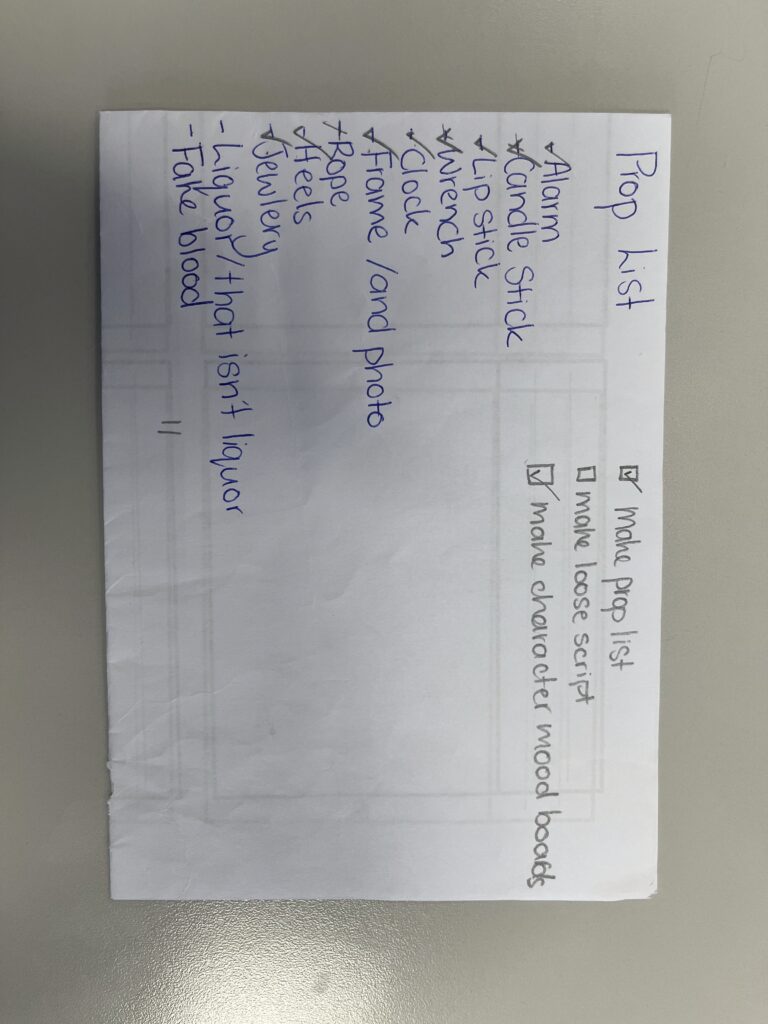
The original prop list during the planning stages was made to identify the key items we would need for filming and to ensure they connected to the Cluedo inspiration behind Host. The list included props such as candlesticks, a wrench, rope and clocks. Which were recognisable objects from the board game and helped establish the murder mystery genre. I also identified jewellery and the red heels as important props to support the characters and their wealthy appearance. Planning these props in advance allowed me to source the necessary items before filming and ensured that they could be incorporated effectively into the narrative and visual style of the film.
Original actors list
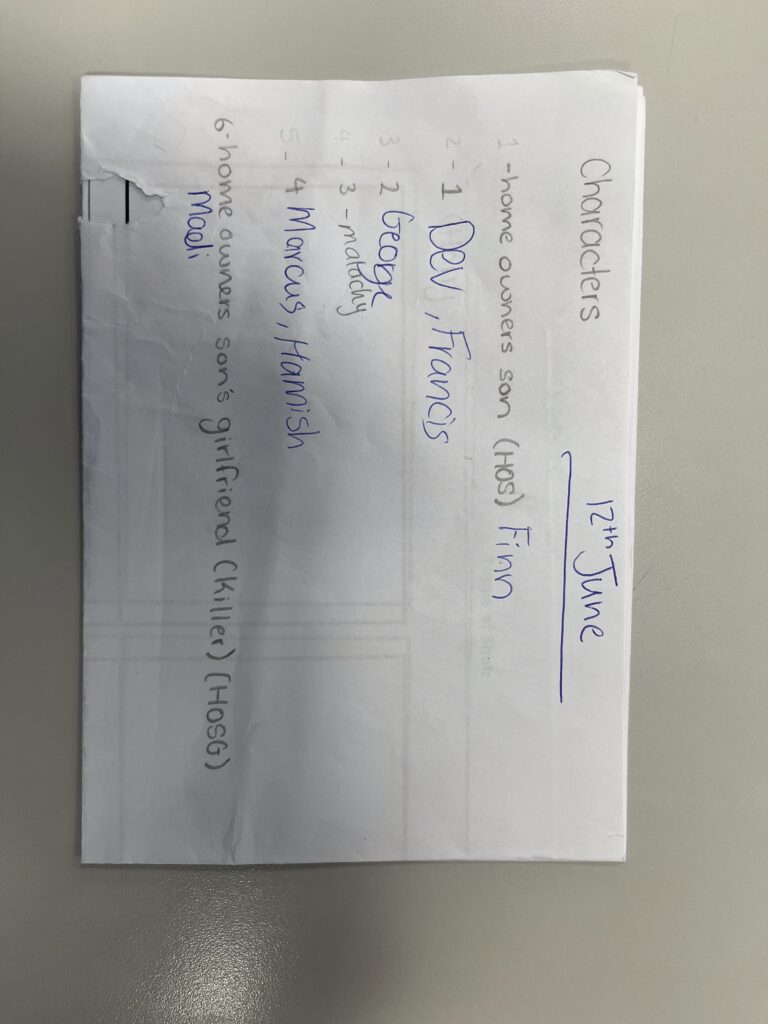
I also created the original actor list during the pre-production to organise the people we were considering for each role. This allowed us to find suitable actors for the roles that at the time were not named yet. I contacted and organised the potential actors before filming and worked around everyones availability to ensure we could assemble the cast. Creating the list helped make the casting process more organised and ensured that we were actively considering how each actor could contribute to the overall quality and believability of the short film.
Location scouting
For the location scouting process, we quickly decided that my house would be the main filming location for “Host”. We choose it because it suited the wealthy characters, while also providing enough different spaces to film the various scenes. My house gave us access to areas such as the living room, hallway, bathroom, garage and office, which allowed us to create visual variety without needing to travel between multiple locations. Using my house also made the production process more practical, as we had control over the space and could arrange the environment and props to suit our shot list. The location therefore became an important part of establishing the films atmosphere.
Health and Safety
Because we filmed at my house, we were able to assess the location beforehand and identify potential hazards in each area we planned to use. We made sure walkways, hallways, and filming areas were kept clear of unnecessary objects so that cast and crew could more around safely, particularly during scenes involving movement, like the car scene and the hallway scene. Props such as the candlestick, wrench, rope and fake blood were handled carefully and only used as fictional props. We also made sure that any water used for the bathroom scene was controlled to prevent slippery surfaces. The filming equipment was positioned carefully to avoid creating trip hazards, and we ensured that everyone knew the filming areas and where they could safely move. Overall planning the health and safety of the location allowed us to create the film safely while still achieving the visual effects and atmosphere we wanted.
Scripting
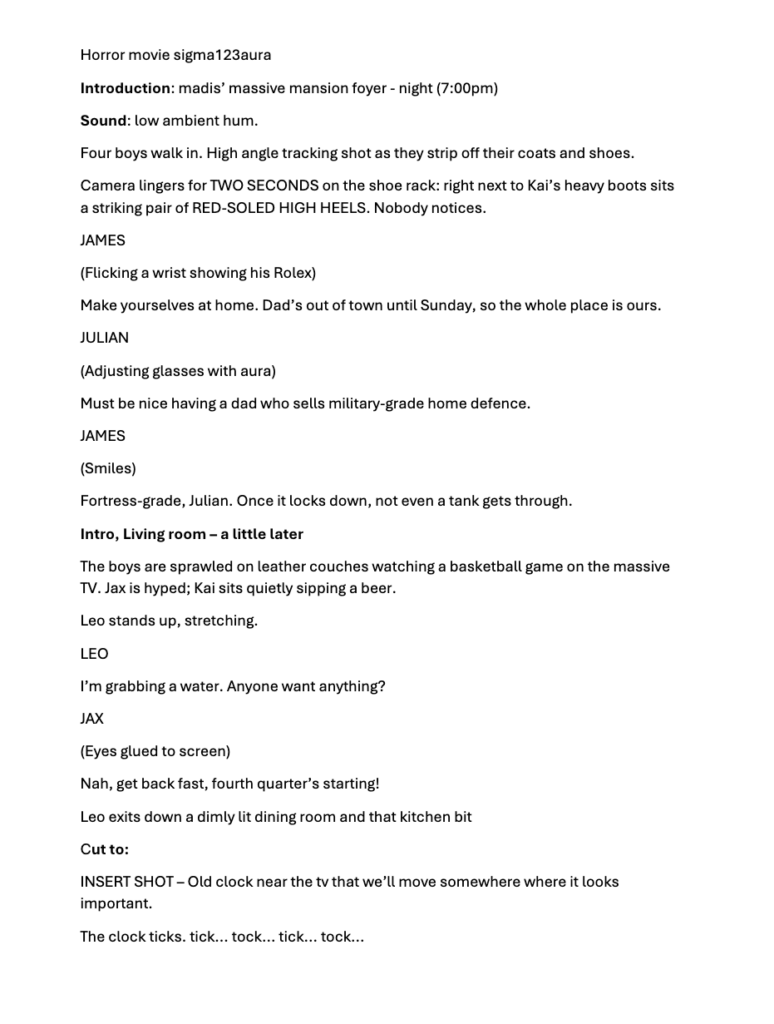
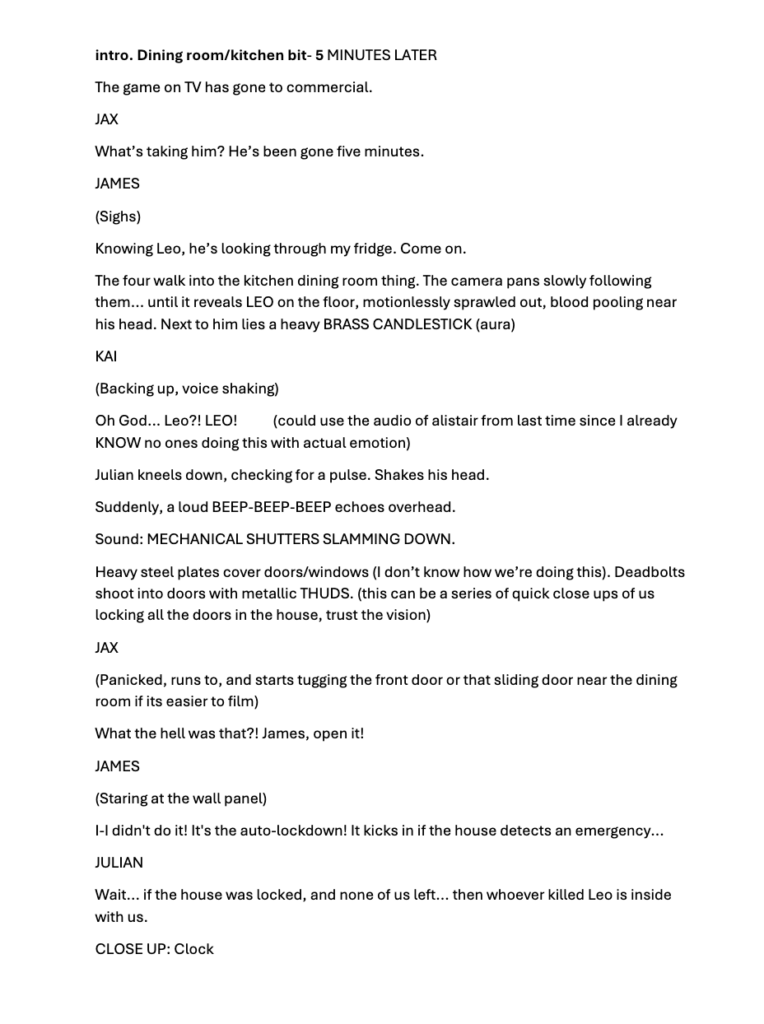
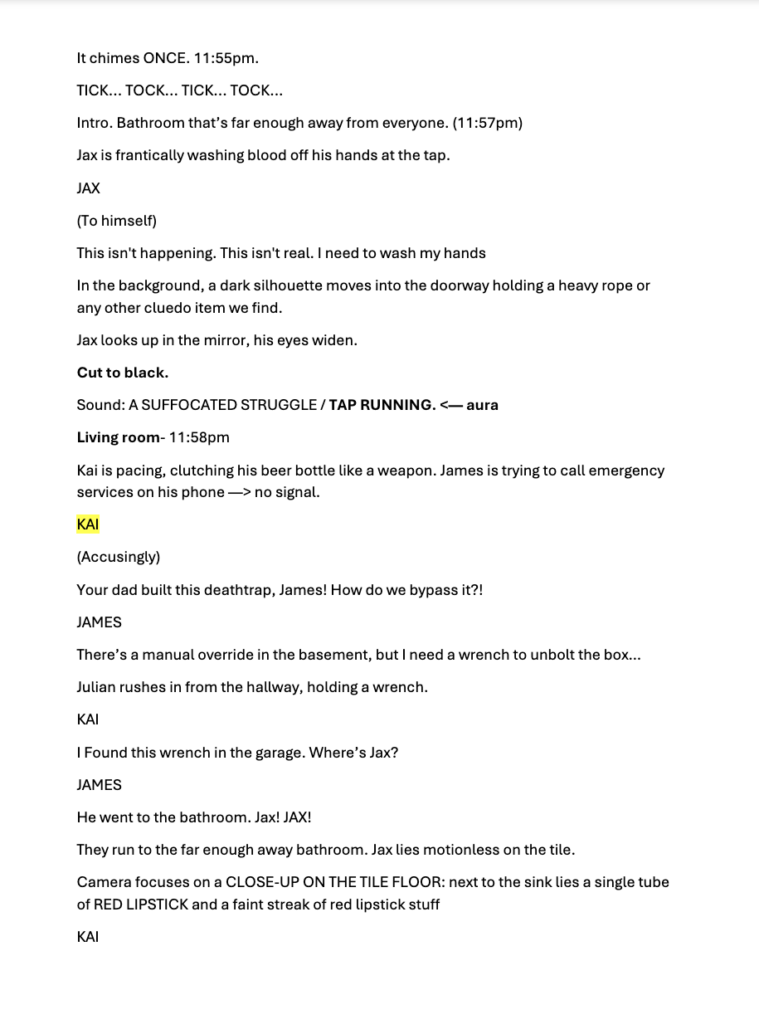
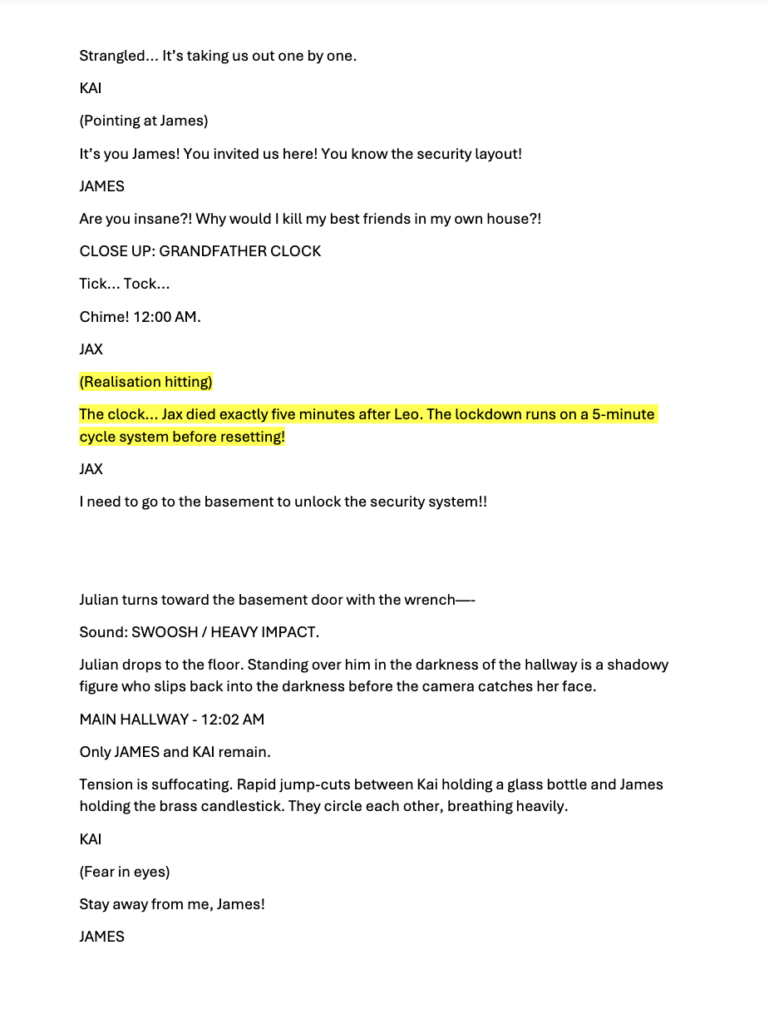
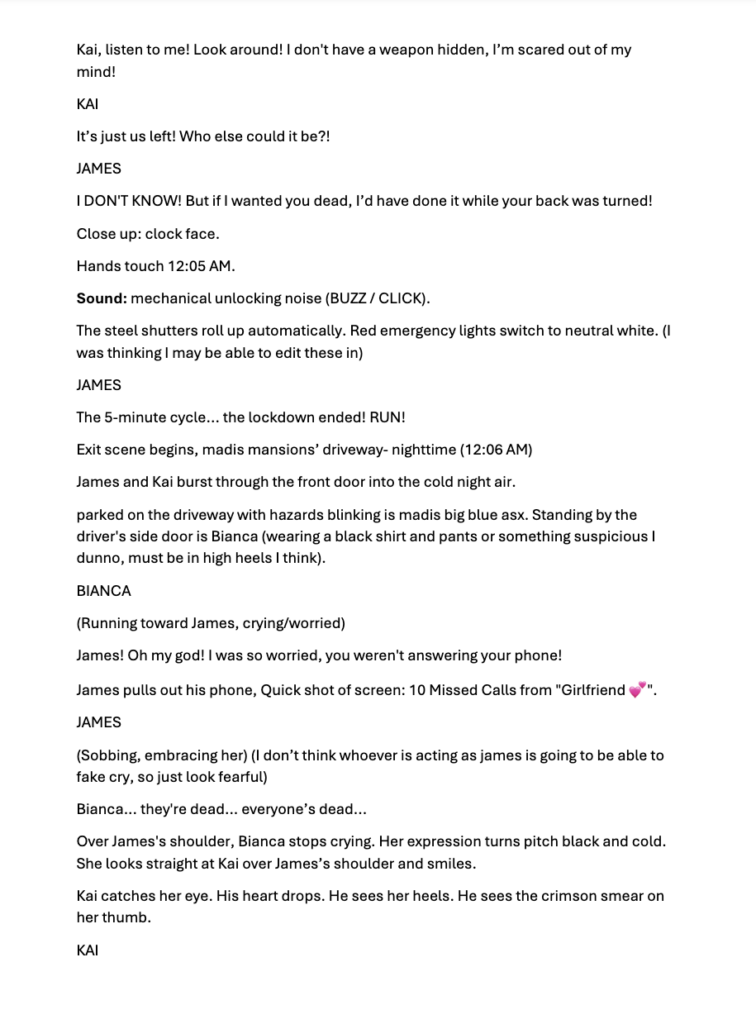
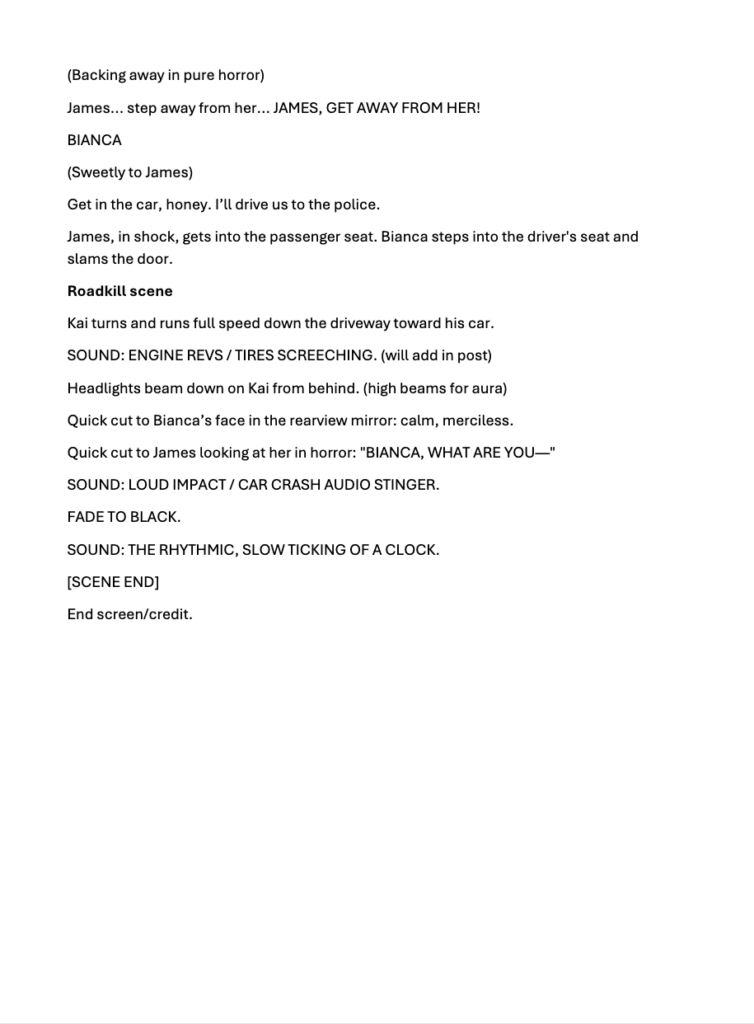
The script for Host was developed collaboratively, with me contributing heavily to the initial ideas and structure of the story. I helped turn our original concept, inspired by Cluedo, into a structured screenplay with clear characters, dialogue, and events. I helped ensure that the script connected with our shot list and available location, meaning the scenes were realistic for us to produce at my house. Developing the script before filming gave us a clear structure to work from while still allowing us to make adjustments and improvements during production.
Filming Process
1st time filming
Our first time filming session included Alistair, Hamish, Guy, Tristan, Malachy and I. However, we began filming without having a script which meant the actors had to improvise which set back production and made things harder. Everyone also wore clothing they already had at home and did not really follow the mood board, which meant the characters did not have the consistent wealthy appearance. We also experienced technical issues because the camera was not working, so we had to use peoples phones to record instead. We managed to film all of the planned scenes in about 3 hours, however we did have to simplify and cut certain parts, including the final car scene. Another problem we faced while filming was that once Malachy’s character died (which was in the 3rd scene) he did not participate in the remaining filming or help with the directing or recording. After reviewing the footage, Malachy felt that the quality and overall appearance were not what we wanted, so we decided to film again.
2nd time filming
For our second filming session, Malachy brought costumes that were much more closely matched to the character mood boards and outfit drawings I had made. This made the characters look more consistent and helped strengthen out representation of wealthy teenagers. However, getting everyone changed and organising the costumes took over an hour of our 3 hour filming period. Leaving us with only 2 hours to film. We managed to complete approximately five of the eighteen scenes, before Hamish had to leave. This created a huge problem because we had not yet reached his death scene, which was important to the narrative as he was the second character to die in the bathroom. Although the costumes and visual style were significantly improved compared with the first attempt, the limited time meant we could not complete enough of the production and would need another filming session.
Third filming session
During the third filming session, Hamish was unable to come, while the rest of the cast and crew was available. To avoid repeating the costume delays from the previous time, Malachy arrived around 30 minutes early to prepare everyones costumes and film additional B-roll footage. This meant that the rest of the group arrived we could begin filming a lot quicker than previously. We focused on filming all of the scenes that did not require Hamish. However, we still could not recreate the scenes involving Hamishes character after his death, particularly the bathroom scenes. This meant that the only footage we had for those scenes remained from the first filming session, which Malachy had previously decided he was unhappy with. Overall, the three filming session demonstrated how planning, communication, equipment, costume preparation and cast availability significantly affected out production process.