Planning
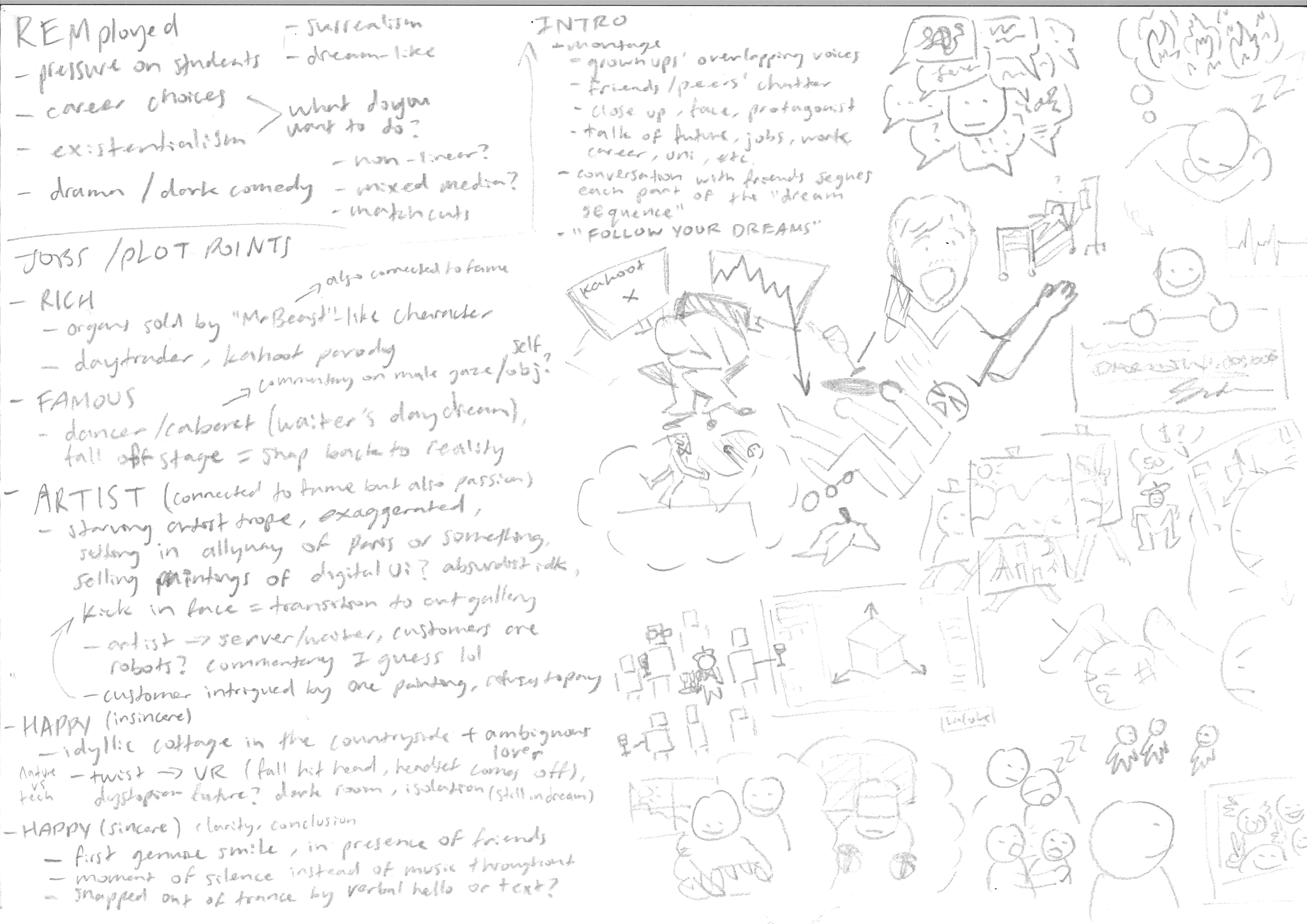
Initially I looked at narrative prompts to get a sense of what my film should be about. However, I found them to be overly generic and did not connect with them. I decided to pull from my own experiences. I incorporated my love for absurdist mixed media and my worries of the future. My previous interest in dreams and the subconscious also played a part in developing the film’s concept. Combining teenage angst and surrealist visuals became a major goal.
I was largely inspired by Everything Everywhere All at Once (2022) and The Amazing World of Gumball (2011) but also my other research informed my choices when making the film.
Through visual brainstorming, I narrowed down my ideas, sketching out scenarios for the protagonist, potential careers featured in the dream sequence and interactions with other characters.
I came up with the title of the short film quite early on when the concept had been first developed. I thought R.E.M.ployed was funny as a both a pun and a portmanteau of R.E.M. and employed, combining aspects of dream and work into the title. I found that both pronunciations worked with the play on words.
Script
As I began writing the script for R.E.M.ployed,
I had written out major plot points and then used that to shape dialogue. I intended to include certain lines with thematic relevance and potentially social commentary but not all made the cut. When shooting began the script was not entirely finalised, but as scenes were filmed over many days, the portion needed for each shoot was usually complete. I had actually filmed the opening montage first, when I had only written lines for that particular scene.
Before casting, the script was written with a male protagonist in mind. Although during initial planning the protagonist was female. In the end, Tara was cast as the protagonist and changes were made to the script to be less andro-centric. Certain dynamics within scenes and the greater narrative had changed. For example, the reversal of roles in the dance scene and whether tropes were reinforced or subverted (the historical portrayal of woman as overly emotional or prone to hysteria, i.e. the character archetype of the madwoman, or the arts being viewed as stereotypically feminine in spite of a male dominated field).
Storyboard
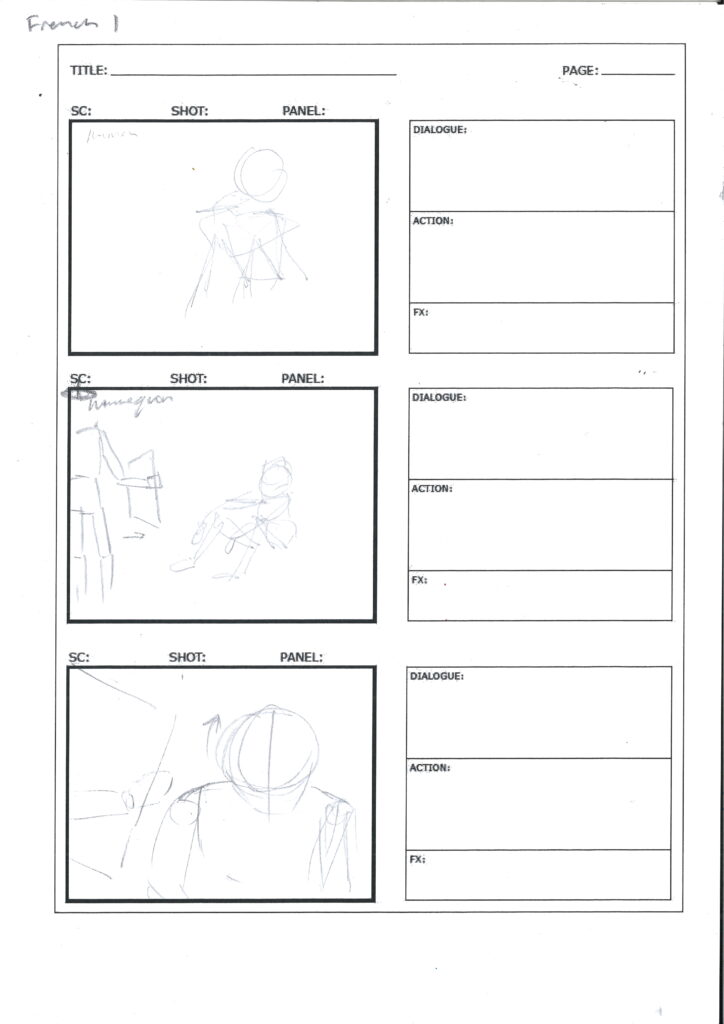
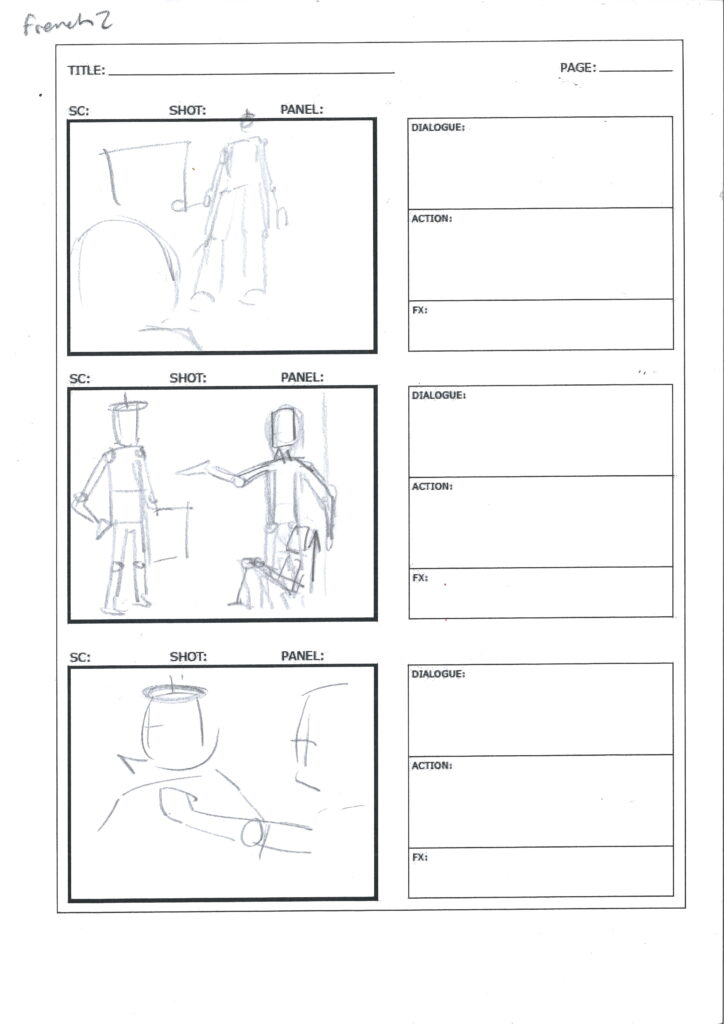
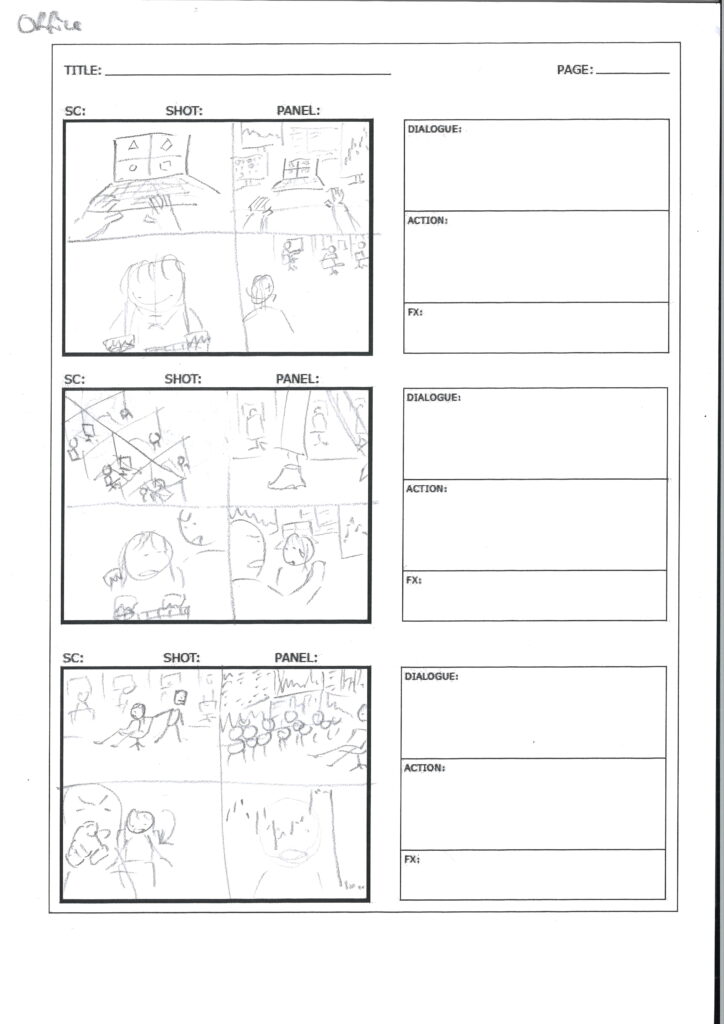
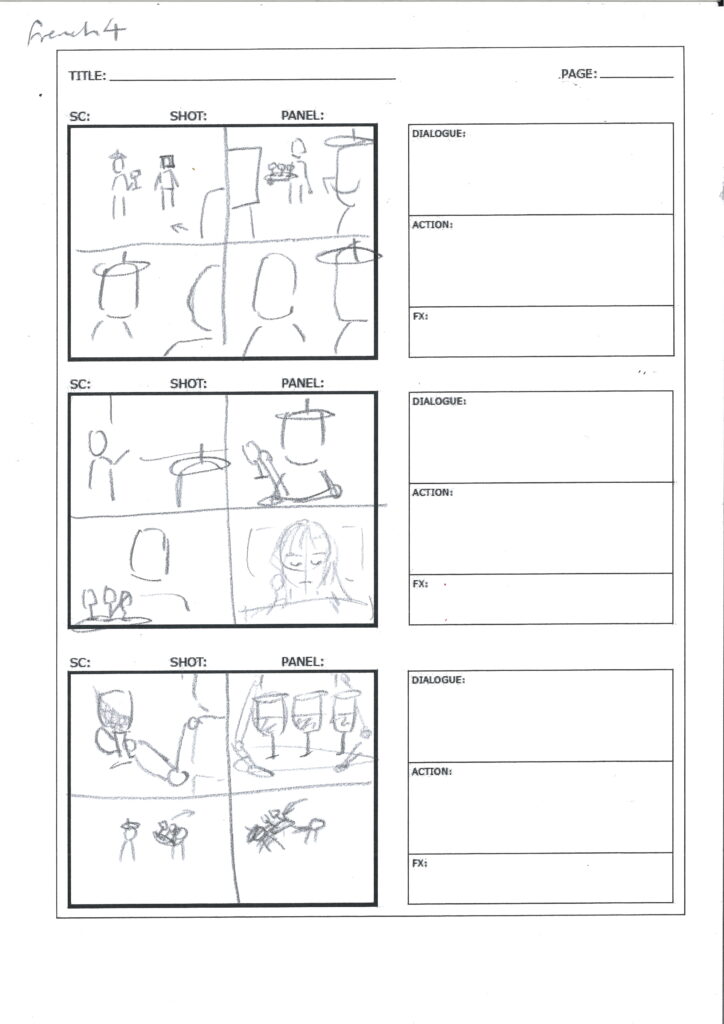
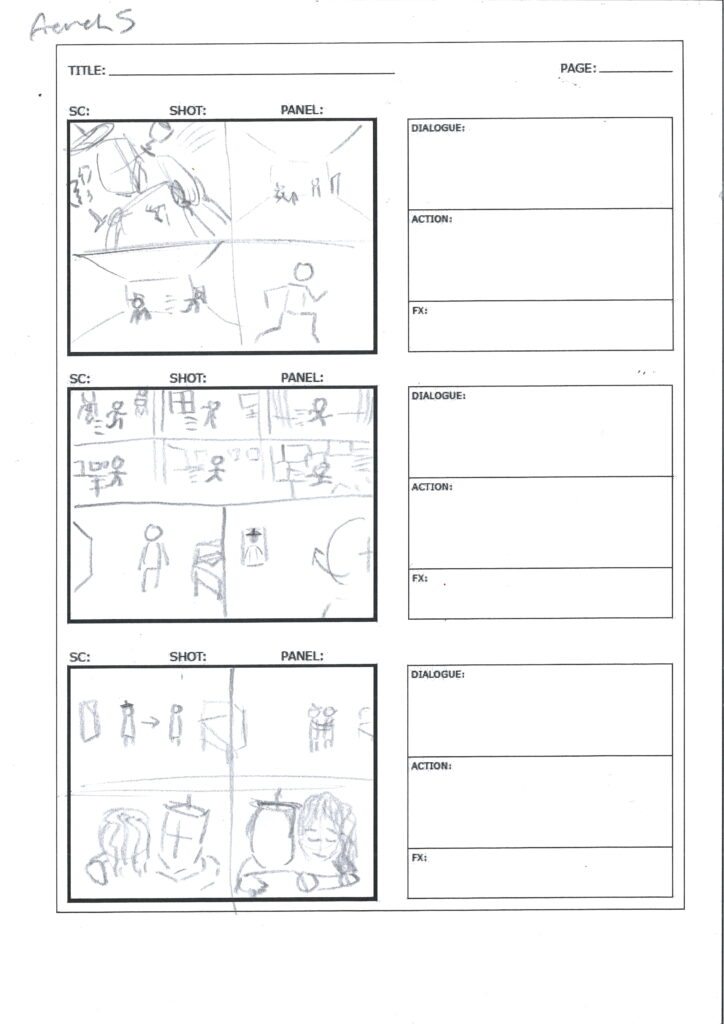
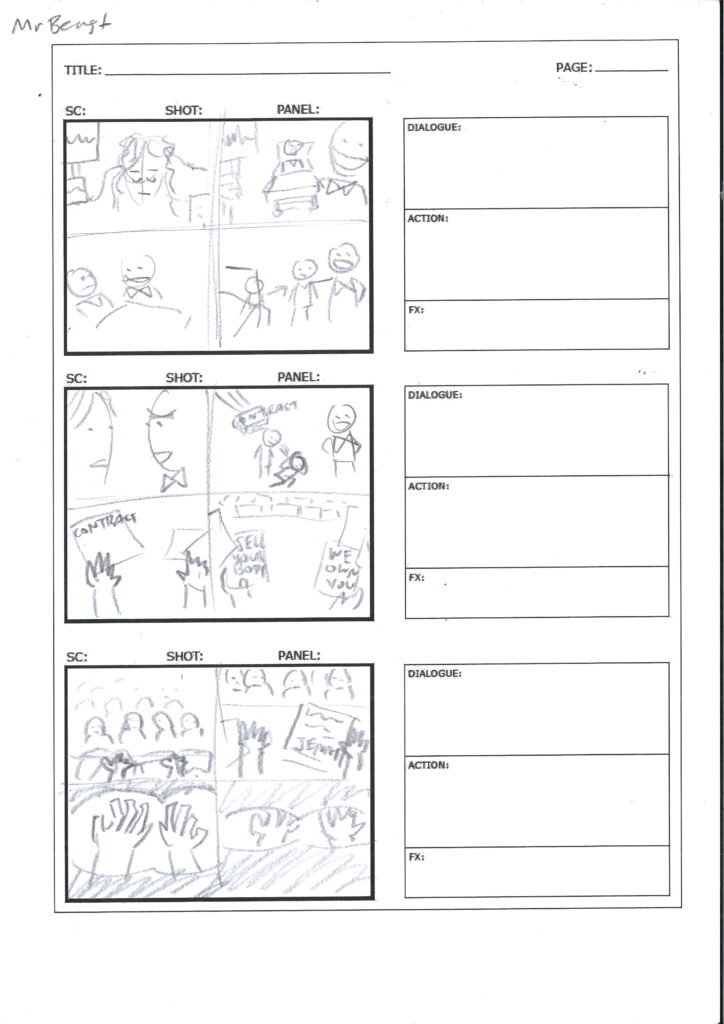
After a rough script was drafted, I began storyboarding. I decided not to create an animatic due to a number of factors (time constraint, the length of the film itself, the lack of accompanying sound). Compared to my second preliminary task, the storyboard was more simplified and gestural. Certain scenes were more malleable and freeform than others. I felt I was ruminating excessively over the execution and decided to move on.
Shooting
I first filmed the opening montage, casting teachers from school for greater authenticity (and convenience). As it was largely detached from the rest of the film, I took longer to cast the protagonist and supporting cast. For the role of the protagonist, I had narrowed down to Wade and Tara (who had helped previously). Who I chose partially determined the supporting cast which made things difficult. Eventually, I decided on Tara (as Wade told me he was less confident, and Tara had more experience).
Shooting took place over multiple days. It was spread out and sometimes sporadic.
I filmed in sections and tried to accommodate people’s time schedules. A few lines were changed or improvised by actors, although it did not significantly impact narrative. I felt my skills as a director during shooting fell short as I struggled to accurately articulate to actors how I wanted a scene to play out. Despite a few frantic shoots and some last-minute changes, shooting went fine enough. It was good working with people I knew. Even though I was stressed, I had some good laughs on set.
Editing
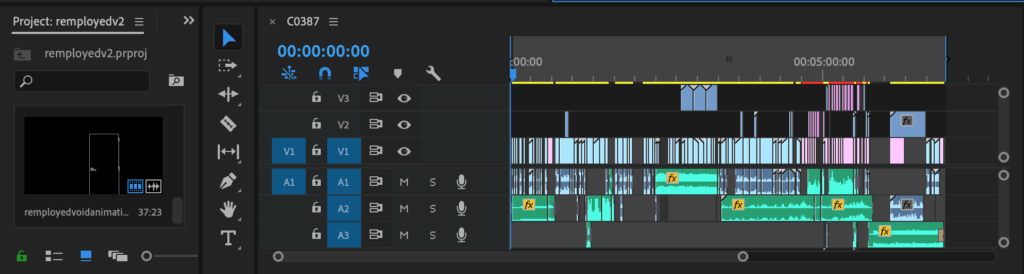
I began editing as soon as the footage for the opening montage was filmed. I edited the film in sections and over multiple versions as I shot more footage. I received feedback for early rough edits and refined the film over multiple iterations. I used Premiere Pro, an editing program I was familiar with and had used previously. The feedback of peers and teachers informed certain revisions (e.g. sound, framing and pacing). As shooting was not entirely accurate to script/storyboard, editing at some points also felt freeform. The intentional use of music, montage and symbolism received positive feedback during peer review.
Animation
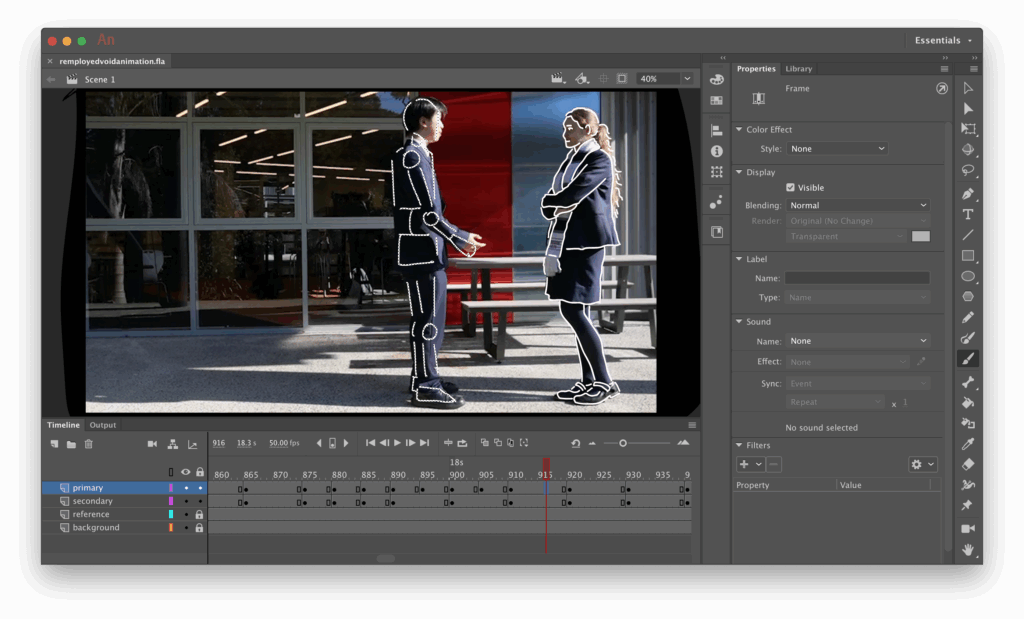
To incorporate animation mixed media into R.E.M.ployed was ambitious. Although, I felt it added to the film’s surreal dreamlike atmosphere. I utilised rotoscoping for the penultimate scene, a technique I had used previously in Goodbye Stranger. The way characters are stylised yet movement remain uncanny and realistic mirrors the protagonist subconscious as between worlds within her internal conflict, creating a more sincere representation of emotional headspace, compared to the more exaggerated and comedic animation used in previous scenes.
Admittedly, I overestimated my ability and underestimated the time required to fully realise my goal of a mixed media short film. I found there were limitations to both my resources and ability. For example, the wooden mannequins I used had a limited range of motion, making it difficult for them to stand or articulate in detail. The stop motion sequence ended up being more simplified at a lower frame rate. I initially also had planned to animate the gallery scene in blender, taking on a low poly 3d style. However, I had little experience with the program and decided to make both the scene in the alleyway and the gallery stop motion. For the scene featuring a parody of Mr Beast, I decided to lean in to both slapstick and absurdist humour, utilising movement while juxtaposing realistic and unrealistic styles.
Reflection
The scope of this project was wider than expected. In terms of production, the nature of the project pushed me outside of my comfort zone. I feel I was hindered by both perfectionism and procrastination. Not only was there more workload in an independent project, I also lacked the accountability I had when I felt there was a group that relied on me. I ended up making creative compromises with myself, as what I wanted felt unachievable with my skill within the coursework’s time frame. Overall, I still am proud of my final short film. However, at points it could be argued the film is overly indulgent and personal. The level of absurdism sometimes felt overly esoteric and inaccessible, although I hoped it would appeal to a Gen Z audience as it did to me. Despite aspects of the film feeling clunky, I am most pleased with the culmination of my efforts resulting in something interesting, visually unique and hopefully relatable.
Social Media and Postcard
In conjunction with the film, I also created a social media page and postcard advertisement. Using the examples of Barbie and I Saw the TV Glow, I wanted to create a cohesive sense of branding to connect my social media page and postcard to my final short film. I maintained a monochromatic palette for my social media profile picture and story highlights. The postcard advertisement was also black and white with a minimalistic composition to create a sense of enigma. The use of colour and typography mirrors the short film’s title card, reinforcing continuity between media products.