Preliminary Task 1 – Camera Techniques
Camera Techniques Practice
Learning to apply our learning about camera techniques and the creation of meaning.
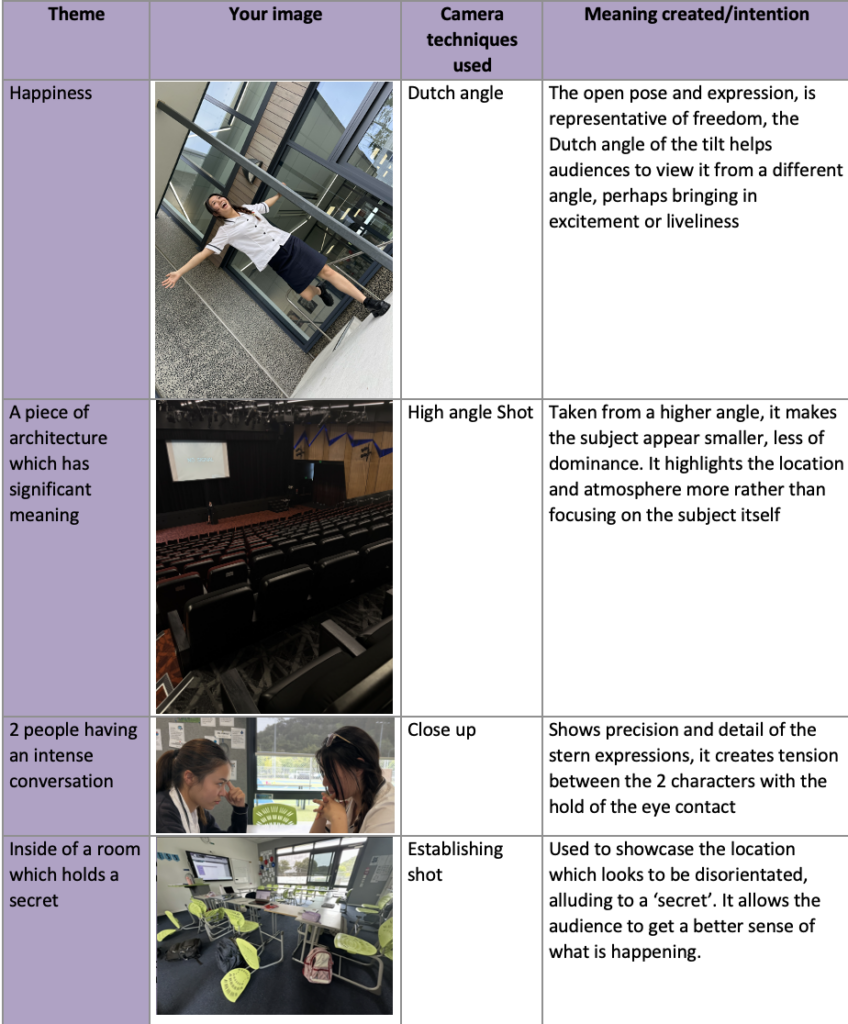
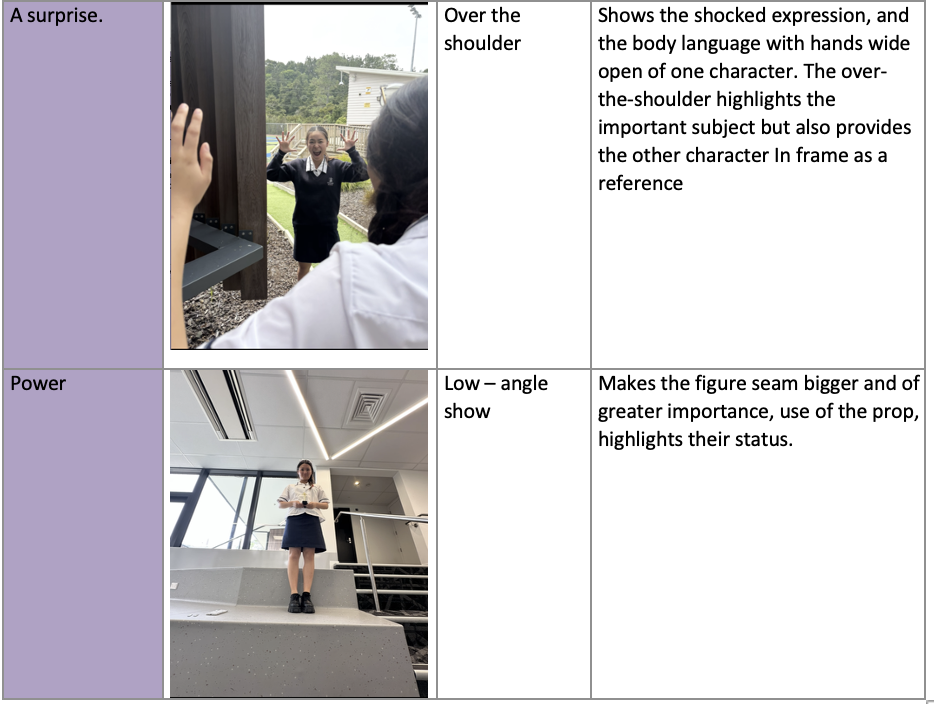
We went around the school taking photos; applying our knowledge to use a range of camera angles to convey different purposes and meaning.
Below is the work my partner and I did. We did well on using our creativity, finding different locations to help showcase the range of camera techniques we learnt. However, it was challenging to take the photo, which would clearly demonstrate the angle clearly and intention clearly.
An area of focus and improvement for myself regarding camera techniques would be expanding my knowledge and skillset by challenging myself to use the harder to capture techniques, so I could recognise and identify it’s purpose in the future.
This was a good way for us to learn about the different techniques and angles and apply them immediately, which was particularly useful as it was a visual and interactive experience. Furthermore, both me and my partner discussed the meaning/intention together and explained our views as we both had our own interpretation and perspective of what effect it had on us.
Preliminary Task 2 – Pitch
The purpose of this task was to begin applying our micro element knowledge to a practical project. We worked in partners and were given the prompt of:
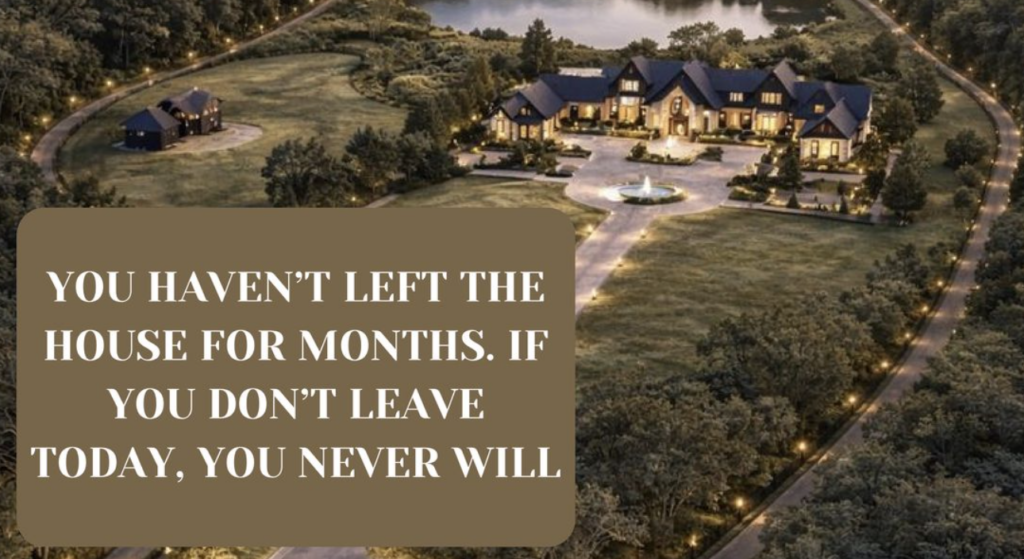
‘You haven’t left the house in months. If you don’t leave today you never will’.
With this prompt we had to create a concept for a 30 second scene of a film and complete a pitch. In this task we brainstormed ideas, made a mood board, created a storyboard and then made and presented our pitch.
Through this task I learnt there are lots of factors to consider before production. Additionally setting a clear plan helped guide us in the correct direction and prevent us from going off topic especially since it is only a 30 sec scene. Although our audience feedback was mainly positive, however I felt that we could’ve used more of a variety of different techniques to further encourage our creativity, and work on storyboarding skills for it to be clearer to follow and plan next time.
This task was helpful as it gave me an insight as to what coursework would be like. It was the first time I really considered all the effort needed in order for the outcome to come across seamlessly. I felt that it was a good way for me to use my micro-element knowledge which was freshly learnt, helping embed it into my memory, through a practical task.
Below is my planning before creating the final scene:
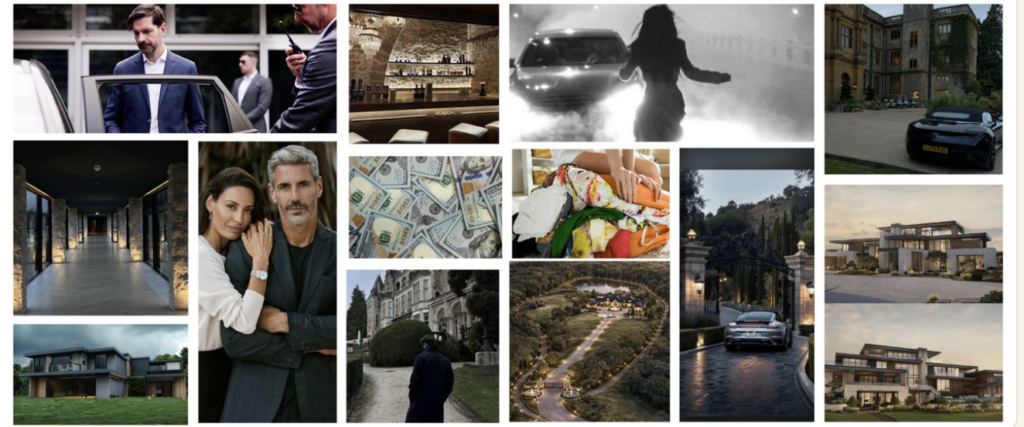
Given that this was our prompt, me and my partner discussed in person brief ideas before writing them down and starting a mood board. We wanted to showcase the representation of wealth and control, but also create a narrative storyline which could be easy to follow.
MOOD BOARD
Our mood board consist of images filled with luxury goods like expensive cars, large homes, and services like bodyguards. These are all representative of wealth shown very explicitly in the cash picture. We also added in potential characters just to help remind us what direction we were heading in.
The control aspect is shown in a disorganised mess of the suitcase. Perhaps implying that even the rich and wealthy still struggle like normal people, bringing in a sense of reality.
STORYBOARD
We planned our storyboard to help guide us as to what each clip would look like. Here we used a variety of different camera angles and scenes in order to help convey our idea across.
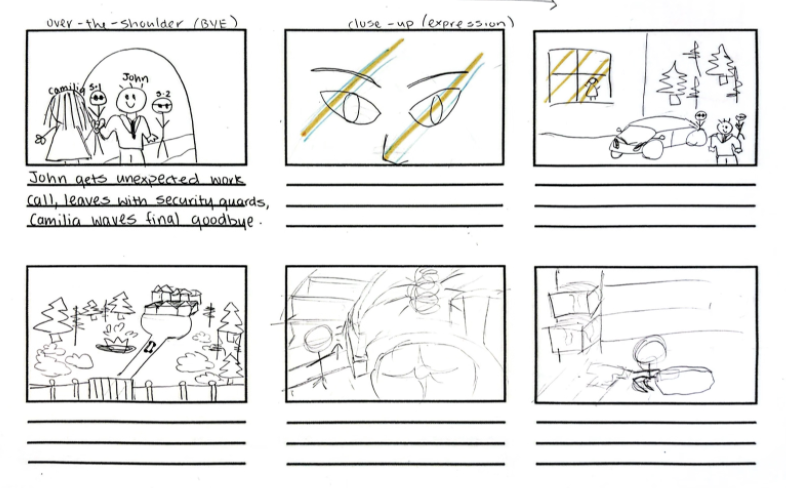
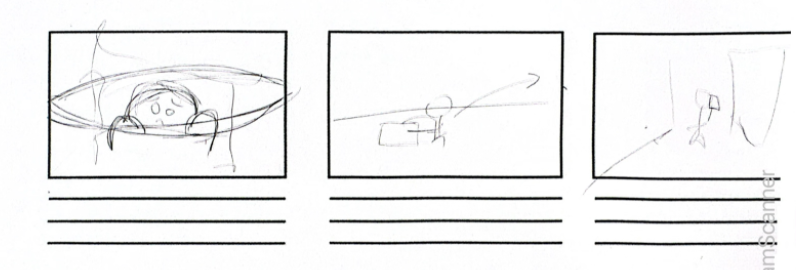
Finally, after preparation we presented our pitch to the class. Overall our feedback was very positive, with our idea being appreciated and liked. However, and area of improvement for us was a clearer storyboard, in which we could maybe refine with colour or do digitally with photos from the internet.
Preliminary Task 3 – Pre-Production
For this task we a creating a 30-60 second film in groups of 3
Our prompt includes the following criteria: must include dialogue of “He’s gone”, must include a prop of significance, and there must be some kind of unanswered question.
After brainstorming ideas based on this prompt my group and I decided on the concept of a thriller, where the significant prop was the use of a duffel bag. The original concept created was a student looking for his bag in the gym, but instead with the use of camera techniques, sound, and editing it alluded to the fact that he disappeared and enigma was used to leave the audience questioning what had happened to the student. We expanded on this idea, by having his friend look for him the next day when he realised he had been gone, receiving a mysterious phone call. The narrative constantly had many unanswered questions, always being alluded and never shown directly, and this was done through the use of enigma. Audiences were left thinking, which creates suspension and tension, with these being typical conventions of a thriller.
We then divided up our pre-production tasks and I worked with Yan Tong and Joel on creating a mood board/storyboard for our piece.
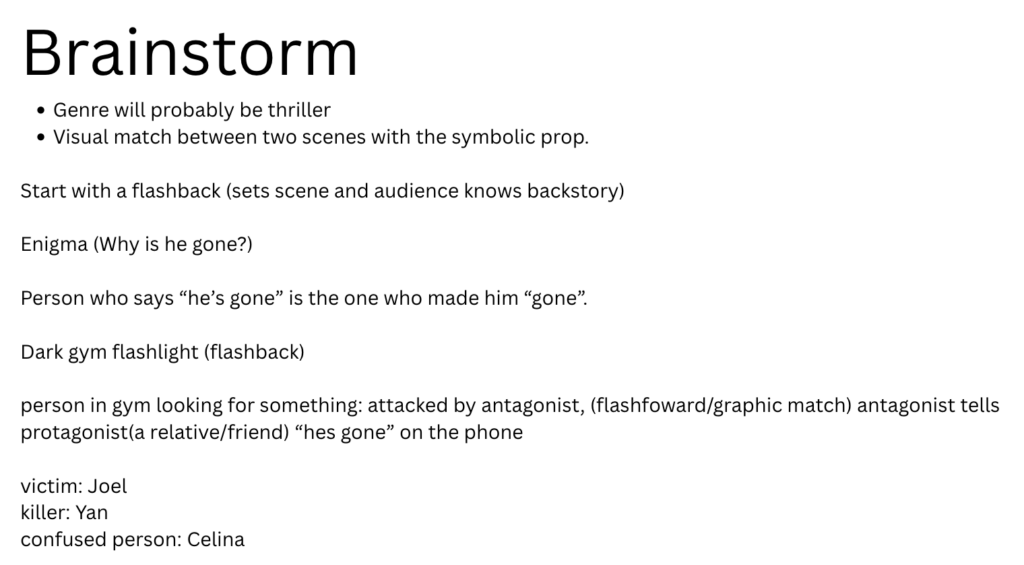
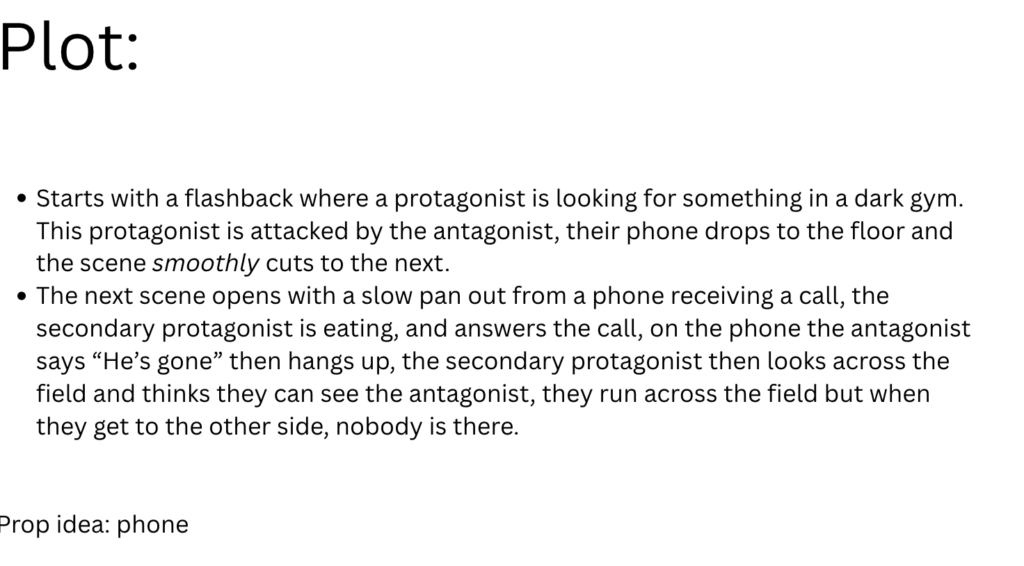
BRAINSTORM/PLOT
We listed down the elements we had to include, then wrote beside it how we would implement these into our film. Our roles were also divided with me helping with the mood board and the storyboard. Our whole group also took turns acting as preparation for the coursework. I took on the role as the “Confused Person”, and even without much acting background, I gave it my best shot, and ensured I reflected upon what went well and what could be improved.
MOODBOARD
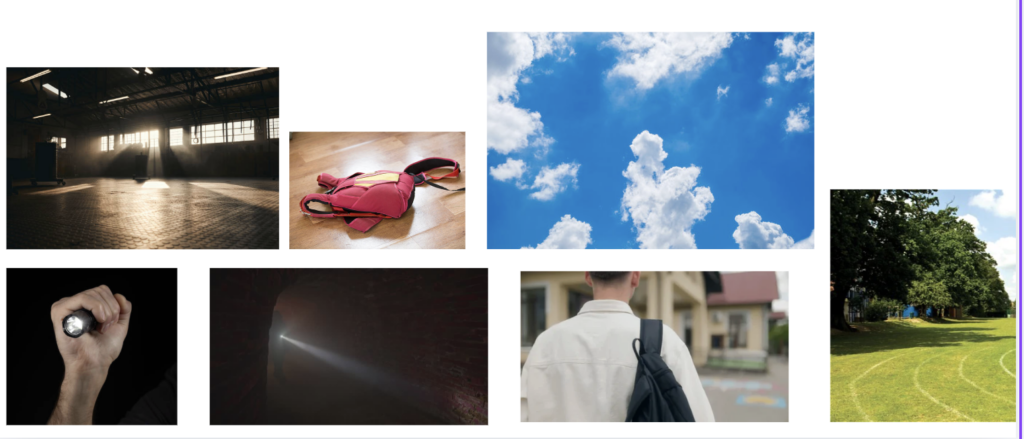
Our mood board was simple, but effective. We group images together based on the scenes taking place, with empty gym’s, flashlights, dark location/atmosphere and a bag being elements of one and the sunny blue skys and green fields being another. This contrast was significant with the dark gym being indoors and having the next scenes end with it outdoors with bright skies.
STORYBOARD/SCRIPT
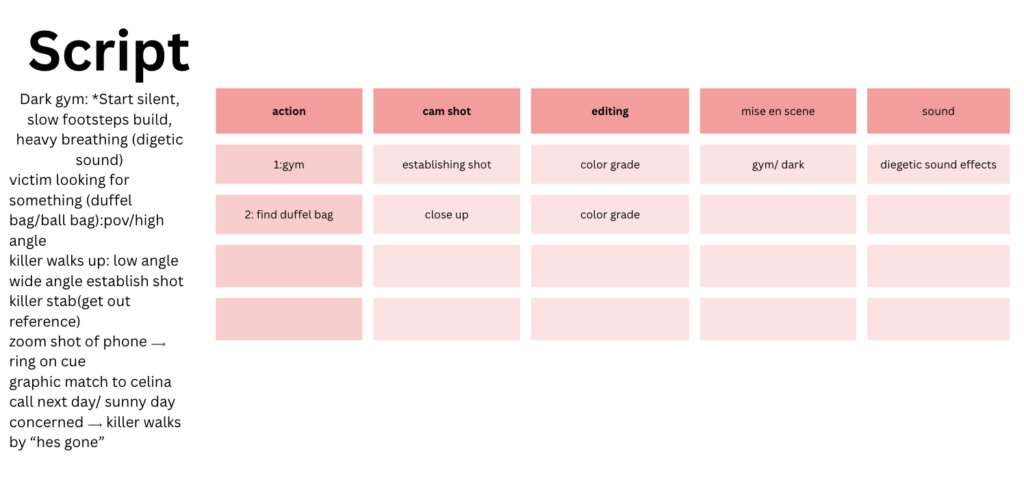
We planned our storyboard, considering the types of shots, editing, mise-en-scene and sound being used. We also wrote a brief script to follow through while filming, however improvisation was done when needed.
We didn’t use any images/photos for the storyboard which did limit us a bit as we didn’t have a clear direction.
PHOTOS
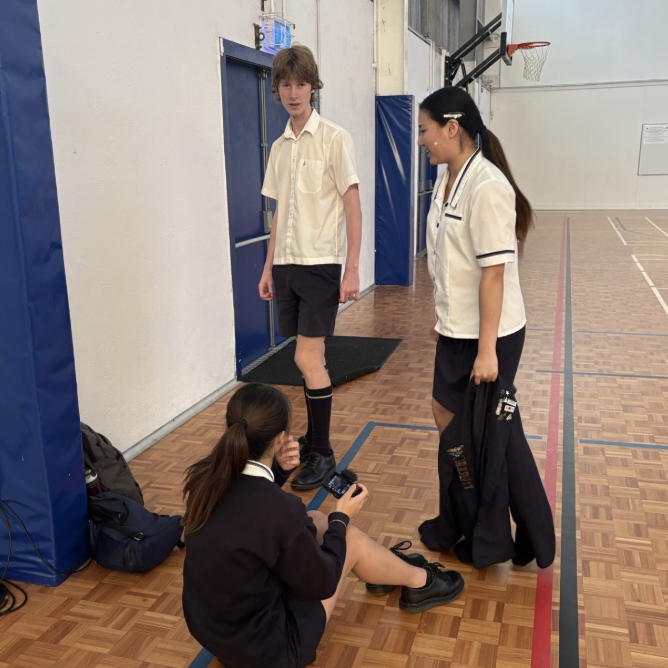
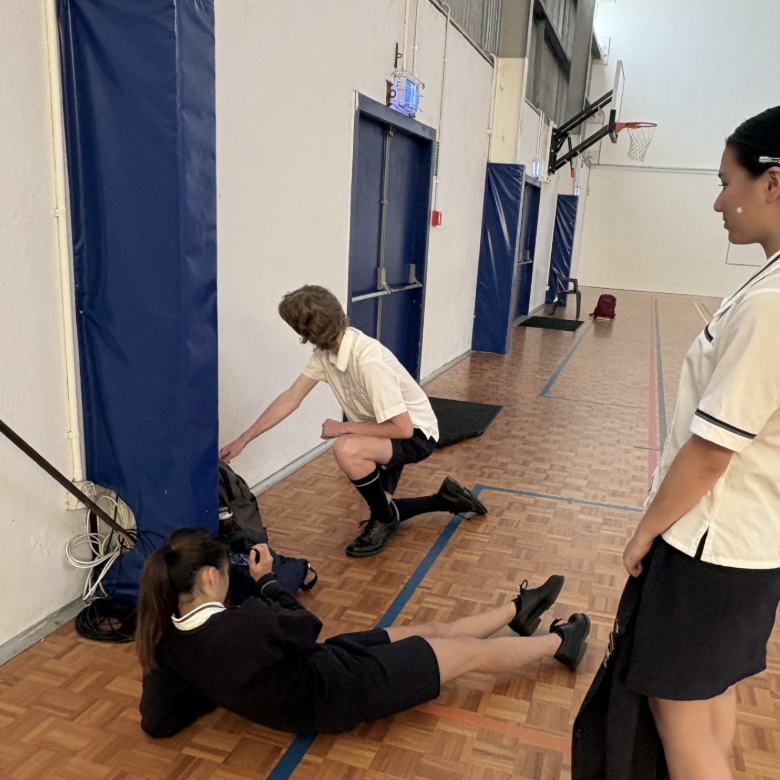
Here is some photos of our group in progress
EDITING
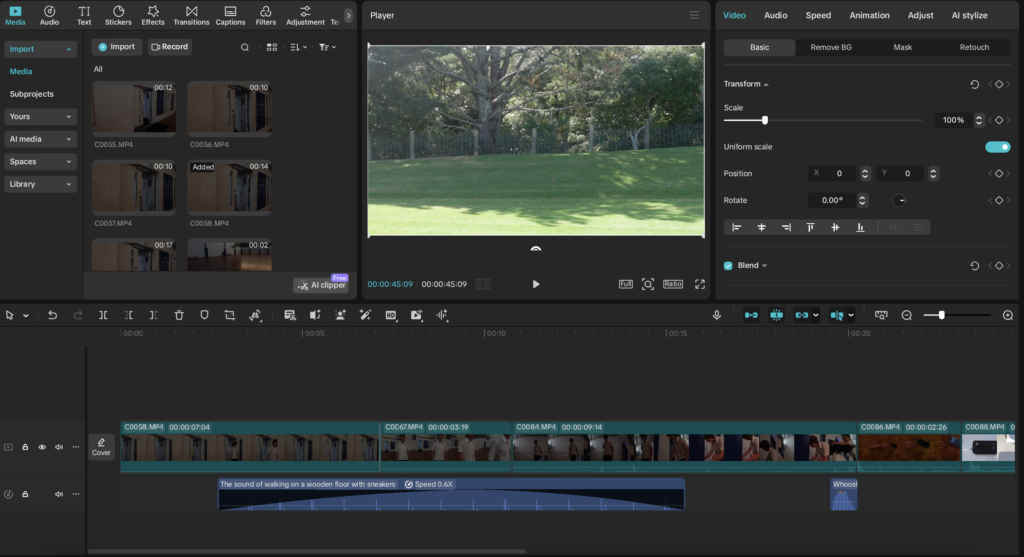
I chose to use Capcut for my software as it was something I had previously used before and was somewhat familiar with. Although, I had not done much editing prior to this activity it gave me a chance to experiment with the different features the software could produce (E.g Sound volume/speed).
PROCESS
At first I transferred the video clips from the camera onto my laptop, then making a shared file for me and my teammates to easily access. I had then ensure I made a backup copy incase any footage would disappear or have trouble opening up. I then uploaded the images onto Capcut itself, and selected my favourite clips and began arranging them in order. After this I made adjustments to the length and duration the clips, and had a thought about where I wanted the movement to slow down and speed up. The overall pacing of the activity I felt was slow at times like the walk to build up tension and suspense, but fast after the ‘attack’, I chose this to reflect the thriller genre conventions. Next I played around using Capcut’s free sound effects, searching in the search bar for sounds like ‘heavy walking’ and ‘swooshes’. I had then added these below the clips as to where it most made sense, fading them in and out to make it more seamless. Finally I added a few free transitions Capcut had like ‘black out’, ‘mix’, utilising it’s resources. This helped link together the clips, creating a connection rather than seperate clips alone. During editing, I was constantly rewatching from the start to ensure continuity and the flow of the narrative, this is something to consider later on when I complete my short-film opening.
FINAL CUT
Below I have inserted my final edit. Us 3 edited our own copies as practice before the coursework of the film opening. It gave us a opportunity to develop our editing skills prior, which were a weakness of mine, however I have already felt improvement through the use of playing around with different sound effects and audio techniques, leaving me feeling more confident when it comes to coursework. For coursework, I now understand the amount of effort it takes after filming the clips, in order for the video to flow with continuity and ensure the narrative makes sense to the audience.